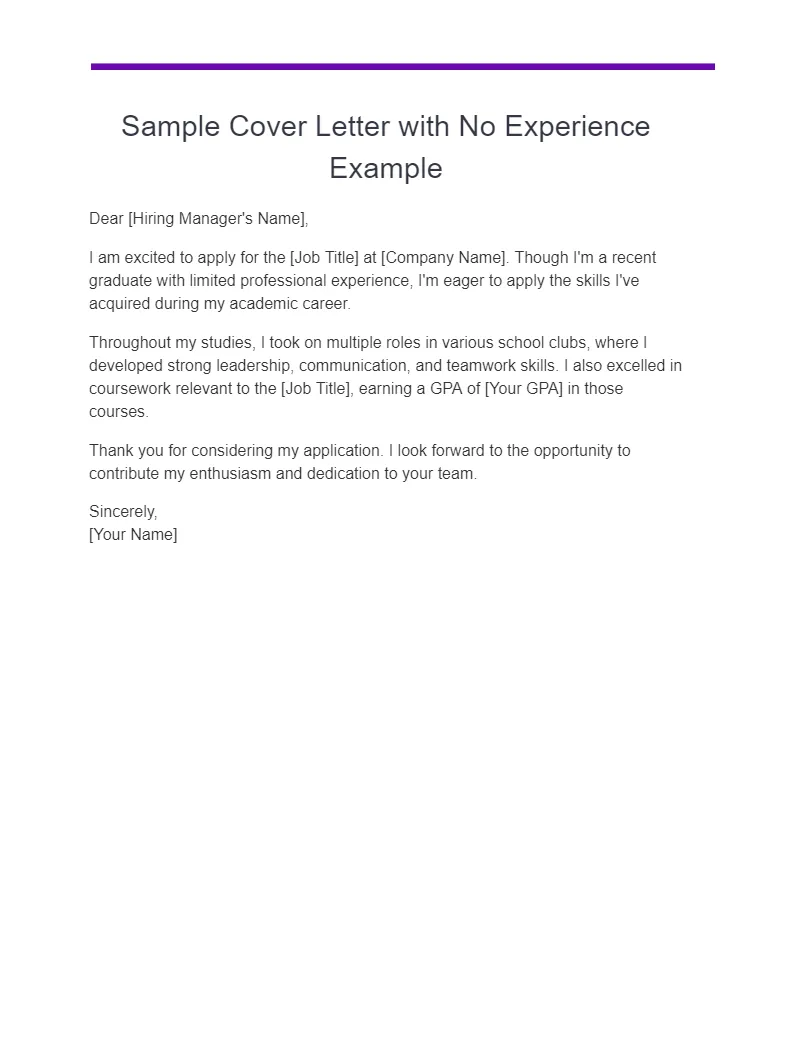
What is a Cover Letter
A cover letter is a crucial document that accompanies your resume when applying for a job. It serves as your personal introduction to the hiring manager, providing an opportunity to express your interest in the position and highlight your qualifications. Unlike your resume, which provides a factual overview of your experience and skills, a cover letter allows you to showcase your personality, enthusiasm, and unique value proposition. It’s your chance to make a strong first impression and convince the employer that you are the ideal candidate for the role. A well-crafted cover letter demonstrates your communication skills and your understanding of the job requirements, helping you stand out from other applicants and increase your chances of landing an interview. It should always be customized to the specific job and company you are applying to.
Why You Need a Cover Letter No Experience
Even without professional experience, a cover letter is essential. When you lack direct work experience, it allows you to highlight transferable skills gained from other areas of your life, such as academics, volunteer work, extracurricular activities, or personal projects. The cover letter becomes your platform to explain how your skills and experiences align with the job requirements, even if they don’t come from a traditional work setting. It provides context for your resume, demonstrating your potential and eagerness to learn. A strong cover letter can convince employers of your suitability by focusing on your abilities, enthusiasm, and potential for growth, rather than solely on past work history. It shows you are proactive and dedicated to the application process, making you a more attractive candidate to potential employers.
Highlighting Transferable Skills

Transferable skills are skills you’ve acquired in one situation that can be applied to another. These skills are vital when you have no direct experience because they bridge the gap between your background and the job requirements. Think about skills like communication, problem-solving, teamwork, leadership, time management, and adaptability. These are valuable in any workplace. The cover letter is where you explicitly connect these skills to the job’s requirements. Provide examples of how you’ve used these skills, even if in non-work settings, and explain their relevance to the position. For instance, if the job requires strong communication skills, showcase how you effectively communicated in a group project or as a volunteer, highlighting specific achievements that demonstrate these abilities. This approach shows that you are capable and ready to take on the job.
Identifying Your Skills
Start by making a comprehensive list of your skills. Review the job description carefully and identify the skills the employer is seeking. Then, brainstorm your own skills, encompassing technical, soft, and personal skills. Reflect on your past experiences, considering your education, volunteer work, projects, and any other activities where you have developed and used valuable skills. Be specific and identify examples of situations where you have used the skills. For example, instead of simply saying ’teamwork,’ provide an example such as, ‘Collaborated with a team of five students on a marketing project, coordinating tasks and successfully delivering a final presentation on time.’ This specificity shows employers the real-world applicability of your skills and makes your application more compelling.
Quantifying Your Achievements
Whenever possible, quantify your achievements. Use numbers, percentages, and concrete data to demonstrate the impact of your skills. This helps to convince the hiring manager of your abilities. For example, instead of saying ‘improved customer service,’ say ‘Increased customer satisfaction scores by 15% through proactive problem-solving.’ When discussing projects or volunteer work, detail the results you achieved and how you contributed to those outcomes. This approach adds credibility and makes your claims more impactful, allowing the employer to understand the value you can bring to the role. Even without professional experience, you likely have achievements that can be quantified to show your capabilities and results-oriented mindset.
Formatting Your Cover Letter

The formatting of your cover letter is crucial for making a positive first impression. It should be well-organized, easy to read, and free of errors. Use a professional font like Times New Roman, Arial, or Calibri in a readable size (11 or 12 points). Ensure your letter has clear margins (1 inch on all sides) and single-spacing with a blank line between paragraphs. Keep the letter concise, ideally one page long. Use headings and bullet points to break up large blocks of text and improve readability. The overall layout should be clean, uncluttered, and consistent. Attention to detail in formatting signals your professionalism and attention to detail.
Contact Information
At the top of your cover letter, include your contact information: your full name, phone number, email address, and LinkedIn profile URL (if you have one). This information should be aligned to the left or right, depending on your preferred style. Ensure your email address is professional. The contact information must match the information on your resume. This makes it easy for the hiring manager to reach you for further steps in the hiring process. Double-check for any errors in the contact details; a mistake could lead to missed opportunities.
Professional Greeting
Begin your cover letter with a professional greeting. If possible, address the hiring manager by name. Research the company and role to find out the name of the person responsible for hiring; this extra effort shows initiative. If you can’t find a specific name, use a general greeting like ‘Dear Hiring Manager’ or ‘Dear [Company Name] Hiring Team.’ Avoid generic greetings such as ‘To Whom It May Concern,’ as they lack personalization. A personalized greeting demonstrates that you have taken the time to research the company and are genuinely interested in the position.
Body Paragraphs

The body of your cover letter is where you showcase your qualifications and explain why you are a good fit for the job. The body typically consists of three paragraphs, each with a specific purpose. These paragraphs should clearly demonstrate your interest in the role, highlight your relevant skills, and explain why you are a great candidate. It’s the core of your cover letter, where you provide evidence of your capabilities and enthusiasm. Tailor each paragraph to the specific job description and company to ensure your message resonates with the hiring manager.
First Paragraph
Start your first paragraph by stating the position you are applying for and where you found the job posting. Briefly express your enthusiasm for the role and the company. Then, include a concise statement highlighting your key strengths or your primary interest in the position, establishing a clear link between your career goals and the requirements of the job. This paragraph should capture the reader’s attention and make them want to read further. Expressing your genuine interest early on sets a positive tone and shows that you are motivated to contribute to the company.
Second Paragraph
The second paragraph is where you showcase your skills and experience. Since you have no experience, focus on transferable skills. Explain how your skills and experiences, whether from academics, volunteer work, or personal projects, align with the job requirements. Provide specific examples to illustrate your abilities and demonstrate the impact you have made in these settings. Emphasize achievements that demonstrate your skills; quantify these achievements whenever possible. This demonstrates how your skills and experiences translate into value for the employer, despite your lack of professional experience. Show how you can apply your skills to achieve success in the role.
Third Paragraph

In the third paragraph, express your eagerness to learn and contribute to the company. Describe your understanding of the company’s mission, values, or recent projects, and explain how your goals align with the company’s objectives. Show your genuine interest in the organization and the industry. Conclude by summarizing why you are the ideal candidate for the position, reiterating your key strengths and demonstrating your enthusiasm for the opportunity. End on a strong note, leaving a lasting positive impression on the hiring manager, and reinforcing why they should consider you.
Closing Paragraph
Conclude your cover letter with a clear and professional closing. Restate your interest in the position, reiterate your key qualifications, and thank the hiring manager for their time and consideration. This should be short and to the point. Avoid sounding overly eager or desperate. A confident and concise closing reinforces your positive impression and reinforces your enthusiasm. Ensure the closing complements the overall tone of the letter and leaves the hiring manager with a final, favorable impression.
Call to Action
Include a call to action in your closing, inviting the hiring manager to contact you. You can write a sentence like ‘I am eager to discuss my qualifications further and would welcome the opportunity for an interview.’ Provide your phone number and email address again. State that you look forward to hearing from them soon. This final step actively encourages the hiring manager to move forward with your application. It shows you are proactive, and it’s a subtle reminder to them to consider your application.
Proofreading and Editing

Proofreading and editing are vital. Before submitting your cover letter, carefully proofread it to check for any grammatical errors, spelling mistakes, or typos. Ensure the language is clear, concise, and professional. Read your cover letter multiple times, or better yet, have a friend or family member review it. A flawless cover letter reflects your attention to detail. Errors can undermine your credibility. Ensure the formatting is consistent throughout the document. A polished cover letter demonstrates your respect for the opportunity and your professionalism.
Cover Letter Template No Experience [Example]
While it’s important to customize your cover letter, using a template can provide a solid structure. You can find numerous cover letter templates online specifically designed for individuals with no experience. These templates typically include sections for contact information, a professional greeting, an introduction to the role, highlights of transferable skills, and a concise closing. Customize the template with your details. Review the job description carefully, and tailor the content to showcase your relevant skills and experiences. Customize the template to reflect your unique personality, and ensure it aligns with your personal brand and the company’s culture. The goal is to create a cover letter that is both professional and uniquely yours.