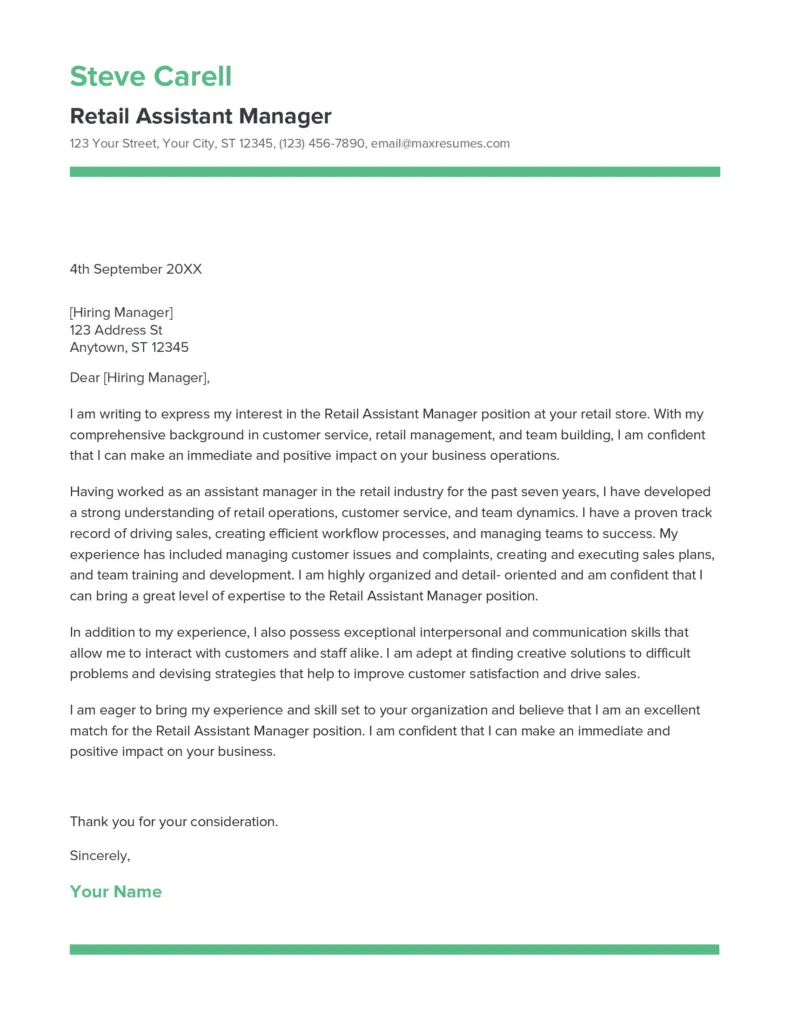
Cover Letter How to Get the Assistant Manager Job
Landing an Assistant Manager role in retail is a significant career step. A well-crafted cover letter is your key to unlocking the door to your dream job. It’s your first impression, your opportunity to showcase your skills, experience, and personality. A compelling cover letter grabs the hiring manager’s attention and persuades them to delve into your resume. This guide provides a comprehensive roadmap to create a cover letter that stands out from the competition, ensuring you secure that all-important interview. We’ll cover everything from understanding the role and highlighting your achievements to avoiding common pitfalls. Let’s get started on building a cover letter that gets results!
Understanding the Assistant Manager Role
Before crafting your cover letter, it’s essential to understand the core responsibilities and requirements of an Assistant Manager in the retail sector. This knowledge allows you to tailor your letter to the specific demands of the job, demonstrating that you possess the necessary skills and experience to excel. The assistant manager role is often a bridge between upper management and the frontline staff, playing a vital part in store operations and customer satisfaction. Your cover letter must reflect that understanding.
Key Responsibilities of an Assistant Manager

An Assistant Manager’s day-to-day duties can be incredibly diverse. They often include supervising staff, managing inventory, handling customer complaints, and ensuring the store meets its sales targets. They also play a key role in opening and closing procedures, managing cash registers, and maintaining a positive work environment. Your cover letter should touch on these responsibilities and illustrate how you’ve successfully managed similar duties in the past. Emphasizing your ability to handle multiple tasks simultaneously is also crucial.
Essential Skills for Success
To succeed as an Assistant Manager, you need a combination of soft and hard skills. Excellent communication and leadership are essential to motivate the team. Strong organizational and time-management skills are needed to handle the various tasks. Knowledge of sales, customer service principles, and basic financial management is also critical. Your cover letter should highlight these skills, providing specific examples of how you’ve utilized them to achieve positive outcomes in previous roles. Think about your ability to resolve conflict, train new employees, and analyze sales data.
Crafting a Powerful Cover Letter
Now that you understand the role, let’s focus on crafting a cover letter that will impress. This is where you get to demonstrate why you’re the ideal candidate. A well-structured, tailored, and error-free cover letter can significantly increase your chances of getting an interview. The goal is to showcase your personality, highlight your key skills and experience, and demonstrate why you’re a perfect fit for the company and the specific Assistant Manager position.
Formatting Your Cover Letter

Professional formatting is essential. Use a clear, readable font like Arial or Times New Roman, and maintain consistent font sizes throughout the document. Keep the letter to one page. Use standard margins (1 inch on all sides) and single-spacing. Use clear headings and subheadings to break up the text and make it easier to read. Avoid excessive use of bolding or underlining; use them sparingly to emphasize key points. A well-formatted cover letter demonstrates your attention to detail and professionalism.
Header and Contact Information
Start with your contact information in the header your name, address, phone number, and email address. Then, include the date and the hiring manager’s name and title (if known), and the company address. If you don’t know the hiring manager’s name, research the company’s website or LinkedIn to find out who is responsible for hiring for the role. If you are unable to find a name, use a professional greeting like “Dear Hiring Manager.”
Greeting the Hiring Manager
Address the hiring manager by name whenever possible. A personalized greeting shows you’ve taken the time to research the company and the role. For example, “Dear Mr. Smith” or “Dear Ms. Jones.” If the name isn’t available, opt for a professional greeting. Avoid generic greetings like “To Whom It May Concern,” as they appear impersonal and show lack of effort. Getting the name right shows you’re attentive to details.
Writing the Opening Paragraph

The opening paragraph is your hook; it must capture the hiring manager’s attention immediately. State the position you are applying for and where you saw the job posting. Briefly mention why you’re interested in the role and the company, and what makes you an ideal candidate. For example, you might say, “I am writing to express my interest in the Assistant Manager position at [Company Name], as advertised on [Platform]. With [Number] years of experience in retail management and a passion for driving sales and exceeding targets, I am confident I possess the skills to excel in this role.”
Highlighting Your Skills and Experience
The body of your cover letter is where you showcase your relevant skills and experience. Use a few paragraphs to discuss your accomplishments and how they align with the job requirements. Refer to the job description and highlight the skills and experiences that are most important to the role. Provide specific examples of your achievements, using quantifiable results whenever possible. Showcase your ability to lead teams, manage inventory, handle customer service issues, and drive sales growth. Focus on what you can bring to the company, and how your skills and experience will help them achieve their goals.
Quantifying Your Achievements
Use numbers to demonstrate your achievements. Quantifiable results make a compelling case for your abilities and show that you have a proven track record. For instance, instead of saying, “Increased sales,” state, “Increased sales by 15% within six months.” Instead of, “Improved customer satisfaction,” say, “Improved customer satisfaction scores by 20%.” Quantifying your achievements proves your impact and gives the hiring manager concrete evidence of your capabilities.
Using Action Verbs

Use action verbs to describe your accomplishments. Action verbs make your cover letter more dynamic and engaging, creating a vivid picture of your skills and experience. Examples of action verbs include: managed, led, achieved, increased, improved, trained, developed, implemented, and supervised. Starting your sentences with action verbs will make your cover letter more persuasive and compelling. For instance, “Managed a team of 10 employees,” or “Led a sales team that consistently exceeded monthly targets.”
Expressing Your Enthusiasm and Fit
In the body of your cover letter, express your enthusiasm for the role and the company. Explain why you are excited about the opportunity and what attracts you to this particular position. Show that you’ve researched the company and understand its mission and values. Explain how your values align with those of the company and how you can contribute to its success. Demonstrate your understanding of the company’s goals and how you can help them achieve those goals. Showing your enthusiasm makes you a more appealing candidate.
Closing Your Cover Letter
In the closing paragraph, reiterate your interest in the position and thank the hiring manager for their time and consideration. Reiterate your strong belief that you are a good fit for the role. Include a call to action, such as expressing your availability for an interview. For example, “Thank you for your time and consideration. I am eager to learn more about this opportunity and discuss how my skills and experience can benefit [Company Name]. I am available for an interview at your earliest convenience.” End with a professional closing, such as “Sincerely” or “Best regards,” followed by your typed name.
Proofreading and Editing

Before submitting your cover letter, meticulously proofread and edit it. Check for grammatical errors, spelling mistakes, and typos. Ensure the formatting is consistent and professional. Ask a friend or family member to review your cover letter for any errors you may have missed. A polished, error-free cover letter reflects your attention to detail and professionalism. Proofreading is a critical step; errors can create a negative impression and potentially eliminate your application.
Tailoring Your Cover Letter for Each Application
Do not use the same cover letter for every job application. Instead, customize each cover letter to match the specific requirements of the job description. Tailoring your cover letter shows that you have taken the time to understand the company’s needs and that you’re genuinely interested in the role. Show the hiring manager that your skills and experience directly align with the job requirements. Tailoring will significantly improve your chances of securing an interview.
Researching the Company
Before writing your cover letter, research the company and the role. Visit their website to understand their mission, values, and products or services. Review the job description carefully, paying close attention to the skills and experience they are looking for. Research the company’s culture, and tailor your letter to show how your personality and work style align with their values. Showing that you understand the company’s goals and challenges will impress the hiring manager.
Matching Skills to Job Requirements

Carefully match your skills and experience to the requirements listed in the job description. Highlight the most relevant skills and provide examples of how you have used them in the past. Use keywords from the job description throughout your cover letter. If the job description emphasizes customer service skills, be sure to provide examples of your customer service accomplishments. If they want someone who is experienced in managing inventory, showcase that experience. Tailoring your letter is key.
Common Mistakes to Avoid
Avoid common mistakes that can undermine your application. These errors can decrease your chances of getting an interview. Avoid generic cover letters that do not mention the company or role. Avoid spelling and grammar errors. Avoid using vague language. Avoid providing irrelevant information. Do not submit a cover letter that is too long or too short. Failing to tailor your cover letter to the job will also make a negative impression. Being mindful of these points ensures that you present yourself in the best possible light.