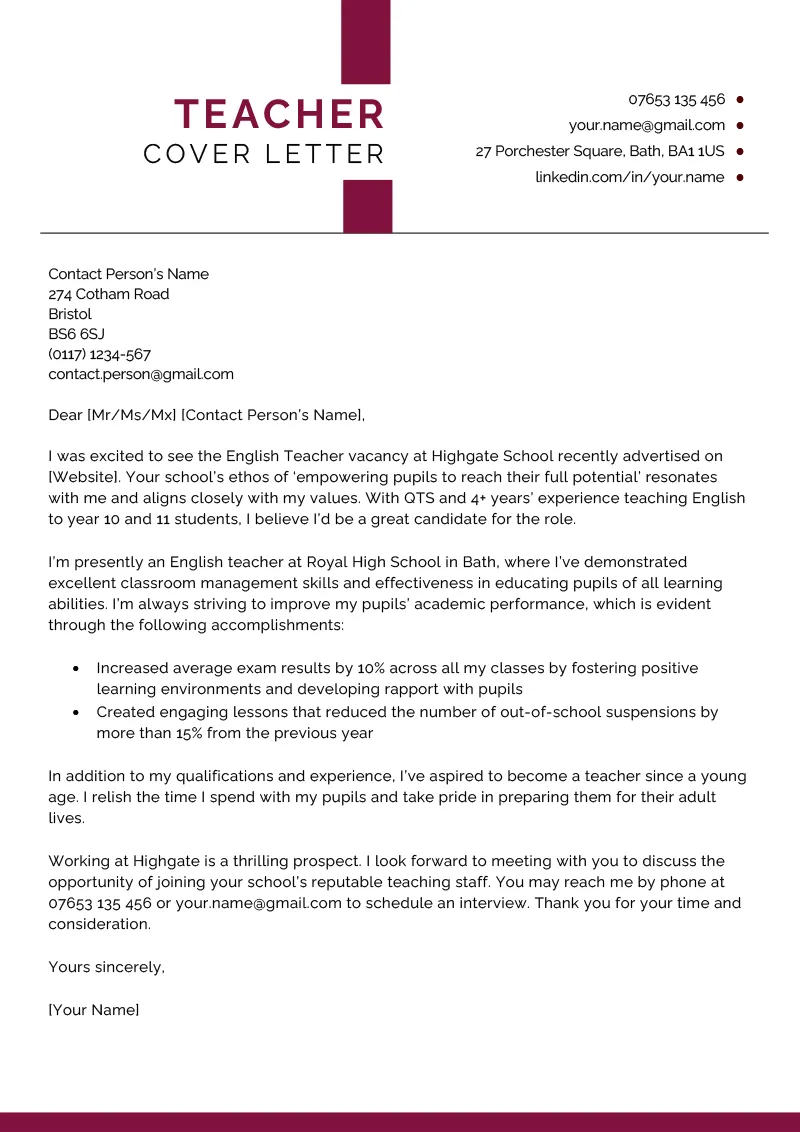
A cover letter is more than just a formality, it is your first impression on a potential employer. It’s your chance to showcase your personality, enthusiasm, and suitability for a teaching position. In a competitive job market, a well-crafted cover letter can significantly increase your chances of landing an interview. This article will provide you with a comprehensive guide to writing a compelling cover letter that will help you secure your dream teaching job.
Cover Letter Overview
Your cover letter should complement your resume, providing a more detailed narrative of your skills and experiences. While your resume lists your qualifications, your cover letter explains why you are the best fit for the specific role. It’s your opportunity to connect with the hiring manager on a personal level and demonstrate your passion for teaching.
Why Cover Letters Are Crucial for Teachers
For teachers, a cover letter allows you to express your teaching philosophy and approach to education. It lets you articulate your beliefs about student learning, classroom management, and your overall commitment to fostering a positive learning environment. It helps you to personalize the application and makes you stand out from the crowd.
What Makes a Cover Letter Stand Out
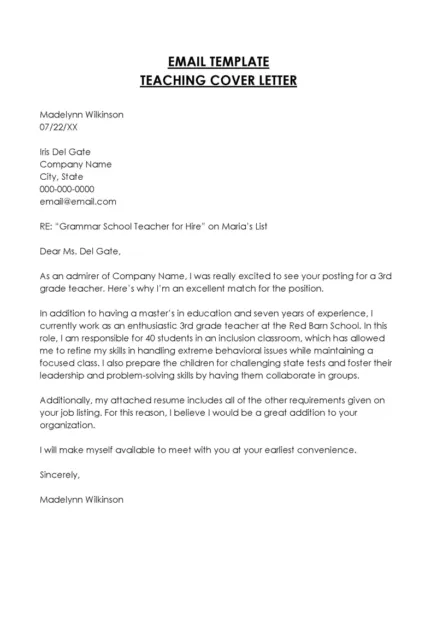
A standout cover letter is tailored to the specific job and school. It goes beyond simply restating your resume; it highlights how your skills and experiences align with the school’s needs and values. This means researching the school, understanding its mission, and demonstrating how you can contribute to its success. A cover letter that showcases this will always stand out.
Key Components of a Winning Cover Letter
A strong cover letter comprises several essential elements that work together to create a compelling narrative. Each component plays a crucial role in conveying your qualifications and enthusiasm to the hiring manager. These key components include clear contact information, a professional salutation, a strong opening, highlighting relevant skills, providing concrete examples, education and certifications, and a compelling closing.
Contact Information and Salutation
Formatting your Cover Letter correctly

Ensure your cover letter is professional and easy to read. Use a clear, readable font like Times New Roman or Arial, with a font size between 11 and 12 points. Maintain consistent formatting throughout the document, including margins (typically 1 inch on all sides) and line spacing (single or 1.15). Keep paragraphs concise and use bullet points to highlight key skills and achievements.
Proper Addressing
Always address your cover letter to a specific person, if possible. Research the hiring manager’s name and title. A personalized salutation like “Dear Mr./Ms. [Last Name]” shows that you’ve taken the time to learn about the school and the person in charge. If you can’t find a specific name, use a professional alternative like “Dear Hiring Committee” or “Dear [Department Name] Hiring Manager.”
Writing a Compelling Opening Paragraph
The opening paragraph is your first chance to capture the reader’s attention. Start with a strong statement that grabs their interest, such as your passion for teaching or your understanding of the school’s mission. Mention the specific position you’re applying for and briefly state why you are a good fit. Make it clear why you are the best candidate.
Showcase Your Passion and Enthusiasm

Demonstrate your enthusiasm for teaching and for the specific school. Share a brief anecdote or a personal connection that illustrates your passion for education. This could be a story about a successful lesson, a positive experience with students, or your commitment to creating an inclusive and engaging learning environment. Enthusiasm is contagious, and it shows you are genuinely interested in the role.
Highlight Your Relevant Skills
This section is where you highlight your skills and experiences that align with the job description. Carefully review the job posting and identify the key requirements. Then, provide specific examples of how you’ve demonstrated those skills in previous roles or experiences. Tailor your letter to each job application.
Mention Skills and experience
Focus on the skills and experiences that are most relevant to the position. These may include classroom management, lesson planning, curriculum development, differentiated instruction, or experience with specific technologies. Use action verbs to describe your accomplishments and quantifiable results whenever possible. For example, instead of saying “I helped students improve their reading skills,” say “I implemented a reading intervention program that improved student reading scores by 15%.”
How to Describe Your Teaching Philosophy

Your teaching philosophy is a core part of your cover letter, as this helps hiring managers understand your approach to education. Articulate your beliefs about teaching, learning, and the role of the teacher. Briefly explain your approach to student engagement, assessment, and classroom management. This is an important step to show why you are the best candidate for the job.
Providing Concrete Examples
Back up your claims with specific examples. Instead of just listing skills, describe how you’ve used them to achieve positive outcomes. This is a prime opportunity to highlight how you go above and beyond to make the students better learners. Provide enough examples to show your expertise.
Showcasing your accomplishments with Quantifiable results
Use data and statistics to illustrate your impact. For example, you could state, “In my previous role, I increased student test scores by 20% through the implementation of differentiated instruction techniques.” or “I reduced disciplinary incidents by 30% by implementing a positive behavior support system.”
Discussing Classroom Management Strategies

Share your approach to classroom management. Describe the strategies you use to create a positive and productive learning environment. Examples might include using positive reinforcement, establishing clear expectations, or implementing restorative justice practices. Your goal is to demonstrate to the hiring manager that you know how to control the class.
Highlighting Your Education and Certifications
Briefly mention your educational background, including your degree(s) and any relevant certifications. Focus on how your qualifications align with the requirements of the job. If you have any special certifications or licenses, be sure to highlight them. This will set you apart from other candidates and prove you are the best person for the job.
Mention relevant coursework
Highlight any coursework or specializations that are relevant to the position, such as special education, early childhood education, or specific subject areas. Mention any professional development activities you’ve completed, such as workshops or conferences, that demonstrate your commitment to continuous learning.
Mention relevant certifications

List all relevant certifications, such as teaching licenses, subject-specific certifications, or specialized training. Be sure to mention the state or organization that issued the certification, and provide the license number if requested. Highlighting certifications is a good way to stand out amongst the candidates.
Creating a Strong Closing Paragraph
The closing paragraph should reiterate your interest in the position and express your enthusiasm. Thank the hiring manager for their time and consideration, and make it easy for them to contact you. You will want to leave a lasting impression so that they contact you.
Expressing Gratitude and Next Steps
Thank the hiring manager for considering your application. Reiterate your interest in the position and express your excitement about the opportunity. Include a call to action, such as inviting them to contact you to schedule an interview or learn more about your qualifications.
Following Up After Submission
After submitting your cover letter and resume, consider following up with a brief email or phone call a week or two later. This shows your continued interest and provides an opportunity to reiterate your qualifications. In your follow-up, thank the hiring manager again and express your eagerness to hear from them regarding the position.
Cover Letter Examples for Different Teaching Positions
The approach to writing a cover letter will vary depending on the specific teaching position. It’s important to tailor your cover letter to the unique requirements of each role, showcasing your skills and experiences in a way that is most relevant to the position. You can find sample cover letters online or ask for help from a professional. This will increase your chances of landing the job.
Common Mistakes to Avoid in Your Cover Letter
There are several common mistakes to avoid when writing a cover letter. These errors can undermine your application, so it’s important to be aware of them and take steps to avoid them. This will give you the best chance of getting the job.
Grammatical Errors and Typos
Grammatical errors and typos can make your letter seem unprofessional and may lead to the hiring manager dismissing your application. Always proofread your cover letter carefully before submitting it. It’s a good idea to have another person review it as well, as they may catch errors you’ve missed.
Generic Cover Letters
Using a generic, one-size-fits-all cover letter is a major mistake. Cover letters should be tailored to each specific job and school, highlighting your skills and experiences in a way that directly relates to the position. Doing research and adding information relevant to the school is a must for standing out.
Focusing too much on yourself
While it’s important to showcase your skills and experiences, avoid making your cover letter all about you. Focus on how your skills and experiences align with the needs and values of the school. Make it clear how you can contribute to their mission and goals. This will make you stand out.
Proofreading and Editing Your Cover Letter
Proofreading and editing are essential steps in the cover letter writing process. A polished cover letter demonstrates professionalism and attention to detail. Take the time to carefully review your letter for any errors and make sure it is as effective as possible. This is the last step and should not be skipped.
Tips for Effective Proofreading
Proofread your cover letter multiple times, looking for any grammatical errors, typos, or formatting inconsistencies. Read your letter aloud to catch any awkward phrasing or sentences. Use spell check and grammar check tools, but don’t rely on them entirely. Check for consistency in your writing style, font, and margins.
Seeking Feedback from Others
Ask a friend, family member, or career advisor to review your cover letter. An objective second pair of eyes can catch errors or suggest improvements that you may have missed. They can provide valuable feedback on clarity, tone, and overall effectiveness. Get feedback and see what you can improve.
Writing a compelling cover letter is an essential step in landing a teaching job. By following these guidelines, you can create a cover letter that effectively showcases your skills, experiences, and passion for teaching. Take the time to tailor your cover letter to each job application, and always proofread carefully before submitting. Good luck with your job search!