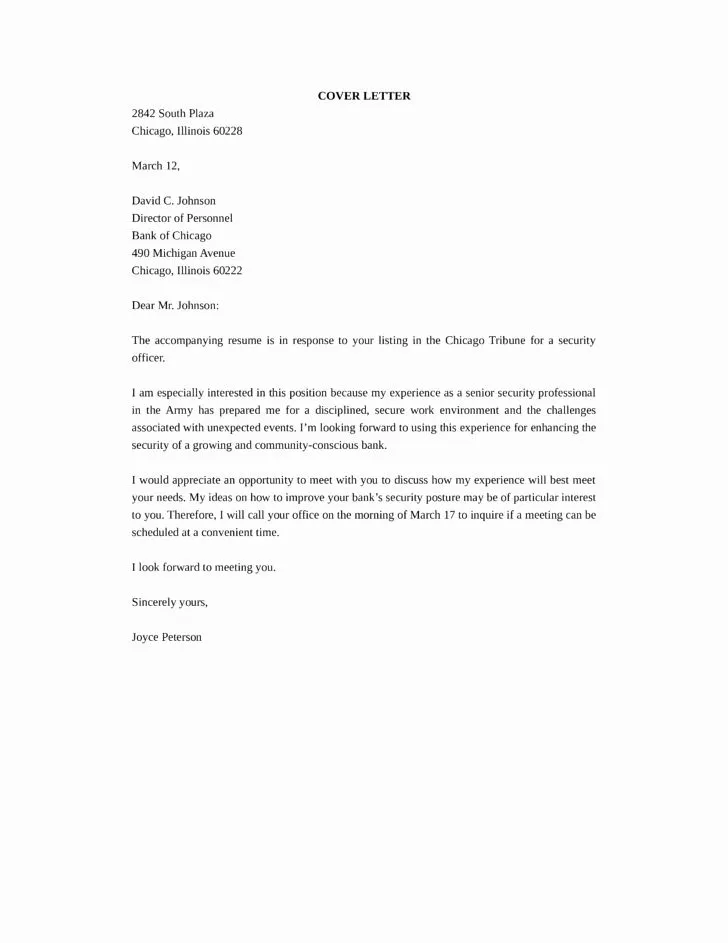
In the competitive field of security, a well-crafted cover letter is your first line of defense. It’s more than just a formality; it’s your opportunity to make a strong first impression and convince potential employers that you are the ideal candidate. A cover letter allows you to showcase your skills, experience, and personality in a way that a resume alone cannot. Think of it as your personal sales pitch, designed to highlight your value and secure that all-important interview. By investing time and effort into creating a compelling cover letter, you significantly increase your chances of landing your dream security job. This guide provides actionable strategies to help you write a cover letter that truly stands out.
Why a Great Cover Letter Matters for Security Professionals
For security professionals, a cover letter is crucial because it provides context to your resume. It lets you explain how your skills and experience align with the specific requirements of the job, and it gives you space to highlight relevant achievements that might not be immediately obvious from your resume. In a field where attention to detail is paramount, a well-written cover letter demonstrates your professionalism, communication skills, and commitment to excellence. A strong cover letter can also help you overcome potential shortcomings in your resume, such as gaps in employment or a lack of specific experience by highlighting transferable skills and your eagerness to learn and adapt.
Highlighting Your Security Experience
Your cover letter is the perfect place to expand on your security experience. Instead of just listing job titles and dates, provide specific examples of your responsibilities and accomplishments. Describe the environments you’ve worked in, such as corporate offices, retail locations, or government facilities, and detail the types of security measures you’ve implemented or managed. Mention specific incidents you’ve handled, detailing the steps you took to resolve them and the positive outcomes achieved. Quantify your achievements whenever possible, such as the number of security breaches prevented or the efficiency improvements you implemented. This will showcase your ability to make a significant impact in previous roles.
Detailing Relevant Security Skills

Clearly articulate your relevant security skills in your cover letter. These skills can be technical, such as proficiency in surveillance systems, access control, and alarm systems, or they can be soft skills, such as communication, conflict resolution, and critical thinking. Tailor your skills section to match the specific requirements of the job you are applying for. Use keywords from the job description to demonstrate that you have the skills the employer is looking for. Provide specific examples of how you have applied these skills in past roles. For example, describe how you used your surveillance skills to identify and apprehend a suspect or how you resolved a conflict through effective communication and de-escalation techniques.
Showcasing Certifications and Training
Certifications and training are extremely important in the security field. Highlight your relevant certifications and training in your cover letter to demonstrate your commitment to professional development and your expertise in specific areas of security. Mention any certifications such as Certified Protection Professional (CPP), Physical Security Professional (PSP), or other industry-recognized credentials. Include details about the training programs you have completed, such as those related to crisis management, first aid, or specialized security technologies. This helps provide a clearer picture of the training that you have completed to support your resume and experience. This will not only demonstrate your qualifications but also showcase your dedication to staying up-to-date with industry best practices.
Tailoring Your Cover Letter to the Job
One of the biggest mistakes job seekers make is using the same cover letter for every application. To truly ace your security job application, you must tailor your cover letter to each specific job and company. Generic cover letters are easily spotted and often get overlooked. Instead, customize your letter to reflect the requirements of the position and the values of the company. This will show the hiring manager that you have taken the time to understand their needs and are genuinely interested in the opportunity.
Researching the Company and Role

Before you start writing, research the company and the specific role. Visit the company’s website, read industry news, and look for information about their security policies, values, and recent projects. Understand the specific requirements of the job description, including the skills, experience, and qualifications they are looking for. This research will provide valuable insights that you can use to tailor your cover letter and demonstrate your understanding of the company’s needs. Use this information to address their needs and address them in your letter, providing a clear idea of your interest in the role.
Matching Skills to Job Requirements
Carefully review the job description and identify the key skills and experience required for the role. Then, in your cover letter, clearly match your skills and experience to those requirements. Use specific examples from your past experiences to demonstrate how you have successfully used these skills in previous roles. This could be anything from managing a team or specific technologies or any incident you managed to resolve the problem. By matching your skills to the job requirements, you will show the hiring manager that you are a strong fit for the position and that you understand what they are looking for in a candidate.
Emphasizing Achievements and Results
Instead of simply listing your responsibilities, use your cover letter to highlight your achievements and results. Use the STAR method (Situation, Task, Action, Result) to describe how you approached a challenge, the actions you took, and the positive outcomes you achieved. For example, if you improved security protocols, explain the situation, the tasks you undertook, the actions you took, and the quantifiable results, such as a reduction in security breaches or an increase in employee safety. Showcasing your achievements will demonstrate the value you can bring to the company and help you stand out from other candidates.
Formatting and Structure Best Practices

The way your cover letter looks is just as important as what it says. Use a professional and easy-to-read format. Choose a clean font, such as Arial or Times New Roman, and use a font size between 10 and 12 points. Ensure that your cover letter is well-organized, with clear headings and paragraphs. Use bullet points to highlight key skills and accomplishments. This format will make it easy for the hiring manager to quickly scan your cover letter and find the most important information.
Using a Professional Tone
Maintain a professional tone throughout your cover letter. Use formal language and avoid slang, jargon, or overly casual language. Address the hiring manager by name, if possible. Show enthusiasm for the position, but avoid being overly eager. Be confident and assertive in your writing, but avoid sounding arrogant or boastful. Focus on providing concise and factual information that demonstrates your qualifications and your interest in the role. Your cover letter is a reflection of your professionalism, and it should create a positive first impression for the hiring manager.
Keeping it Concise and Easy to Read
Hiring managers are busy people. Keep your cover letter concise and easy to read. Aim for a length of one page, and use clear and concise language. Break up long paragraphs into shorter, more manageable sections. Use bullet points to highlight key skills and accomplishments. Make sure to include keywords from the job description in your cover letter. This will help the hiring manager quickly understand the information you are providing and help with any applicant tracking systems the company might be using. A well-structured and concise cover letter will show that you respect the hiring manager’s time and that you can communicate effectively.
Proofreading and Editing Your Cover Letter

Before submitting your cover letter, proofread and edit it carefully. Check for any spelling, grammar, or punctuation errors. Ensure that your formatting is consistent and that the overall presentation is professional. Read your cover letter aloud to catch any awkward phrasing or unclear sentences. Ask a friend or family member to review your cover letter and provide feedback. A polished and error-free cover letter demonstrates your attention to detail and your commitment to excellence. A single mistake can cast doubt on your professionalism and reduce your chances of getting an interview.
Call to Action and Closing Your Letter
End your cover letter with a clear call to action. Express your interest in an interview and state your availability. Provide your contact information, including your phone number and email address. Thank the hiring manager for their time and consideration. Close with a professional salutation, such as “Sincerely” or “Respectfully.” This will help the hiring manager understand that you are eager for an interview and that you are truly interested in the position. A well-written conclusion can leave a lasting positive impression and increase your chances of moving forward in the hiring process. Use this cover letter to demonstrate your genuine interest in the role.
Writing a cover letter is an essential step in the job application process. By following the advice in this guide, you can create a cover letter that highlights your skills, experience, and qualifications and increase your chances of landing your dream job in the security field. Remember to tailor your cover letter to each job, focus on achievements, and proofread carefully. Good luck with your job search!