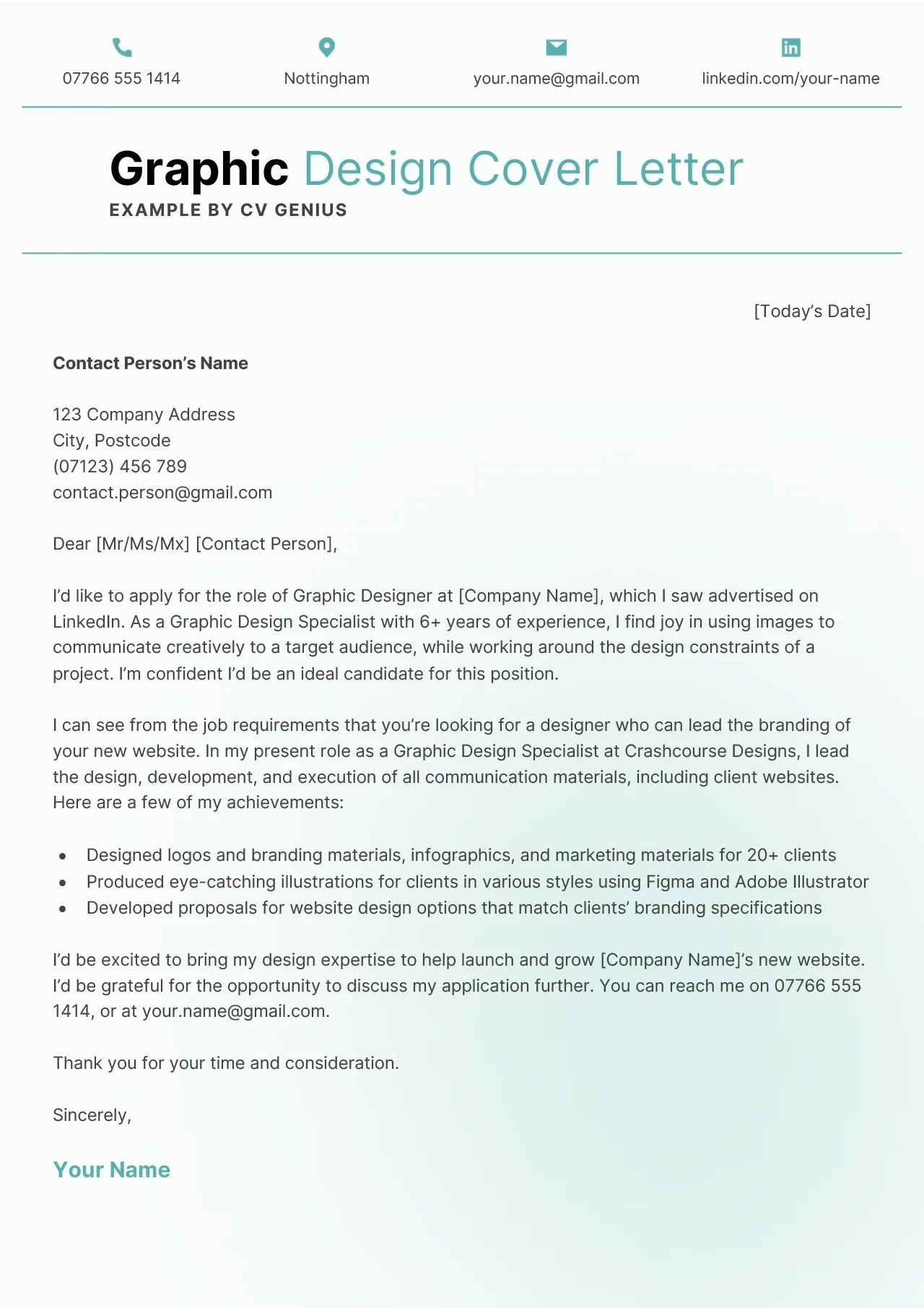
Crafting a Compelling Graphic Designer Cover Letter
In the competitive field of graphic design, a well-crafted cover letter is your first opportunity to make a lasting impression. It’s more than just a formality; it’s a chance to showcase your personality, skills, and passion for design. A compelling cover letter grabs the hiring manager’s attention, demonstrating why you’re the ideal candidate. It complements your portfolio and resume, providing context and insights that a list of achievements alone cannot convey. Think of it as your personal brand statement, carefully designed to resonate with the employer and set you apart from the competition. This guide will help you create a cover letter that impresses, increasing your chances of landing your dream job. A strong cover letter is crucial for the graphic designer role, as it provides a personal touch and explains why your specific skills are perfect for the job.
Understanding the Purpose of a Cover Letter
The primary goal of a graphic designer cover letter is to introduce yourself and highlight your suitability for the role. It allows you to elaborate on your resume, providing a narrative that connects your skills and experiences to the job requirements. The cover letter humanizes your application, revealing your enthusiasm and personality. It’s an opportunity to explain gaps in your experience, discuss your design philosophy, and express why you’re interested in the company. The cover letter also serves as a sample of your writing and communication skills, crucial in a field where clear and concise communication is essential. The purpose is to demonstrate how your creative abilities and personality align with the company culture.
Highlighting Your Unique Design Skills

Graphic designers possess a diverse set of skills, and your cover letter is the ideal place to showcase your specialties. Instead of simply listing your skills, provide examples of how you’ve used them to achieve successful outcomes. For instance, if you’re proficient in branding, describe a project where you developed a comprehensive brand identity, including logo design, color palettes, and typography. If you excel in UI/UX design, mention a project where you improved user engagement and satisfaction through innovative design solutions. Use action verbs to describe your contributions, such as ‘designed,’ ‘developed,’ ‘implemented,’ or ‘created.’ Tailor the skills you highlight to match the job description. This targeted approach demonstrates your understanding of the role and your ability to contribute effectively. Consider highlighting your ability to work with design software. (Image: design-skills.webp)
Showcasing Your Design Portfolio
Your design portfolio is your primary marketing tool, and your cover letter should direct the hiring manager to your best work. Provide a link to your online portfolio early in the letter, and briefly mention a few key projects that align with the job requirements. If you’re applying for a branding position, highlight projects that showcase your branding expertise. If the job emphasizes web design, feature your web design projects. Briefly describe each project, focusing on the problem you solved, the design process you followed, and the results you achieved. This will give the hiring manager context and encourage them to explore your portfolio further. Make sure that the projects align with the target job. (Image: design-portfolio.webp)
Formatting Your Graphic Design Cover Letter
The format of your cover letter is as important as its content. It reflects your attention to detail and professionalism. A well-formatted cover letter is easy to read and visually appealing. It should complement your design aesthetic, but not distract from the content. The goal is to make a professional statement and format it to be easily understood.
Choosing the Right Cover Letter Format

Several cover letter formats are suitable for graphic designers. The most common formats are the full block, modified block, and indented formats. The full block format is the most straightforward, with all text aligned to the left. The modified block format places your contact information, the date, and the closing on the right. The indented format is less common and features indents at the beginning of each paragraph. Choose the format that best suits your style and the company’s culture. Maintain consistency in your formatting throughout the letter. Using a simple and clear font like Arial or Calibri will help readability. Don’t get too creative with the format; the focus should be on the content.
Header and Contact Information
Your header should include your name, contact information (phone number and email address), and a link to your online portfolio. This information should be clearly displayed at the top of the letter, making it easy for the hiring manager to contact you. Ensure your contact information is up-to-date and professional. If you have a professional website or LinkedIn profile, include the links. Keep the header clean and uncluttered. The header is a quick way to provide essential information.
Salutation and Opening Paragraph
Address the hiring manager by name if possible. Research the company’s website or LinkedIn to find the hiring manager’s name. If you can’t find a specific name, use a general salutation like ‘Dear Hiring Manager’. The opening paragraph should immediately grab the reader’s attention. State the position you’re applying for and how you learned about the opportunity. Briefly mention your most impressive qualification or skill that aligns with the job requirements. Show your interest in the role and the company. The first paragraph sets the tone for the rest of the letter. (Image: cover-letter-format.webp)
Body Paragraphs and Content

The body of your cover letter is where you elaborate on your skills, experience, and accomplishments. Use the body paragraphs to highlight your key skills and experiences. Provide specific examples of how you’ve used your skills to achieve results in previous roles. Quantify your achievements whenever possible. For example, if you improved website conversion rates, mention the percentage increase. Tailor the content to match the job description and the company’s needs. Use action verbs and avoid jargon. Keep the paragraphs concise and focused. This is where you can let your skills and experience shine through.
Closing and Call to Action
In your closing paragraph, reiterate your interest in the position and the company. Thank the hiring manager for their time and consideration. Include a clear call to action, such as ‘I look forward to the opportunity to discuss my qualifications further in an interview.’ Reiterate your contact information. Proofread the entire letter before sending it to ensure there are no grammatical errors or typos. A strong closing leaves a positive final impression.
What to Include in Your Graphic Design Cover Letter
To create an impressive cover letter, several key elements must be included. These elements will showcase your skills, experience, and enthusiasm, increasing your chances of securing an interview.
Your Professional Summary and Experience

Begin with a brief professional summary that highlights your relevant experience and key skills. This section should provide a snapshot of your background and expertise. Mention your years of experience in graphic design and the types of projects you’ve worked on. Detail your experience by highlighting your past roles and responsibilities, and give specific examples of how you’ve contributed to successful projects. Tailor this section to match the job requirements. Include any notable achievements or awards. Be as concise as possible without omitting important details. Give the hiring manager a clear understanding of your professional background. Provide your experience and expertise. (Image: cover-letter-graphic-designer.webp)
Key Design Skills and Software Proficiency
Graphic designers must be proficient in various design software and possess a range of design skills. List the software and tools you’re skilled in, such as Adobe Creative Suite (Photoshop, Illustrator, InDesign), Sketch, Figma, and others. Describe your expertise in design principles, including typography, color theory, layout, and branding. Highlight your skills in specific areas, such as web design, UI/UX design, print design, or motion graphics. Quantify your software and design skills by providing examples of projects where you’ve used these skills to achieve successful results. Show the hiring manager that you have the technical skills needed for the role. Your expertise can come from educational or professional backgrounds.
Why You’re Interested in the Specific Role
Express your genuine interest in the specific role and the company. Explain why you’re drawn to this opportunity and what excites you about the company’s mission or values. Show that you’ve researched the company and understand its products, services, and target audience. Demonstrate how your skills and experience align with the company’s needs and goals. Avoid generic statements. Instead, focus on what makes this opportunity unique and how you can contribute. Mention your passion for design and how it aligns with the company’s values. Make sure you explain why you want this specific job.
Tailoring Your Cover Letter for the Job

A generic cover letter rarely impresses hiring managers. Customize your cover letter to align with the specific job description and the company’s needs. This demonstrates that you’ve taken the time to understand the role and are genuinely interested in the opportunity.
Researching the Company and Its Values
Before writing your cover letter, thoroughly research the company. Visit its website, read its ‘About Us’ section, and explore its social media profiles. Understand the company’s mission, values, and culture. Identify its recent projects and any awards it has received. Look for information about the company’s design style and the target audience it serves. This research will help you tailor your cover letter to demonstrate that you’re a good fit for the company. Understanding the company will provide the insights to help you tailor your letter. (Image: company-research.webp)
Matching Your Skills to the Job Description
Carefully read the job description and identify the key skills, qualifications, and experiences the employer is seeking. Highlight your relevant skills and experiences in your cover letter, providing specific examples of how you’ve demonstrated these skills in previous roles. Use keywords from the job description. Quantify your achievements whenever possible. For example, if the job description mentions a need for social media graphics, mention your experience in creating engaging social media content and the results you’ve achieved. By aligning your skills and experience with the job description, you show that you’re a strong candidate for the role. Show them how your skills and the job description line up to make you the perfect candidate.
Proofreading and Editing Your Cover Letter
A cover letter with errors can undermine your application. Proofread your cover letter multiple times to catch any typos, grammatical errors, or inconsistencies. A polished cover letter reflects your attention to detail and professionalism. Have a friend or colleague review your cover letter for a fresh perspective.
Common Mistakes to Avoid
Several common mistakes can damage your chances of making a positive impression. Avoid generic cover letters, as they show a lack of interest and effort. Do not just repeat your resume; instead, provide additional context and insights. Ensure that your cover letter is free of grammatical errors and typos. Don’t be too informal or casual, especially in your tone. Avoid using jargon that the hiring manager might not understand. Don’t make any false claims or exaggerate your skills or experience. Keep your cover letter concise and focused. A well-written and error-free cover letter increases your chances of getting an interview.
Proofreading Checklist
Before submitting your cover letter, use a proofreading checklist to ensure it’s error-free. Check for grammatical errors, including subject-verb agreement and tense consistency. Verify your spelling, paying attention to homophones and commonly misspelled words. Ensure the formatting is consistent and visually appealing. Confirm that all your contact information is accurate and up-to-date. Review the letter for clarity and conciseness. Make sure the content is tailored to the job description and the company. Ask a friend or colleague to review the cover letter. Proofreading helps you catch mistakes and improve your chances of getting hired. (Image: proofreading.webp)