Why a Cover Letter Matters
In the competitive landscape of professional services, a well-crafted cover letter is your first and often most critical opportunity to make a lasting impression. While your resume provides a snapshot of your skills and experience, the cover letter allows you to weave a narrative, demonstrating your understanding of the role and your genuine enthusiasm for the company. It’s where you can showcase your personality, communication skills, and the unique value you bring to the table. Ignoring the cover letter is a missed opportunity; it’s your chance to stand out from the crowd and persuade hiring managers to delve deeper into your qualifications. A strong cover letter demonstrates your proactive approach to the job search and your attention to detail, both highly valued traits in any professional setting. Moreover, it allows you to personalize your application, tailoring your message to the specific requirements of the role and the culture of the organization you are targeting.
Crafting a Compelling Header
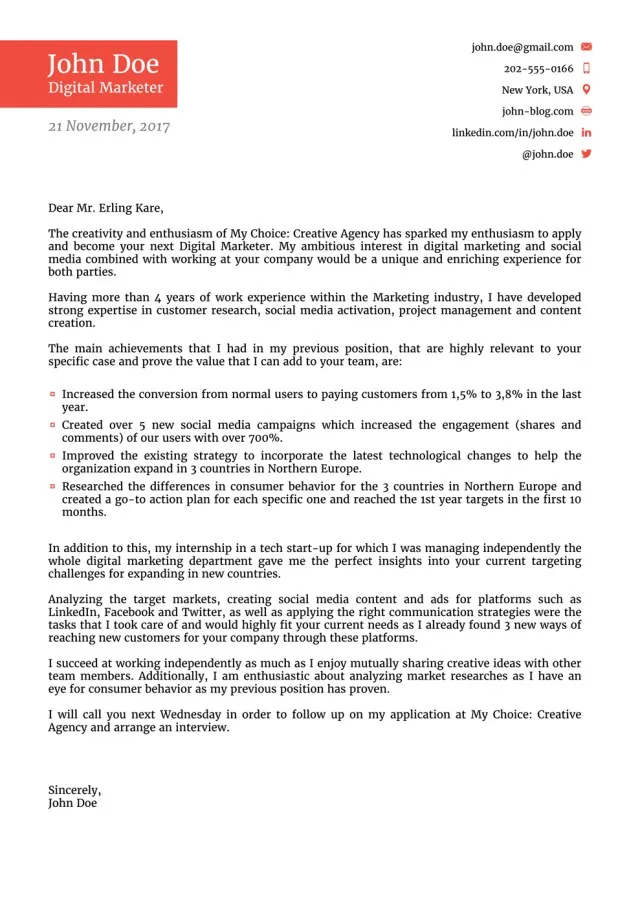
Your header sets the tone for your entire cover letter. It needs to be visually appealing, well-organized, and professional. Start with your name, contact information (phone number, email address, and LinkedIn profile URL if applicable). Ensure your header is easy to read and uses a font that is clear and professional, such as Arial or Times New Roman. The layout should be clean, avoiding excessive graphics or colors that might distract from the content. The header should seamlessly integrate with the rest of your cover letter, creating a cohesive and polished look. Make sure the header is consistent with the design of your resume to present a unified professional image. Finally, review it carefully to make sure all your contact information is accurate and up to date; a mistake here can lead to missed opportunities.
Your Contact Information

Make certain the provided contact information is accurate. This includes your full name, professional email address, and phone number. It’s also a good idea to include a link to your LinkedIn profile, showcasing your professional network and additional information about your career. Ensure your email address sounds professional; avoid using nicknames or unprofessional language. The primary purpose of this section is to facilitate communication, thus, double-check every detail before submitting your application to prevent any potential issues. This immediate accessibility provides recruiters a simple way to contact you, therefore, it is key for a successful job application. Accuracy and professionalism in your contact details are essential to make a positive first impression and increase your chances of getting a call.
Date and Recipient’s Details
Following your header, include the date you are sending the cover letter. Beneath the date, you should include the recipient’s information, which usually includes the hiring manager’s name, their title, and the company’s address. If you cannot find the hiring manager’s name, research on LinkedIn or the company’s website. Addressing the letter to a specific person demonstrates initiative and attention to detail, making a more personalized impression. If you cannot determine the hiring manager’s name, use a general greeting such as “Dear Hiring Manager.” Ensure the details you have are accurate. Errors here can make your application look careless. The recipient’s information is a crucial part of professional communication. Correct formatting shows that you have taken the time and effort to research the company and the role.
Writing a Strong Opening
The opening paragraph of your cover letter is your first and most important chance to grab the reader’s attention. It should immediately state the position you are applying for and where you saw the job posting. Following this, briefly summarize your key qualifications and why you are a good fit for the role. Aim for a compelling hook that gets the hiring manager interested in reading further. A strong opening should showcase your enthusiasm for the position and the company. Avoid generic openings such as “I am writing to express my interest…” Instead, try a more dynamic approach such as, “With a proven track record in…” or “I am excited to apply for…” Tailoring your opening to the specific role and the company’s needs demonstrates your initiative. Keep it concise, engaging, and specific to immediately demonstrate the value you bring.
Grab Their Attention Immediately

To immediately grab attention, begin with a strong statement that highlights your most relevant skills or achievements. Consider starting with a brief anecdote, a quantifiable accomplishment, or a specific skill that aligns perfectly with the job requirements. This approach showcases what makes you unique and encourages the reader to continue reading. Tailor your opening to the specific job description; use keywords from the job posting to demonstrate that you have read and understood the role’s requirements. Showing that you know the company is a good move, so mention anything relevant to their mission or work. The goal is to make a memorable first impression, setting the stage for the rest of your cover letter. A creative opening can significantly enhance your chances of being selected.
Highlighting Your Value
This section is where you clearly demonstrate your value. The body of your cover letter should delve deeper into how your skills and experiences match the job requirements. Use specific examples to show your capabilities and how you have achieved results in the past. Tailor each cover letter to the specific job and company, highlighting the skills and experiences most relevant to the position. Avoid simply listing your resume details. Instead, expand on your accomplishments, explaining what you did, how you did it, and the results you achieved. This demonstrates your value to the hiring manager and shows that you can contribute to the company’s success. Use strong action verbs to describe your accomplishments, such as “managed,” “implemented,” and “achieved.” Focus on the value you bring to the employer by showing your success and how it can translate to the new role.
Showcasing Relevant Skills
Focus on the skills most relevant to the job. Review the job description carefully and identify the key skills the employer is looking for. Then, use your cover letter to showcase how you possess and have utilized these skills. Give specific examples from your work experience to illustrate how you’ve used these skills to achieve positive outcomes. Do not just state you have a skill, provide evidence to back it up. You can include both hard skills (technical abilities) and soft skills (communication, teamwork). The goal is to provide concrete evidence that you can perform the job effectively. Quantify your achievements whenever possible (e.g., “Increased sales by 20%”). This helps hiring managers see the value you will bring to their company.
Quantifying Your Achievements

Quantifying your achievements makes your cover letter more persuasive and easier to understand. Instead of simply stating that you “improved efficiency,” say that you “reduced processing time by 15%.” Use numbers and metrics to demonstrate your impact in previous roles. Provide specific details about your accomplishments, such as the size of the project you worked on, the amount of money you saved or generated, or the number of people you managed. This approach brings your experiences to life and gives hiring managers a clear understanding of your capabilities. The more quantifiable information you provide, the more impressive and memorable your cover letter becomes, increasing your chances of getting the job.
Demonstrating Your Passion
Show your genuine interest in the role and the company. Share what excites you about the opportunity, explaining why this specific position aligns with your career goals. You can talk about the company’s mission, values, or any specific projects that have captured your interest. Show that you have done your research by mentioning something specific that resonates with you. This shows you have taken the time to learn about the company and aren’t just sending a generic application. Your passion should be genuine and enthusiastic. It’s okay to express your enthusiasm in a professional and appropriate way. This personal touch can significantly increase your chances of leaving a memorable impression and setting yourself apart from other applicants.
Closing with Impact
Your closing paragraph provides an opportunity to summarize your key qualifications and reiterate your interest in the position. End with a strong statement that reinforces your value to the company and encourages the reader to take action. This section must be concise and leave a lasting impression. Avoid ending with a generic sentence, such as “Thank you for your time.” Instead, use phrases that suggest a strong desire to be considered for the role, such as “I am confident that I can make a significant contribution to your team.” Reiterate your enthusiasm for the opportunity and express your gratitude for the reader’s time. A strong closing enhances your application, making the hiring manager remember you positively.
Expressing Gratitude and Encouraging Action

Express your gratitude for the reader’s time and consideration. It is also a perfect opportunity to encourage action. Mention that you are available for an interview and that you look forward to the chance to discuss how you can contribute to the company. You can thank them for the opportunity and reiterate your enthusiasm. Do not forget to include a call to action, urging them to contact you. A clear call to action assures they know the next step. Reiterate your interest in the position and your eagerness to contribute to the company’s success.
Proofreading and Polishing
Before submitting your cover letter, meticulously proofread it. Ensure your cover letter is free of grammatical errors, spelling mistakes, and typos. Check for consistency in formatting, font size, and style. Consider reading your cover letter aloud to check for any awkward phrasing or unclear sentences. Ask a friend, colleague, or mentor to review your cover letter and provide feedback. They might catch errors you overlooked. A well-written and error-free cover letter demonstrates your professionalism and attention to detail, significantly increasing your chances of getting a positive response. Remember, your cover letter is an advertisement for your abilities; it needs to be polished.
Ensuring Clarity and Accuracy
Clarity and accuracy are essential for the success of your cover letter. Ensure your sentences are clear, concise, and easy to understand. Avoid using jargon or technical terms that the hiring manager might not be familiar with. Be accurate in your facts and figures. Double-check names, titles, and company information. Keep the information concise and focused on your most relevant skills and experiences. A clear and accurate cover letter reflects well on your attention to detail and your ability to communicate effectively. Proofread the document carefully to avoid errors.
Formatting for Readability

Use a professional font (such as Times New Roman or Arial) in a readable size (11-12 points). Use a clean and organized layout with clear headings and bullet points to make the content easy to scan. Ensure that your cover letter has appropriate margins and spacing to prevent it from looking cluttered. Break up large blocks of text into smaller paragraphs to improve readability. Properly formatted cover letters are more visually appealing and encourage the hiring manager to read the content. This attention to detail shows your professionalism and increases the chances of a positive response.