Understanding the Importance of a Cover Letter for Freshers
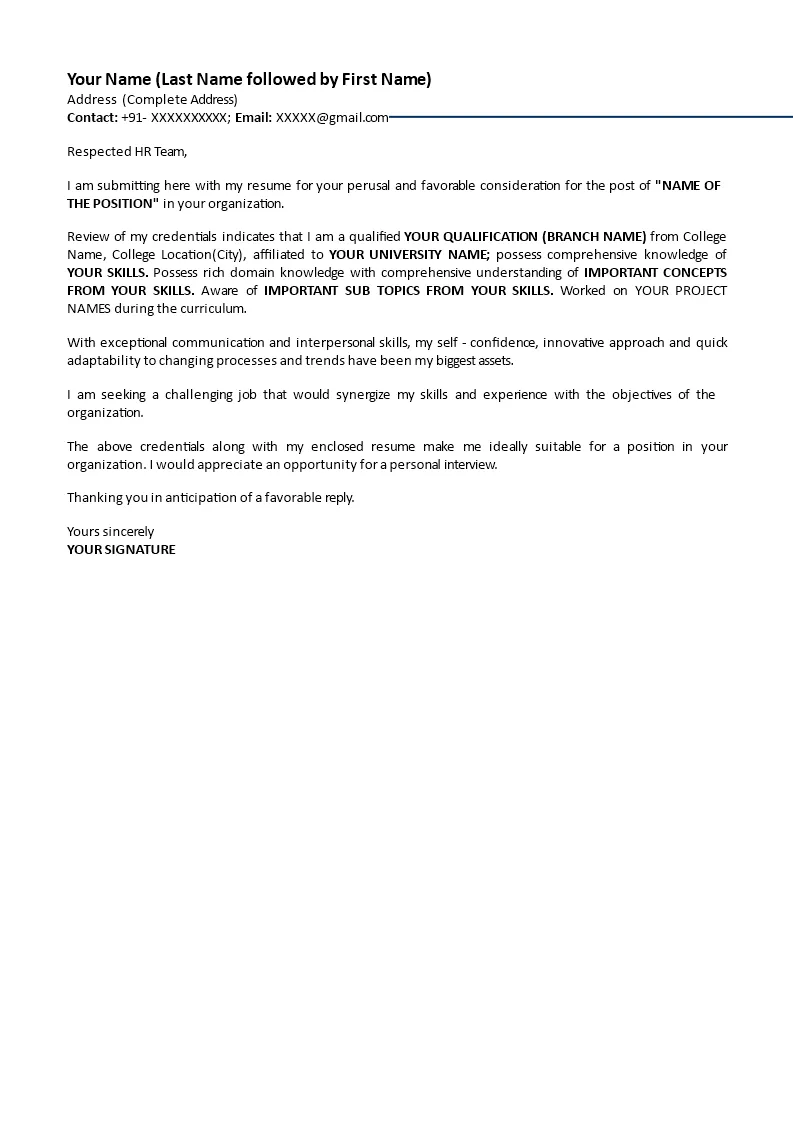
As a fresher, your cover letter is often the first impression you make on a potential employer. It’s your opportunity to showcase your personality, enthusiasm, and suitability for the role, even if your resume is light on professional experience. A well-crafted cover letter can significantly increase your chances of getting an interview and landing your dream job. It provides context to your resume, explaining your career aspirations, and demonstrating your understanding of the company and the role. In a competitive job market, a strong cover letter can set you apart from other candidates.
Why a Cover Letter Matters
A cover letter serves several crucial purposes. First, it allows you to elaborate on your skills and experiences in a way that a resume cannot. You can explain how your academic projects, internships, or volunteer work have prepared you for the job. Second, it demonstrates your written communication skills, an essential asset in virtually any professional setting. Third, it provides an opportunity to express your genuine interest in the company and the specific role, showing that you’ve taken the time to understand their mission and values. Lastly, a well-written cover letter can highlight your soft skills, such as communication, teamwork, and problem-solving abilities, which are often as important as technical skills.
Common Mistakes to Avoid

Several common mistakes can undermine your cover letter. Avoid generic letters that could be sent to any company; personalize each cover letter for the specific role and company. Don’t simply reiterate your resume; instead, provide additional context and insights. Grammar and spelling errors are major red flags, so always proofread carefully. Never use jargon or overly complex language that might confuse the reader. Avoid being overly formal or using cliché phrases. Keep your cover letter concise, ideally no more than one page. Focus on what you can offer the employer rather than listing your needs or expectations.
Key Components of a Standout Cover Letter
Contact Information and Salutation
Start with your contact information, including your name, phone number, email address, and LinkedIn profile URL (if applicable). Address the hiring manager by name if possible, showing that you’ve done your research. If you can’t find a specific name, use a professional salutation such as “Dear Hiring Manager” or “Dear [Department Name] Team”. Ensure your email address is professional and appropriate, avoid using nicknames or unprofessional language. This sets a positive tone from the outset and demonstrates attention to detail, which are crucial in your cover letter for freshers.
The Opening Paragraph Grab Attention
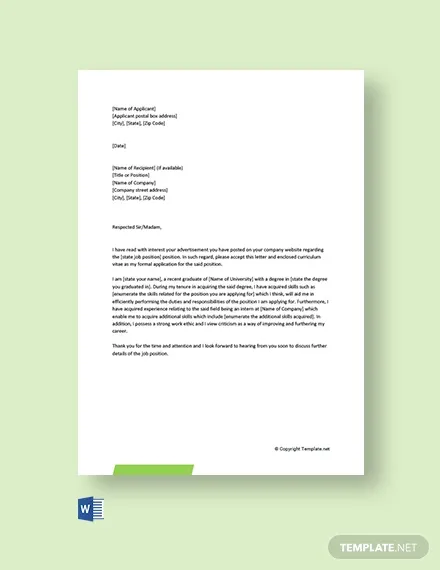
The opening paragraph is your chance to make a strong first impression. Briefly state the position you’re applying for and how you learned about it. Immediately capture the reader’s interest by highlighting your most relevant skills or experiences, or expressing your enthusiasm for the company. Make it clear why you’re a good fit and what unique value you can bring. This paragraph should be concise, impactful, and designed to encourage the reader to continue reading the rest of your cover letter. For instance, consider mentioning a specific project or achievement that aligns with the job requirements to grab their attention.
Highlighting Your Skills and Achievements
In the body paragraphs, delve deeper into your skills and accomplishments. Use specific examples from your academic projects, internships, or extracurricular activities to demonstrate your abilities. Connect these examples directly to the job requirements. Explain how your skills align with the role’s demands and the company’s needs. This is where you showcase your understanding of the role and your potential to contribute. Use action verbs to describe your accomplishments and focus on what you achieved, not just what you did. Tailor your examples to match the keywords and requirements listed in the job description.
Showcasing Relevant Projects or Coursework
For freshers, academic projects and coursework are crucial for demonstrating practical skills and knowledge. Briefly describe relevant projects you’ve completed, highlighting your role and the skills you utilized (e.g., project management, coding, data analysis). Mention any technologies or tools you’re proficient in. Explain the outcomes of these projects and how they relate to the job requirements. Showcase any awards or recognition you received for your work. Focus on projects that are most relevant to the position, tailoring your descriptions to align with the company’s needs. For example, if you’re applying for a software development role, highlight projects involving programming languages relevant to the company.
Quantifying Accomplishments

Quantify your achievements whenever possible. Instead of saying “Managed a team,” say “Managed a team of 5 students, delivering a project on time and under budget.” Use numbers, percentages, and other metrics to demonstrate the impact of your work. Quantifying your accomplishments provides concrete evidence of your abilities and helps the hiring manager understand the value you can bring. For instance, if you improved a process, specify the percentage improvement. If you contributed to a project, mention your specific contributions and the results achieved. Concrete examples, supported by data, make your cover letter more persuasive.
Expressing Enthusiasm and Company Research
Show your genuine enthusiasm for the company and the specific role. Demonstrate that you’ve researched the company by mentioning its recent projects, values, or mission. Explain why you’re interested in working for this particular company and how your goals align with theirs. Highlight any specific aspects of the company or role that excite you. Showing genuine interest makes you stand out from other candidates. For instance, mention a recent company initiative that aligns with your interests or skills and shows that you are a good fit and are actively interested in a particular role.
Closing the Letter and Call to Action
In your closing paragraph, reiterate your interest in the role and the company. Express your confidence in your ability to contribute to their team. Include a call to action, such as inviting the hiring manager to contact you for an interview. Thank the reader for their time and consideration. Keep the tone professional and enthusiastic. End with a formal closing, such as “Sincerely” or “Best regards,” followed by your name. Your closing should leave a lasting positive impression, encouraging the reader to contact you to learn more.
Formatting and Proofreading

Choosing the Right Font and Layout
Choose a clean, easy-to-read font such as Arial, Times New Roman, or Calibri. Use a font size of 11 or 12 points. Maintain consistent formatting throughout your cover letter. Use a professional layout with clear headings, ample white space, and justified or left-aligned text. Ensure the document is well-organized, making it easy for the reader to scan and find key information. Avoid excessive use of bolding, italics, or underlining. Make sure your cover letter looks neat and professional, and is a good representation of you as a professional.
Proofreading for Errors
Proofread your cover letter multiple times. Check for grammar, spelling, punctuation, and formatting errors. Use a grammar checker, but also read the letter aloud to catch any awkward phrasing or mistakes. Ask a friend, professor, or career counselor to review your cover letter. Ensure your contact information is accurate and up-to-date. Proofreading is crucial; errors create a negative impression, showing a lack of attention to detail. Thorough proofreading ensures your cover letter is polished and professional, increasing your chances of getting the job. Check your cover letter several times to ensure that it is error-free.
Tailoring Your Cover Letter

Researching the Company
Before writing your cover letter, research the company thoroughly. Visit their website, read their blog, and check their social media pages to understand their mission, values, and recent activities. Identify the specific requirements and preferences of the role you’re applying for. Tailor your cover letter to reflect this understanding. Mention specific projects, initiatives, or values of the company to demonstrate your interest. Researching the company allows you to create a targeted cover letter that showcases your genuine interest and suitability for the role. This shows that you’re invested in the company.
Customizing for Each Job
Never use a generic cover letter. Customize each cover letter for the specific job you’re applying for. Review the job description carefully and identify the key skills, experiences, and qualities the employer is seeking. Highlight the relevant qualifications and experiences from your background. Use keywords from the job description in your cover letter to show that you’re a good fit. This level of customization shows that you’ve taken the time to understand the role and the company’s needs. Tailoring your cover letter greatly increases your chances of getting noticed by the hiring manager.
Additional Tips and Resources

Action Verbs to Use
Use strong action verbs to describe your accomplishments and skills. Examples include “achieved,” “managed,” “developed,” “implemented,” “led,” “collaborated,” “created,” “designed,” and “improved.” Action verbs make your cover letter more dynamic and impactful. Avoid passive voice and instead focus on what you did and the results you achieved. Make sure that you use the right action verbs to describe your achievements. This helps the hiring manager to understand your skills and what you are capable of doing. Using such verbs in your cover letter will increase its impact.
Cover Letter Examples
Review cover letter examples for inspiration and guidance. Search online for templates or examples tailored to freshers. Customize these examples to fit your background and the job you’re applying for. Adapt the structure, language, and content to reflect your unique skills and experiences. Remember that each cover letter should be personalized to reflect your qualifications and your knowledge about the role and the organization. Use examples as a starting point but personalize them to ensure your cover letter shines and demonstrates that you’re a good fit for the role.