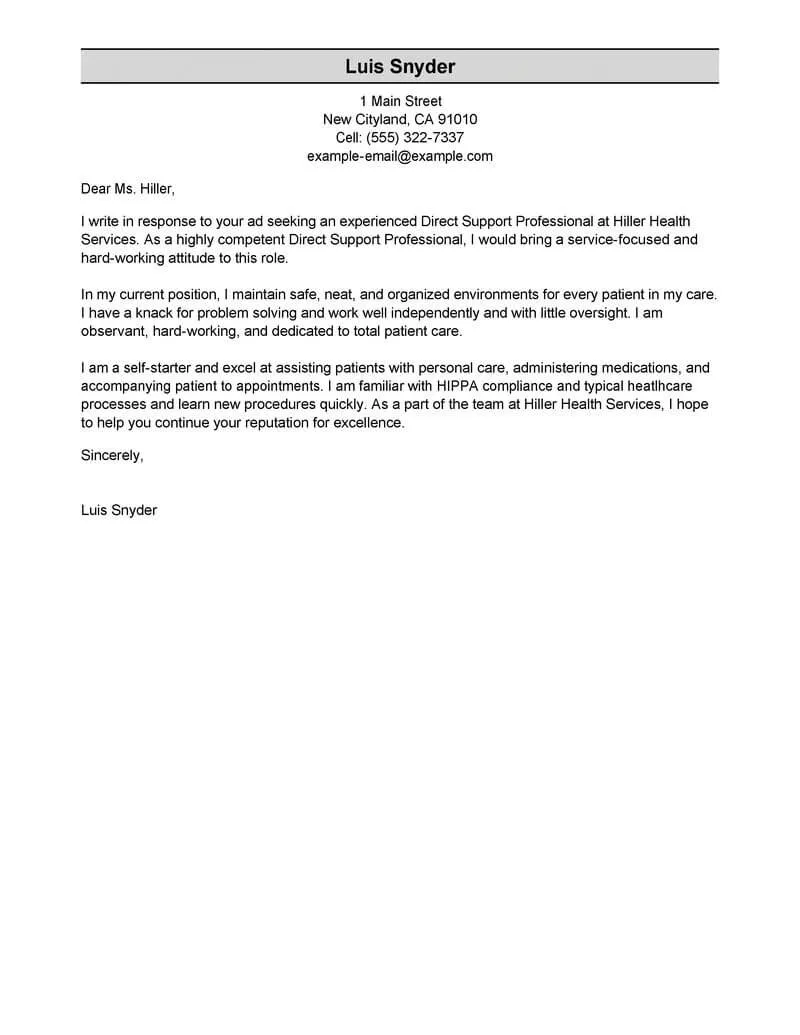
Why a Direct Care Worker Cover Letter is Important
A compelling cover letter is your initial opportunity to make a strong first impression when applying for a Direct Care Worker position. It serves as a crucial introduction, complementing your resume and providing a platform to highlight your unique skills, experiences, and dedication to caregiving. In the competitive field of direct care, where empathy and compassion are as important as technical skills, a well-crafted cover letter can set you apart. It allows you to go beyond a list of qualifications and demonstrate your genuine interest in the role, the organization, and the individuals you’ll be caring for. The cover letter provides the context needed to understand the significance of your previous experiences and how they translate to the specific requirements of the job. By showcasing your understanding of the challenges and rewards inherent in direct care work, you create a powerful narrative that resonates with potential employers.
Key Elements of a Successful Direct Care Worker Cover Letter
A successful cover letter for a Direct Care Worker position requires a strategic approach that balances professionalism with genuine empathy. It should be clear, concise, and tailored to the specific job requirements. Begin by clearly stating the position you are applying for and where you found the listing. Then, highlight your most relevant qualifications and experiences, focusing on how they align with the needs of the role. Include specific examples that demonstrate your skills in communication, patience, and problem-solving. Ensure your letter reflects your understanding of the responsibilities involved in direct care, such as assisting with daily living activities, providing emotional support, and maintaining a safe and comfortable environment. Express your passion for helping others and your commitment to providing high-quality care, and conclude with a strong call to action, inviting the employer to contact you for an interview.
Contact Information and Date

Start your cover letter by including your contact information at the top. This should include your full name, phone number, email address, and optionally, your LinkedIn profile URL if you have one. This allows the hiring manager to easily reach you. Following your contact information, include the date you are writing the letter. Ensure that your contact information is up-to-date and professional. Next, include the recipient’s information, typically the hiring manager’s name, their title, and the company’s address. If you are unsure of the hiring manager’s name, research the company website or LinkedIn to find out. Addressing the letter to a specific person shows that you have put in effort and attention to detail, which will impress the hiring manager.
Greeting the Hiring Manager
The greeting sets the tone of your cover letter and should be professional and courteous. Avoid generic greetings like “To Whom It May Concern.” Instead, try to find the hiring manager’s name. If you know the hiring manager’s name, use a formal greeting such as “Dear Mr./Ms. [Last Name].” If you cannot find the hiring manager’s name, you can use a professional alternative such as “Dear Hiring Manager,” or “Dear [Company Name] Hiring Team.” Researching the company and using a more personalized greeting can significantly impact the employer’s view of your letter. Be mindful of the company’s culture and ensure that your greeting is appropriate for the environment. Regardless of the greeting you choose, ensure it reflects respect and professionalism, as this is the first point of interaction.
Your Opening Paragraph Grab Attention
The opening paragraph of your cover letter is your chance to capture the reader’s attention immediately. Start with a concise statement of the position you are applying for and how you learned about it. Briefly highlight your most relevant qualifications or a key experience that makes you a strong candidate. Avoid generic statements like, “I am writing to express my interest.” Instead, use a more engaging and impactful opening. For example, you might start by mentioning a specific achievement or a skill that directly aligns with the job description. Express your enthusiasm for the role and the organization. This paragraph sets the stage for the rest of your letter, so make it impactful and demonstrate your understanding of the role and the needs of the employer. The goal is to get the reader interested in continuing to read the rest of your letter.
Highlight Relevant Skills and Experience

The body of your cover letter should provide a detailed overview of your skills and experience, directly relating to the job requirements. Start by identifying the key skills and experiences the employer is seeking, usually outlined in the job description. Focus on these areas and provide specific examples from your past roles that showcase your ability to perform the duties required. Use action verbs to describe your accomplishments and responsibilities. For example, instead of saying you “assisted” clients, say you “provided assistance to clients with daily living activities, including personal hygiene, medication reminders, and meal preparation.” Quantify your achievements whenever possible. If you’ve worked in a caregiving role before, mention the number of clients you assisted or the positive outcomes achieved. The goal is to demonstrate how your skills and experience align with the needs of the position, making you a strong candidate.
Detailing Your Caregiving Experience
When detailing your caregiving experience, be specific about your responsibilities and the populations you have worked with. Describe the types of care you have provided, such as personal care, medication management, mobility assistance, and emotional support. Explain the environments you have worked in, whether in private homes, assisted living facilities, or hospitals. Highlight any specializations, such as experience with dementia, Alzheimer’s disease, or other specific medical conditions. Mention any certifications or training related to caregiving, like CPR, First Aid, or specialized care certifications. Provide examples of challenging situations you have handled and how you managed them. Focus on the positive impact you have had on the lives of those you have cared for. The goal is to illustrate your competence, compassion, and dedication to providing excellent care, showing the employer you understand the direct care worker responsibilities.
Showcasing Your Soft Skills
Direct Care Worker positions require a blend of technical expertise and strong interpersonal skills. In your cover letter, make sure to highlight the soft skills that are essential for this role. These include empathy, patience, communication, and problem-solving skills. Provide concrete examples of how you have demonstrated these skills in previous roles. For example, describe a situation where you communicated effectively with a patient or family member to resolve a conflict. Mention your ability to maintain a calm demeanor under pressure or your knack for building rapport with individuals from diverse backgrounds. Highlight your ability to work collaboratively with other healthcare professionals. These skills are as vital as your technical abilities, as they demonstrate your ability to provide not only physical care, but also emotional support, which enhances the overall quality of care you provide.
Quantifying Your Achievements

Whenever possible, quantify your achievements in your cover letter to provide concrete evidence of your impact. Using numbers and statistics helps to illustrate your accomplishments and makes your claims more credible. For example, instead of saying, “I improved patient satisfaction,” you could say, “Improved patient satisfaction scores by 20%.” If you have experience with medication management, mention how many patients you assisted with their medications daily. If you have experience working with a specific medical condition, mention the percentage of patients with that condition you have helped. By providing numbers, you demonstrate your performance and the value you bring to the role. Quantification helps the employer understand the tangible results of your actions and the positive impact you’ve made.
Demonstrating Your Passion for Caregiving
Demonstrating your passion for caregiving is crucial for a Direct Care Worker cover letter. It sets the tone for the whole application. It shows that you are not just looking for a job, but that you have a genuine calling to help people. Write about what motivates you to work in this field and what aspects of caregiving bring you the most satisfaction. Reflect on instances where you made a positive impact on someone’s life. Express your commitment to providing the best possible care and creating a positive environment for the individuals you support. Show your eagerness to learn and grow within the role. This passion is what makes you stand out from other applicants and shows the employer that you are committed to the well-being of those in your care. It adds a personal touch to your letter and makes your application more memorable.
Expressing Your Understanding of the Role
Show your understanding of the Direct Care Worker role by demonstrating that you understand the responsibilities, challenges, and rewards involved. Briefly describe your awareness of the physical, emotional, and social needs of the individuals you will be assisting. Address how you plan to manage difficult situations, whether it is dealing with a patient’s difficult behavior, managing complex medical conditions, or navigating challenging family dynamics. Mention your knowledge of the role’s required ethical guidelines and your commitment to respecting patient privacy and dignity. Illustrate your knowledge of the importance of maintaining a safe and supportive environment, which includes safety protocols and proper communication. Showing that you have thoroughly considered the role makes you appear better-prepared for the realities of the job, which will impress any hiring manager.
Mentioning Your Knowledge of Relevant Certifications and Training

Always mention any relevant certifications, training, or licenses you possess in your cover letter. Include details such as the name of the certification, the issuing organization, and the date of completion. Common certifications for Direct Care Workers include CPR, First Aid, and any specific training in the care of individuals with disabilities or specific medical conditions. If you have completed any specialized training programs, such as those related to dementia care, medication management, or behavioral health, be sure to list these as well. Also, mention any ongoing professional development activities you are involved in, which shows your commitment to continuous learning. These details reinforce your professional qualifications and demonstrate that you meet the requirements of the position, making you a more desirable candidate. This helps to show the employer that you are both qualified and prepared to handle the demands of the job.
Closing and Call to Action
Conclude your cover letter with a professional closing and a clear call to action. Thank the hiring manager for their time and consideration. Reiterate your interest in the position and express your enthusiasm for the opportunity. State your availability for an interview and provide your contact information again for easy reference. A strong call to action might be, “I am eager to discuss how my skills and experience can contribute to the success of [Company Name]. I am available for an interview at your earliest convenience and can be reached at [Phone Number] or [Email Address].” End the letter with a professional closing, such as “Sincerely” or “Best regards.” This shows your professionalism and ensures that your contact details are easily accessible. A well-crafted call to action encourages the hiring manager to take the next step.
Proofreading and Formatting Your Cover Letter
Proofreading and formatting your cover letter are essential steps to ensure it is polished and professional. Carefully review your cover letter for any grammatical errors, spelling mistakes, and typos. Read it aloud to catch any awkward phrasing or unclear sentences. Ask someone else to review your cover letter for an unbiased perspective. Ensure the letter is well-formatted with a clear and easy-to-read font, such as Times New Roman or Arial, and use consistent formatting throughout. Use appropriate spacing between paragraphs and sections for readability. Use a professional font and layout. Make sure the letter aligns with the other elements of your application. A well-formatted and error-free cover letter shows that you are detail-oriented and committed to presenting yourself in the best possible light. Poorly formatted and error-filled cover letters can make you appear less professional, which can damage your chances of getting an interview.
Common Mistakes to Avoid

Avoid common mistakes to ensure your Direct Care Worker cover letter leaves a positive impression. Avoid generic cover letters. Tailor each letter to the specific job description. Do not simply rehash your resume, provide additional context and insights. Avoid excessive length; keep the letter concise, typically one page. Do not use jargon or overly complex language. Ensure your letter is free of grammatical errors, spelling mistakes, and typos. Avoid negativity and do not complain about previous employers or situations. Never lie or exaggerate your skills or experience. Avoid using cliché phrases. Take the time to research the company and address the hiring manager directly if possible. By avoiding these common mistakes, you can create a cover letter that effectively showcases your qualifications and helps you stand out from the competition.
Tailoring Your Cover Letter to the Job Description
Customizing your cover letter to match the specific requirements and expectations outlined in the job description is a key element to success. Carefully review the job description and identify the key skills, experiences, and qualifications the employer is seeking. Then, tailor your cover letter to emphasize how your background aligns with these requirements. Use the same keywords and phrases that are used in the job description, but be sure not to simply copy and paste content. Provide specific examples from your past experiences that demonstrate your ability to meet the employer’s needs. For each point in the job description, cite your direct, relevant experience. Show your understanding of the role by demonstrating your awareness of the organization’s mission, values, and the specific needs of the individuals you will be supporting. By tailoring your cover letter, you demonstrate that you have taken the time to understand the role and are an ideal fit for the position.
Seeking Feedback and Revision
Before submitting your cover letter, it is important to seek feedback and revise your document. Ask friends, family members, or career counselors to review your cover letter and provide constructive criticism. Ask them to evaluate the clarity, flow, and overall effectiveness of your letter. Seek feedback on how well your skills and experiences are presented and if your letter is free of errors. Incorporate the feedback you receive to improve your cover letter. Be open to suggestions for changes or revisions. Often, a fresh perspective can help you identify areas where your cover letter can be improved. Once you have made revisions, ask someone to proofread your cover letter one last time before submitting your application. This process will ensure your cover letter is professional, well-written, and effective in helping you stand out from the competition.