Top 5 Cover Letter Secrets for Education Professionals
In the competitive field of education, a compelling cover letter is your first opportunity to make a lasting impression on potential employers. It’s more than just a formality; it’s a chance to showcase your unique qualifications, passion, and suitability for a specific role. This guide delves into the top 5 secrets to crafting cover letters that stand out, ensuring you get noticed and land your dream job in education. Whether you’re a seasoned educator or just starting your career, these strategies will help you create a cover letter that effectively communicates your value and sets you apart from other applicants. Remember, a well-crafted cover letter is your personal marketing tool, so make it count.
Highlighting Your Skills and Experience
Your cover letter should be a concise and powerful summary of your skills and experience as an educator. Start by identifying the key skills required for the position you are applying for and align your experiences with those needs. Provide specific examples that demonstrate how you have successfully utilized these skills in the past. This section is about more than just listing your qualifications; it’s about illustrating how you’ve made a tangible difference in the classroom. Focus on the impact you’ve had on student learning, classroom management, curriculum development, and any other relevant areas. Use action verbs to describe your accomplishments and quantify your achievements whenever possible, such as the number of students you’ve taught, the improvement in test scores, or the implementation of successful educational programs.
Tailoring to the Job Description

Every job application deserves a tailored cover letter. Generic letters that fail to address the specific requirements of the position are easily dismissed. Carefully read the job description, identifying the key skills, qualifications, and experiences the employer is seeking. Then, customize your cover letter to reflect how your background aligns with those specific needs. This may involve adjusting your language, highlighting particular experiences, or reordering the information to emphasize the most relevant aspects of your qualifications. Show the hiring manager that you understand their needs and are the perfect fit for the role by directly addressing their requirements. Remember, the goal is to demonstrate that you have not only the necessary skills but also the ability to contribute to the school’s specific goals and values.
Quantifying Achievements
Numbers speak volumes. Instead of simply stating you’ve improved student performance, provide specific data to back it up. Quantify your accomplishments whenever possible to make your cover letter more impactful. For example, “Increased student test scores by 15%,” “Implemented a new reading program that improved literacy rates,” or “Managed a classroom of 30 students effectively.” Use metrics to showcase the tangible outcomes of your work and demonstrate your value to potential employers. Quantifiable achievements make your cover letter more credible and show that you can deliver results. When you demonstrate success with data, you set yourself apart from candidates who only provide vague descriptions of their accomplishments. This level of detail gives hiring managers concrete evidence of your effectiveness.
Demonstrating Passion for Education
Your passion for education should be evident throughout your cover letter. Express your enthusiasm for teaching, student development, and the specific subject or grade level you are interested in. Share what motivates you to teach and why you are drawn to the field of education. This section is a chance to show your personality and connect with the hiring manager on a deeper level. Highlight any volunteer work, professional development, or personal experiences that demonstrate your commitment to education. Show the reader that you are not only qualified but also truly care about making a difference in students’ lives. Expressing your passion helps you stand out and demonstrates that you are more than just a candidate; you are a dedicated educator committed to excellence.
Showcasing Relevant Qualifications

Clearly and concisely outline your relevant qualifications. This may include your teaching certifications, degrees, any specializations, and specific training you have received. Make sure your qualifications align with the requirements listed in the job description. If you have experience with specific curricula, technologies, or teaching methods, highlight them here. Emphasize any professional development activities, workshops, or courses you have completed. Ensure your qualifications are presented in an easy-to-read format, and consider using bullet points or short paragraphs to make the information accessible. The goal is to quickly demonstrate that you possess the necessary credentials to excel in the role. Be specific and avoid jargon that might confuse a reader.
Emphasizing Teaching Philosophy
Include a brief statement about your teaching philosophy. This can include your beliefs about student learning, classroom management, and educational goals. Share how you create a positive and inclusive learning environment and mention your approach to student engagement and assessment. Your philosophy should align with the values and mission of the school or district. Give examples of how you put your philosophy into practice in the classroom. This section offers insight into your teaching style and helps the hiring manager understand how you approach student learning. A well-articulated teaching philosophy shows that you are a thoughtful, reflective, and dedicated educator who is committed to student success.
Formatting and Presentation
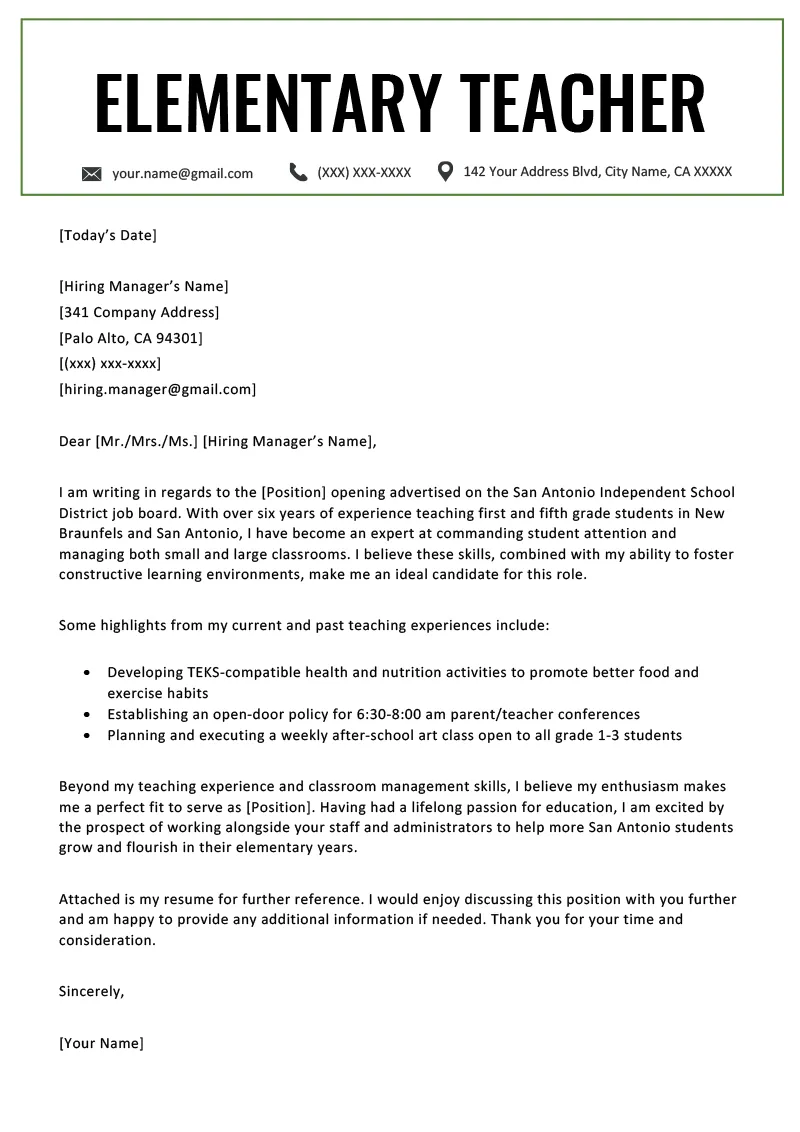
The appearance of your cover letter matters. Ensure your cover letter is well-formatted, easy to read, and free of errors. Use a professional font, such as Times New Roman or Arial, and maintain a consistent font size throughout the document. Use clear headings and subheadings to break up the text and improve readability. Avoid using excessive bolding, underlining, or italics. Your cover letter should be polished and presented as a professional document. Remember, the goal is to present yourself as an organized and detail-oriented individual who takes pride in their work.
Choosing the Right Tone

The tone of your cover letter should be professional and enthusiastic. Use a formal tone, but let your personality shine through. The tone should reflect the values of the school or district. Tailor your language to the specific role and the organization’s culture. Keep it positive and avoid sounding overly aggressive or negative. Make sure your tone reflects your genuine interest in the position and your excitement about the opportunity to contribute to the school community. Show that you are a good fit not only in skills but also in attitude and approach.
Proofreading and Editing
Proofreading and editing your cover letter is crucial. Before you submit your cover letter, carefully review it for any grammatical errors, typos, and inconsistencies. Use a spell checker and grammar checker, but don’t rely on these tools alone. Read the cover letter multiple times, and consider asking a friend, family member, or career counselor to review it as well. A well-edited cover letter demonstrates your attention to detail, professionalism, and commitment to excellence. A polished cover letter shows that you care enough about this opportunity to ensure that your application is free of errors. A clean and error-free cover letter will give you a significant advantage over candidates with sloppy documents.
Call to Action
Your cover letter should end with a clear call to action. This involves stating your interest in the position and expressing your desire for an interview. Make it clear that you are enthusiastic about the opportunity and eager to discuss your qualifications further. Provide your contact information and make it easy for the hiring manager to reach you. This shows your confidence and proactiveness. Restate your value and why you are the best candidate for the job. Remember, the aim is to move from a cover letter to an interview, where you can showcase your skills and experience in person. The call to action is the last impression, make it count.
Requesting an Interview
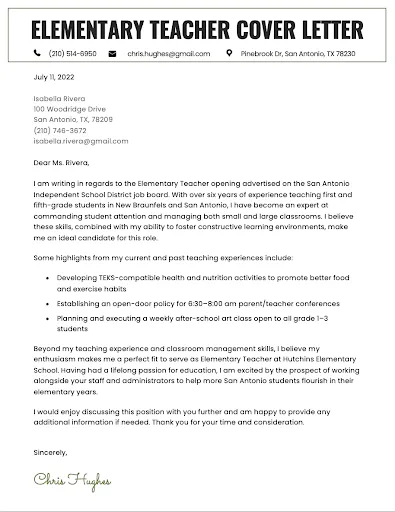
Express your strong interest in the position and politely request an interview. Indicate your availability for an interview and mention how you can be contacted. You can state something like, “I am eager to discuss my qualifications further and welcome the opportunity to interview at your earliest convenience.” Make it easy for the hiring manager to know how to proceed by reiterating your contact information (phone number and email). A direct and courteous request for an interview indicates your professionalism and eagerness.
Expressing Enthusiasm
End your cover letter by expressing your enthusiasm for the position and the school or district. Show that you are truly excited about the prospect of joining their team and contributing to their mission. State your appreciation for their consideration. You can state, “I am excited about the possibility of contributing to [School Name]’s mission of providing an excellent education,” or “Thank you for your time and consideration. I look forward to the opportunity to speak with you about this exciting role.” Conclude with a warm closing, such as “Sincerely” or “Respectfully,” followed by your name. This final impression leaves a positive mark.