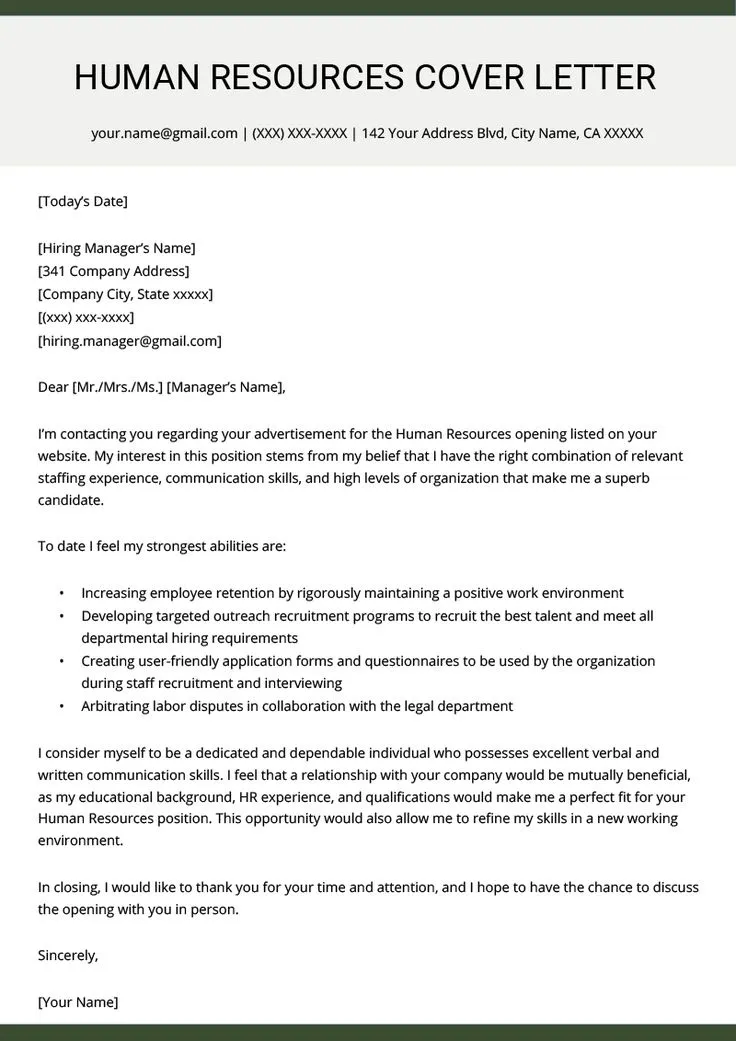
Understanding the Importance of HR Cover Letters
In the competitive world of Human Resources, a well-crafted cover letter is your first opportunity to make a lasting impression. It’s more than just a formality; it’s a critical tool that allows you to highlight your skills, experience, and passion for the role. A strong HR cover letter complements your resume, providing context and depth to your qualifications. It gives you the chance to tell your story, explain why you’re the ideal candidate, and showcase your personality, setting you apart from other applicants. This essential guide offers practical cover letter HR examples and expert advice on creating compelling cover letters that get results, maximizing your chances of landing an interview and securing your desired HR position. By taking the time to create a tailored cover letter, you are demonstrating your genuine interest in the specific role and company, a factor that hiring managers highly value.
Key Components of a Winning HR Cover Letter
A winning HR cover letter is a carefully constructed document that includes several key elements designed to capture the reader’s attention and showcase your suitability for the position. Each component plays a crucial role in conveying your message effectively. Start with a professional header, including your contact information, and follow with a compelling opening paragraph that immediately grabs the hiring manager’s interest. Throughout the letter, you should highlight relevant skills and experience, demonstrating your expertise in HR. Don’t forget to quantify your achievements whenever possible, providing concrete examples of your successes. Tailor your letter to the specific job requirements and research the company culture to demonstrate your understanding of their needs. Finally, conclude with a strong call to action, expressing your enthusiasm for the opportunity and thanking the reader for their time and consideration. This structured approach ensures a clear, concise, and persuasive cover letter that increases your chances of success.
Header and Contact Information

The header of your HR cover letter is the first thing the hiring manager sees, so it must be clean, professional, and accurate. Include your full name, phone number, email address, and LinkedIn profile URL (if applicable). You should also include the date and the recipient’s contact information (hiring manager’s name, title, company name, and address). Ensure that all information is up-to-date and easily readable. Using a professional font and clear formatting helps create a positive first impression. This section sets the tone for the rest of your letter, establishing your professionalism and attention to detail. Accuracy here is crucial; incorrect contact information can lead to missed opportunities. Consider using a simple, elegant layout that reflects your professionalism and organizational skills, qualities highly valued in HR.
The Opening Paragraph [Grab Attention]
The opening paragraph is your chance to hook the reader and make them want to continue reading. Avoid generic openings; instead, immediately state the position you’re applying for and how you learned about it. Show genuine enthusiasm and briefly explain why you are interested in the role and the company. Consider using a strong statement that highlights a key skill or achievement relevant to the job. For example, start with a compelling accomplishment or a specific instance where you demonstrated your HR expertise. Make it clear from the beginning that you understand the company’s needs and are capable of contributing positively. Keep it concise and focused; the goal is to capture attention and set the stage for the rest of your letter. This will also help demonstrate your understanding of the role and the company, indicating you’ve done your research and have a genuine interest in the opportunity. Make sure you are providing information that shows your personality and your value, creating a personalized and compelling narrative.
Highlighting Relevant Skills and Experience
The body of your HR cover letter is where you showcase your skills and experience relevant to the job requirements. Carefully review the job description and identify the key skills and qualifications the employer is seeking. Then, provide specific examples from your previous roles where you have demonstrated these skills. Use action verbs to describe your accomplishments and responsibilities. Focus on results-oriented achievements that showcase your ability to make a positive impact. For instance, if the job description emphasizes employee relations, provide examples of successful conflict resolution, improved employee satisfaction, or implemented programs. Tailor your examples to align with the specific needs of the role, demonstrating that you possess the skills and expertise necessary to excel. This shows you’re not just qualified on paper, but you can translate that into real-world results.
Demonstrating HR Expertise

HR expertise encompasses a broad range of knowledge, from recruitment and onboarding to performance management and employee relations. To demonstrate this in your cover letter, highlight your experience in various HR functions, making sure to align with the job description. Mention any certifications (e.g., SHRM-CP, SHRM-SCP, PHR, SPHR) and their relevance. Provide examples of how you’ve successfully implemented HR programs or policies. Focus on your understanding of employment law, compliance regulations, and best practices. Demonstrate your ability to stay updated on industry trends and apply them effectively. Showcase your knowledge of HRIS systems, data analytics, and other tools used in the HR field. When writing your cover letter, use clear, concise language and focus on providing concrete examples of your HR knowledge and experience. Make it evident that you possess a solid understanding of the core HR functions.
Quantifying Achievements [Showcase Results]
Quantifying your achievements is a powerful way to demonstrate your impact and effectiveness in HR. Instead of merely stating your responsibilities, use numbers and data to illustrate your successes. For example, instead of saying you improved employee retention, state that you reduced turnover by a specific percentage. If you implemented a new training program, mention the increase in employee performance or the reduction in errors. Using quantifiable metrics adds credibility to your claims and demonstrates your ability to deliver results. When possible, use percentages, dollar amounts, or specific numbers to showcase your accomplishments. This approach not only highlights your skills but also provides concrete evidence of your contributions. Also, make sure that you use metrics that directly relate to the job description and the company’s goals. This will show that you understand what’s important to the employer and can make a measurable difference.
Addressing the Specific Job Requirements
A successful HR cover letter is tailored to the specific job requirements outlined in the job description. Carefully review the description and identify the key skills, experience, and qualifications the employer is seeking. Use the language and keywords from the job posting to demonstrate that you understand the role and the company’s needs. Directly address each requirement, providing examples of how your experience aligns with their expectations. Show how your skills and knowledge will benefit the company. This targeted approach demonstrates your attention to detail and your commitment to meeting the employer’s needs. When addressing the specific job requirements, focus on providing concrete examples of how you have successfully performed similar tasks in previous roles. This will show the hiring manager that you are not only qualified but also a strong fit for their team. By customizing your letter, you make it more likely to catch the attention of the hiring manager.
Tailoring Your Cover Letter

Generic cover letters are easily spotted by hiring managers and are often discarded. To stand out, tailor your letter to each specific job application. This means researching the company, understanding the role, and customizing your content to reflect your understanding. Highlight the specific skills and experiences that align with the job requirements. Demonstrate your knowledge of the company’s mission, values, and culture. Mention specific projects, initiatives, or achievements that showcase your suitability for the role. This level of personalization shows that you’ve invested time and effort, making you a more appealing candidate. Customize your letter with the hiring manager’s name, if possible. This personal touch shows you’ve done your research and helps to make a stronger connection. Tailoring your cover letter demonstrates your genuine interest and increases the likelihood of a positive response. When adapting your cover letter for different jobs, remember to revise your content and focus on the role and company.
Researching the Company Culture
Before writing your HR cover letter, research the company’s culture, values, and mission. Visit their website, social media profiles, and news articles to gain insights into their work environment and goals. Understand what the company values and how the HR department contributes to its success. Mentioning specific aspects of the company’s culture in your cover letter demonstrates your interest and shows that you’re a good fit. For instance, if the company promotes employee engagement and work-life balance, highlight your relevant experience in these areas. Tailor your language and tone to align with the company’s brand. This level of research and personalization shows that you are committed to contributing to their organizational culture. If you are familiar with employee reviews on sites like Glassdoor, you can also take note of the aspects the company excels at and mention your ability to continue that success.
Using Keywords Effectively
Many companies use Applicant Tracking Systems (ATS) to screen resumes and cover letters. To increase your chances of getting past the initial screening, use relevant keywords from the job description throughout your cover letter. Carefully read the job posting and identify the key skills, qualifications, and responsibilities. Incorporate these keywords naturally into your writing, ensuring that your letter aligns with the specific requirements. However, avoid keyword stuffing, which can make your letter sound unnatural and detract from its readability. Instead, integrate the keywords seamlessly while providing specific examples of your experience and achievements. For instance, if the job description mentions ’employee relations’, make sure to use this phrase, but provide examples of successful employee relations initiatives you’ve managed. Use keywords in your opening, body, and closing paragraphs to ensure your cover letter is easily searchable by the ATS.
Showcasing Soft Skills

While technical skills are important, soft skills are critical in HR. These include communication, interpersonal abilities, problem-solving, and leadership. To showcase these skills in your cover letter, provide specific examples of how you’ve demonstrated them in previous roles. For example, describe how you successfully resolved a conflict between employees, led a team to achieve a specific goal, or communicated complex information effectively to a diverse audience. Use action verbs to describe your soft skills, emphasizing your ability to work collaboratively, build relationships, and influence others. Mention specific projects or initiatives where you used these skills. Make sure the examples highlight how you apply soft skills, creating a positive and productive work environment. By weaving these skills into your narrative, you prove that you’re not only competent but also a valuable team player.
The Closing Paragraph [Call to Action]
Your closing paragraph is your final opportunity to leave a lasting impression. Express your enthusiasm for the opportunity and reiterate your interest in the position. Thank the hiring manager for their time and consideration. Include a clear call to action, such as inviting them to contact you for an interview or expressing your willingness to provide additional information. Keep it concise, professional, and focused on the next step in the hiring process. You can also reiterate your value proposition by briefly mentioning your key qualifications again. Make it easy for the hiring manager to respond by including your contact information. A strong call to action makes it clear that you are eager to move forward and increases the likelihood of receiving a response. The closing should be positive and optimistic, leaving the reader with a favorable impression.
Thanking the Hiring Manager
Expressing gratitude to the hiring manager is a simple but important step in your cover letter. Thank them for considering your application and for their time and attention. This shows respect and professionalism, leaving a positive impression. Keep it concise and genuine. A sincere thank-you demonstrates your appreciation for the opportunity and sets you apart from other applicants. It also shows that you are considerate and value their time. Consider adding a specific thank-you, such as thanking them for their time, and mentioning a skill in the job description. This shows that you paid attention and increases your chances of a positive response.
Expressing Enthusiasm

Demonstrating enthusiasm for the role and the company is essential. Let the hiring manager know why you’re excited about the opportunity. Mention specific aspects of the role that appeal to you and why you believe you’d be a good fit for the company. Show your genuine interest in contributing to their success. Expressing enthusiasm helps you connect with the reader on a personal level and can significantly improve your chances of being selected for an interview. Make sure your enthusiasm is genuine and specific to the role and the company. Do not make it generic and show your enthusiasm to apply for the job.
Proofreading and Editing [Ensuring Perfection]
Before submitting your HR cover letter, meticulously proofread and edit it. Errors in grammar, spelling, or punctuation can create a negative impression and undermine your credibility. Review every word carefully, checking for clarity, accuracy, and coherence. If possible, have a friend, colleague, or career counselor review your letter for a second opinion. They can catch mistakes you might have missed and provide valuable feedback on the overall tone and effectiveness of your letter. Use a grammar checker and spell-checker to assist, but don’t rely on them completely; always read your letter multiple times. A polished, error-free cover letter reflects your attention to detail and professionalism, qualities that are highly valued in HR. Proofreading is critical to avoid errors that may cost you an opportunity.
Common Mistakes to Avoid
Avoiding common mistakes is critical for a successful HR cover letter. These mistakes can range from poor formatting to irrelevant content, damaging your chances of getting an interview. Being aware of these common pitfalls allows you to craft a more effective cover letter that highlights your strengths and qualifications in the best possible light. Make sure you pay attention to detail and take your time to create a compelling document that meets the standards of Human Resources. Avoiding these common mistakes is crucial for making a positive first impression. If you address these errors, it improves your chances of getting an interview and helps you stand out.
Generic vs. Personalized Cover Letters
One of the most significant mistakes is submitting a generic cover letter that could be used for any job. Generic cover letters lack personalization, showing a lack of effort and understanding of the specific role and company. Make sure you customize your cover letter to each job application. To personalize your cover letter, research the company, understand the job requirements, and tailor your content accordingly. Highlight specific skills and experiences that align with the job description, mentioning details relevant to the company’s mission and values. Also, address the hiring manager by name, if possible, to show that you have taken the time to learn about the company. Generic cover letters show a lack of attention to detail. When personalizing your letter, you must also consider the tone and language of the company. Also, it is recommended that you use the keywords in the job description and highlight your strengths that fit the requirements.
Grammar and Spelling Errors
Grammar and spelling errors are major turn-offs. Your cover letter is a representation of your professionalism and attention to detail. Grammar and spelling errors can damage your credibility. Always proofread your cover letter carefully. Use grammar and spell-checking tools, but don’t rely on them completely. Have a friend or colleague review your letter for a fresh perspective. Pay attention to sentence structure, punctuation, and word choice to ensure your letter is clear, concise, and error-free. Make sure you do not use jargon that may be specific to a company or industry. When reviewing your cover letter, read it aloud to catch awkward phrasing. A well-written, error-free cover letter is a key factor in making a positive first impression.
Focusing on the Wrong Skills
Another common mistake is focusing on skills that aren’t relevant to the job. Your cover letter should highlight the skills and experience that align with the job description and the company’s needs. Carefully review the job requirements and tailor your content to match. Avoid including irrelevant information or generic skills that don’t demonstrate your suitability for the role. Prioritize your most relevant accomplishments and experiences. Provide concrete examples of how you’ve used these skills in previous roles, and back up your claims with quantifiable results. Show the hiring manager how your skills align with the company’s objectives. Make sure you prioritize your most important skills and match the job description.
Including Too Much Information
Avoid including too much information in your cover letter. The goal is to provide a concise and compelling overview of your qualifications, not to repeat everything on your resume. Keep your cover letter focused and to the point. Avoid including irrelevant details or lengthy explanations. Limit your letter to one page and focus on the most relevant information. Prioritize the skills and experiences that align with the job description and provide specific examples of your accomplishments. The HR department is very busy. Conciseness and clarity are key to making a strong impression. By providing specific information and being succinct, you demonstrate your ability to communicate effectively and respect the reader’s time.
Examples of Effective HR Cover Letters
To gain a better understanding of how to write effective HR cover letters, review various examples. Each example shows how to structure and write compelling content. Also, you can see how the different skills and experiences can be highlighted. Make sure to consider different examples. These examples will help you create your own cover letter by using the right language and tone. Many websites and career resources provide examples of effective HR cover letters. Pay attention to how they address the job requirements, highlight relevant skills, and demonstrate the applicant’s expertise. Use these examples to create a template to tailor your cover letter. Each example will guide you toward building a compelling cover letter that gets results. When using the examples, always customize the content to reflect your experience and skills.
Entry-Level HR Cover Letter Example
Entry-level HR cover letters should emphasize relevant coursework, internships, volunteer experience, and transferable skills. Highlight any HR-related projects or initiatives you’ve been involved in, such as organizing training programs, assisting with recruitment, or handling employee onboarding. Focus on your enthusiasm for the HR field and your willingness to learn and grow. Demonstrate your understanding of HR principles and your ability to contribute to the company’s success. Entry-level HR cover letters require a strong academic background and any relevant work experience. Highlight any projects or coursework that provided hands-on experience. Make sure to demonstrate your eagerness to learn and contribute to the company.
Mid-Career HR Cover Letter Example
Mid-career HR cover letters should showcase your expertise and achievements in previous roles. Highlight your experience in specific HR functions, such as employee relations, compensation and benefits, or talent management. Provide examples of how you’ve successfully implemented HR programs or policies, improved employee satisfaction, or reduced turnover rates. Quantify your achievements with specific metrics and data. Demonstrate your ability to lead teams, manage projects, and contribute to the company’s strategic goals. Mid-career HR candidates must have a proven track record of accomplishments. Use your cover letter to highlight your most significant contributions and showcase your leadership abilities. When demonstrating experience, provide metrics and data to showcase success.
Experienced HR Professional Cover Letter Example
Experienced HR professionals should leverage their cover letters to highlight their leadership skills and strategic contributions. Showcase your experience in developing and implementing HR strategies that align with the company’s business objectives. Highlight your ability to manage complex projects, lead teams, and influence stakeholders. Quantify your achievements with specific metrics and data. Demonstrate your understanding of industry best practices and your ability to drive positive change within the organization. Include examples of your previous leadership roles and the impact of your work. Experienced HR professionals must demonstrate leadership capabilities and strategic thinking. Include your accomplishments and show how you have contributed to previous organizations. Include your HR certifications and a summary of your experience.
Cover Letter for HR Manager Role
A cover letter for an HR manager role should highlight leadership, strategic planning, and people management skills. Showcase your experience in leading HR teams, developing HR strategies, and driving organizational change. Provide examples of successful HR initiatives, such as improving employee engagement, reducing turnover, or enhancing talent acquisition processes. Demonstrate your ability to manage budgets, implement policies, and ensure compliance with employment laws. Use the cover letter to highlight your leadership skills and strategic contributions. Provide examples of successful HR initiatives and show your financial management skills. This helps show the depth of knowledge and capabilities as an HR manager.
Cover Letter for HR Specialist Role
A cover letter for an HR specialist role should showcase your expertise in a specific HR function, such as recruitment, compensation and benefits, or employee relations. Highlight your experience in the key responsibilities outlined in the job description. Provide specific examples of how you’ve successfully performed these tasks and achieved measurable results. Demonstrate your knowledge of HR best practices and your ability to contribute to the efficiency and effectiveness of the HR department. Your cover letter should highlight the specific skills and experiences that are relevant to the HR specialist role. Showcase your ability to contribute to the efficiency of the HR department.
Tips for Customizing Examples
When using HR cover letter examples, it is critical to customize them to reflect your unique qualifications. Don’t copy and paste; instead, use the examples as a guide. Replace the example content with your own experiences, skills, and achievements. Adapt the language and tone to match your personality and the company’s brand. Pay attention to the job description and tailor your letter to the specific requirements outlined. Customize the examples to demonstrate your suitability for the role. Use your language and adapt the tone of your cover letter. Make sure to highlight the qualifications that align with the job description.
Adapting to Different Industries
HR practices and expectations can vary across different industries. Customize your HR cover letter to reflect the specific industry and the type of company you are applying to. Research the industry’s key trends, challenges, and best practices. Highlight your experience and skills relevant to that industry, and demonstrate your understanding of the industry’s HR needs. Tailor your cover letter by demonstrating your understanding of the industry’s HR needs. This shows the hiring manager that you understand the company’s challenges and are well-prepared. Adapt the language and tone to align with industry standards.
Adding a Personal Touch
Adding a personal touch to your HR cover letter can make it more memorable and increase your chances of success. Share a brief anecdote or personal story that demonstrates your passion for HR or your commitment to the company’s mission. Mention any connections you have to the company, such as networking with current employees or attending industry events. Tailor your content to show you value the role and the company. This demonstrates that you have invested time and effort. Avoid being overly casual. Keep it professional and appropriate, and it’s more likely to leave a positive impression.
Leveraging Cover Letters for Career Advancement
Your HR cover letter is not only essential for getting a job but also a tool for career advancement. Use your cover letter to highlight your skills, accomplishments, and career goals. Showcase your leadership potential and your willingness to take on new challenges. Explain what you want to accomplish in your HR career. Regularly update your cover letter to reflect your career progression and new skills and experiences. Consider using your cover letter to network with others in the HR field. Regularly updating your letter will help you be aware of your skills and how they relate to the market. This also gives you the chance to build connections.
Networking and Following Up
Use your cover letter as a platform to build professional networks. Include information about networking events or conferences you have attended or plan to attend. Mention any interactions you have had with current employees or industry professionals. Following up after submitting your cover letter and resume is a crucial step. Send a polite email to the hiring manager a week or two after submitting your application. Mention your strong interest in the role and reiterate your qualifications. Following up demonstrates your interest and enthusiasm, and it can help you stand out from the competition. This can help get the attention of the hiring manager. Also, following up is useful to show your continued interest.
Preparing for the Interview
Your HR cover letter plays a crucial role in preparing for the interview. Review your cover letter and the job description carefully. Be prepared to discuss your experience and skills. Also, be ready to provide examples of your accomplishments and how you’ve handled challenges. Make sure you practice answering common interview questions related to HR. Be prepared to discuss the key points in your cover letter, and bring copies of your resume and cover letter. Preparing yourself for the interview is critical to show you have the knowledge to take on the role. The more you are prepared, the more likely you are to impress the interviewer. When preparing for the interview, you must review your cover letter and the job description to be ready for the questions that may be asked during the interview.
Why Cover Letters Still Matter in HR
Even in the digital age, cover letters remain essential for HR professionals. They are an opportunity to show your skills. A cover letter allows you to showcase your personality, demonstrate your passion for the field, and make a strong first impression. Cover letters are a space where you can highlight your experience. It enables you to connect with the hiring manager on a personal level. A well-crafted cover letter can significantly increase your chances of getting an interview and securing your desired HR position. Take advantage of this opportunity to provide context to your accomplishments. A cover letter can demonstrate your written communication skills. Despite the evolution of the job search process, the cover letter still remains an essential tool for HR professionals.
Making a Strong First Impression
The first impression you make with your cover letter can shape the hiring manager’s perception of you. Ensure your cover letter is well-written and professional. Start with a compelling opening paragraph that grabs the reader’s attention. Highlight your most relevant skills and experience, and tailor your content to the specific job requirements. A cover letter can give you a chance to present yourself to the hiring manager. Demonstrate your enthusiasm and provide a clear call to action. Proofread your cover letter carefully and ensure it is free of errors. A strong first impression can set you apart from other applicants and increase your chances of getting an interview. Also, ensure that you follow the guidelines and pay attention to the details.
Demonstrating Your Passion for HR
Showcasing your passion for Human Resources is an excellent way to differentiate yourself from other candidates. Highlight your enthusiasm for the field. Show how you’ve been involved in the HR industry. Show your desire to learn and grow in the role. A genuine passion for HR will resonate with the hiring manager. A cover letter provides you with an opportunity to show you are passionate about your job. Mention your involvement in industry organizations. Also, you can mention your goals for the future. A strong demonstration of passion will improve your chances of being selected. Also, mention your enthusiasm to contribute to the company. Your passion for the field can distinguish you from the other applicants.