Highlighting Your Passion for Art
Your cover letter for an art teacher position is your first opportunity to make a strong impression. It’s more than just a formality it’s your chance to showcase your passion for art and its transformative power. Begin by expressing your genuine enthusiasm for art education. Let the hiring committee know why you’re excited about the prospect of inspiring young minds. Mention specific art forms or techniques that you love to teach, and what you find most rewarding about sharing your knowledge with students. Show that you are not just an instructor, but a passionate advocate for the arts and the positive impact it can have on students’ lives, fostering creativity, critical thinking, and self-expression. Make sure that your passion is genuine and evident in every sentence of your cover letter, as this will set you apart from other applicants.
Demonstrating Relevant Skills
Art teachers require a unique blend of skills, and your cover letter should effectively communicate your competencies. Focus on the skills that directly relate to the job description and the needs of the school. Highlight your proficiency in various art mediums such as painting, drawing, sculpture, digital art, or other specific areas. Mention your ability to manage a classroom, create engaging lesson plans, and assess student work effectively. Include skills related to curriculum development, incorporating technology into art lessons, and differentiating instruction to meet the needs of all learners. Also, it’s important to express any experience you have with arts integration, which links art with other subjects. When detailing your skills, provide specific examples of how you have used them successfully in the past. This makes your application more convincing.
Showcasing Your Creativity

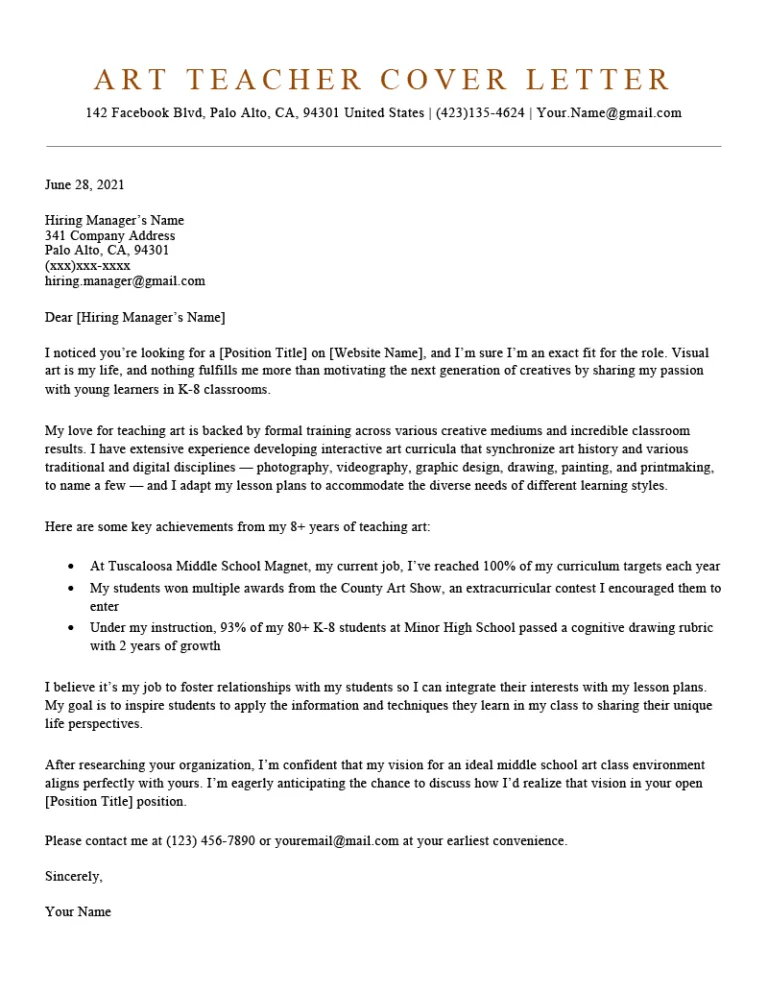
As an art teacher, creativity is at the core of your profession. Your cover letter is an opportunity to demonstrate your own creative flair. Avoid generic templates; instead, infuse your letter with a unique voice and personality that reflects your artistic approach. Consider the design of your cover letter itself. While maintaining professionalism, use visual elements, subtle design choices, or a creative layout to demonstrate your artistic abilities. Incorporate descriptive language and vivid imagery to paint a picture of your teaching style and what you bring to the classroom. Use specific examples of creative projects or innovative lesson plans you’ve developed in the past to show how you inspire students. This will show the hiring committee that you are not just creative, but are also capable of sparking imagination in others.
Tailoring Your Letter to the School
A generic cover letter will not impress potential employers. Show that you’ve invested time in understanding the school’s culture, mission, and specific needs. Research the school’s art program, its values, and the type of students it serves. Customize your cover letter to address the school’s specific requirements, addressing what makes you a good fit for their environment. If the school is known for its focus on a particular art form or teaching philosophy, highlight your experience and enthusiasm for that area. Demonstrate how your skills and experience align with the school’s goals and how you can contribute to their art program. Mention any specific initiatives or projects you would be excited to undertake at their school. This level of personalization will make your application more appealing.
Emphasizing Your Teaching Philosophy
Your teaching philosophy is a critical component of your cover letter. It gives the hiring committee insight into your approach to art education and your beliefs about student learning. Clearly articulate your teaching philosophy and provide examples of how you implement it in the classroom. Highlight your focus on student-centered learning, where you encourage students to explore their creativity and critical thinking. Emphasize your belief in the importance of fostering a positive and inclusive learning environment where every student feels safe to express themselves. Include your methods for inspiring students, providing constructive feedback, and encouraging collaboration. This provides a deep understanding of your teaching methods and personal approach, demonstrating your commitment to the holistic development of your students.
Quantifying Your Achievements

While it’s important to describe your skills and experiences, quantifiable achievements add significant weight to your cover letter. Whenever possible, support your claims with specific data or measurable results. Providing numbers gives concrete evidence of your impact and effectiveness as an art teacher. This shows your proficiency at helping pupils succeed, and allows the hiring committee to realize your strengths. This is achieved by including examples of student project achievements, such as art competition wins, the percentage increase in student engagement, or the number of students who advanced their skills. Be specific and use metrics to illustrate how your teaching has positively affected your students and the school’s art program.
Using Action Verbs
Action verbs are essential for making your cover letter dynamic and impactful. They help you convey your skills, experiences, and achievements in a way that captures the reader’s attention. Start your sentences with powerful action verbs to describe your accomplishments and responsibilities. Examples include ‘created’, ‘developed’, ‘implemented’, ‘managed’, ’led’, ‘designed’, ‘facilitated’, and ‘assessed.’ Instead of saying, ‘I was responsible for teaching art,’ use ‘I designed and implemented a new curriculum for art classes.’ By using action verbs, you can make your cover letter more interesting, and highlight your achievements. They make your qualifications more memorable and provide a compelling narrative of your abilities.
Providing Evidence of Student Success
One of the most compelling elements of your cover letter is the evidence of student success. Provide real-world examples of how your teaching has positively impacted your students’ learning and artistic development. Include information about student projects, exhibitions, or awards they have received under your guidance. If possible, highlight student growth, such as improvements in their art skills, critical thinking, or self-expression. Include any success stories that show the value you add to the school. This could include student participation in community art projects, the establishment of a successful art club, or an increase in student enrollment in art classes. Make sure the school understands that you are committed to student success.
Proofreading and Polishing

A cover letter filled with errors will undermine your professional image. Proofreading and polishing your cover letter is essential for demonstrating attention to detail and professionalism. Read through your cover letter multiple times, checking for grammatical errors, spelling mistakes, and typos. Use a grammar checker and a spell-checking tool, but also read the letter aloud to catch any awkward phrasing or sentences that need revision. Ask a friend or colleague to proofread your letter to give you an objective perspective. A well-written, error-free cover letter shows the hiring committee that you are serious about the position and value quality in your work.
Ensuring a Professional Tone
The tone of your cover letter must be professional, appropriate, and consistent with the context. It is important to maintain a formal, yet enthusiastic, tone throughout your cover letter. Avoid informal language, slang, or overly casual expressions. Use a respectful and courteous tone when addressing the hiring committee. Maintain a positive and enthusiastic tone, expressing your genuine interest in the position and the school. Always proofread your letter to make sure your professional tone comes across well. This will show the hiring committee you can handle serious situations with tact, and that you have good communication skills.
Checking for Grammatical Errors and Typos
A cover letter riddled with grammatical errors and typos can undermine your credibility. Before you submit your cover letter, thoroughly check for any errors. Review all sentences for correct grammar, punctuation, and sentence structure. Ensure that the subject and verb agree in each sentence. Pay attention to the correct use of tenses, pronouns, and articles. Double-check your spelling, especially the names of the school, people, and art-related terms. Consider asking a friend or a career counselor to proofread your cover letter. A well-edited, error-free cover letter speaks volumes about your attention to detail and commitment to excellence.