Know Your Audience
Before you even start writing, consider your audience, the hiring manager. Putting some effort into understanding the company and the specific role will help you tailor your cover letter and demonstrate your genuine interest. Tailoring is not just about using keywords, but also addressing the company’s culture and values. To do this effectively, check the company’s website, social media profiles, and recent news articles to gain insights. Understand the job requirements and identify how your skills and experiences align with the company’s needs and expectations. This preparation will enable you to write a targeted and compelling cover letter that grabs the hiring manager’s attention and highlights why you are the best fit for the role. Doing so will boost your chances of getting an interview.
Research the Company and Hiring Manager
Thorough research is crucial for a compelling cover letter. By researching the company, you can demonstrate your interest and understanding of their mission, values, and recent projects. This information helps you align your skills and experiences with their needs. Researching the hiring manager, if possible, can further personalize your letter. Check their LinkedIn profile to learn about their background, interests, and professional achievements. This will give you valuable insights into their preferences. You can also reference their work or any common connections you may have. Remember to demonstrate a genuine interest in the company and the role by showcasing your knowledge, skills, and alignment with their objectives. This shows that you’ve taken the time to get to know them.
Address the Letter to the Correct Person

Always address your cover letter to the hiring manager by name. If the job posting provides a contact person, use that name. Addressing the letter to a specific individual shows that you have paid attention to detail and taken the initiative to personalize your application. Generic greetings like ‘To Whom It May Concern’ are often perceived as impersonal and demonstrate a lack of effort. If you are unsure of the hiring manager’s name, do some research on the company’s website or LinkedIn to find the relevant contact. If you are unable to find a name, reach out to the company’s HR department or the recruiter listed in the job posting to find out who to address the letter to. This extra step shows your commitment and attention to detail.
Use a Formal and Professional Salutation
Start your cover letter with a formal salutation that sets a professional tone. Using a formal greeting like ‘Dear Mr./Ms./Mx. [Last Name]’ is the best way to start. Avoid casual greetings, such as ‘Hi’ or ‘Hello’, which may be inappropriate for a professional application. Ensure the salutation is aligned with the company’s culture and your research findings. The key is to strike a balance between being respectful and being too formal. When you’re certain of the hiring manager’s name, use their full name to demonstrate your research. This adds a personal touch. When you are addressing the letter to a specific person, it demonstrates that you have taken the time to personalize your application and show professionalism.
Use Keywords and Tailor Your Letter
To effectively use keywords, carefully review the job description and identify the key skills, qualifications, and responsibilities listed. Incorporate these keywords naturally into your cover letter, ensuring they align with your experience and abilities. For example, if the job description emphasizes project management skills, include the phrase ‘project management’ and provide examples of your project management experience. However, avoid overstuffing your cover letter with keywords. Instead, focus on quality, and ensure each sentence flows naturally. Tailoring your letter means customizing it for each job application. Address the requirements of the specific role and showcase the most relevant achievements and skills. This strategy demonstrates your understanding of the job’s requirements and highlights why you are a good fit for the role.
Proofread and Edit Carefully

Proofreading is a critical step in the writing process. Read through your cover letter multiple times to identify and correct any errors in grammar, spelling, punctuation, and formatting. Even minor errors can create a negative impression and undermine your credibility. It is best to take breaks between revisions to refresh your perspective and catch mistakes that you might have missed initially. Use tools like grammar checkers to improve accuracy and clarity. Consider asking a friend, family member, or career advisor to review your cover letter for a fresh perspective. They can identify errors or suggest improvements to ensure your cover letter is polished and error-free. The last thing you want is to lose a potential opportunity because of careless mistakes.
Format the Cover Letter Properly
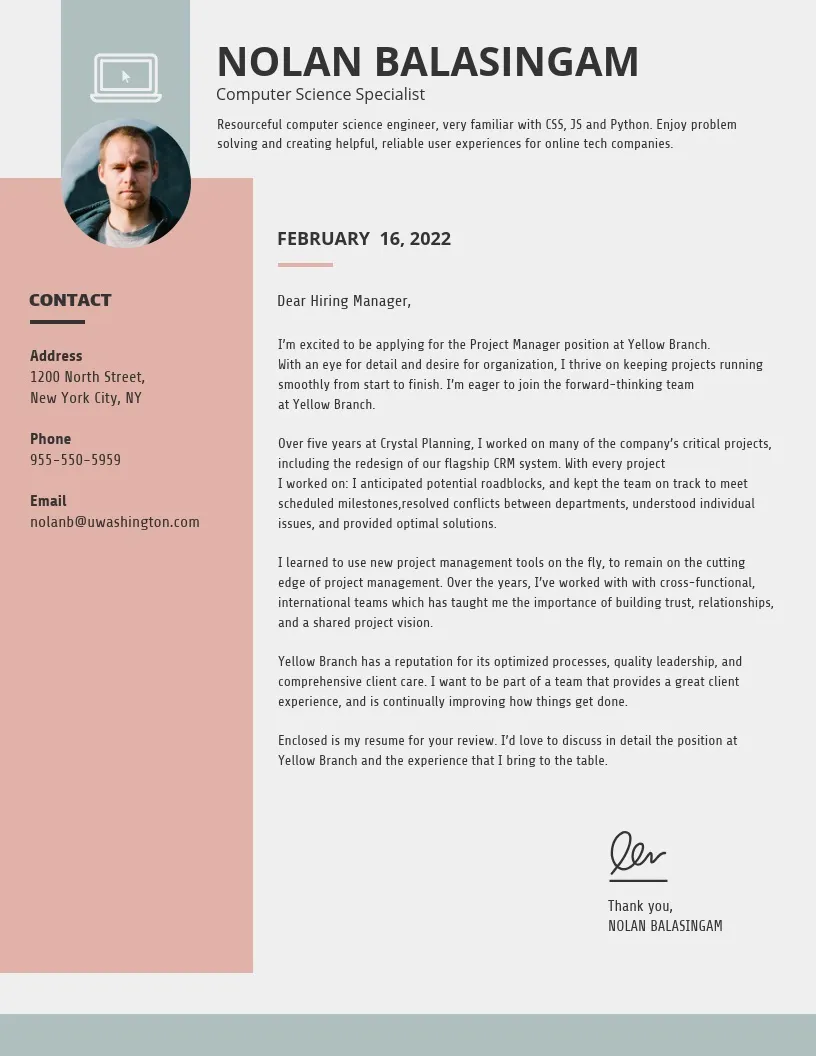
Proper formatting makes your cover letter easy to read. Use a professional font such as Times New Roman or Arial, with a font size between 10 and 12 points. Ensure that your cover letter is well-structured with clear headings and paragraphs. Leave adequate white space between paragraphs and sections to prevent the letter from appearing cluttered. Maintain consistent margins throughout the document. Choose a professional layout to keep your cover letter organized and visually appealing. Keep your cover letter concise. Aim for a length of one page, as it enables you to convey your key qualifications and experiences while keeping the reader engaged. Before submitting your cover letter, review the formatting to ensure that it is easy to read and visually appealing, which will help you make a positive first impression.
What to do When the Hiring Manager’s Name Isn’t Available
If you are unable to find the hiring manager’s name, you can use alternative approaches to address your cover letter professionally. Start with a general salutation like ‘Dear Hiring Manager’. You can research the department you are applying to, using the name of the department or the team. Use the title of the role to address the letter to, such as ‘Dear Marketing Team’. Research on LinkedIn and other platforms to find the recruiter or HR contact. If all else fails, you can use a general greeting, but keep it professional. You can also reach out to the company’s HR department or the recruiter listed in the job posting to inquire about the appropriate contact. Be sure to proofread and edit carefully before submitting your cover letter to ensure it is polished and error-free.