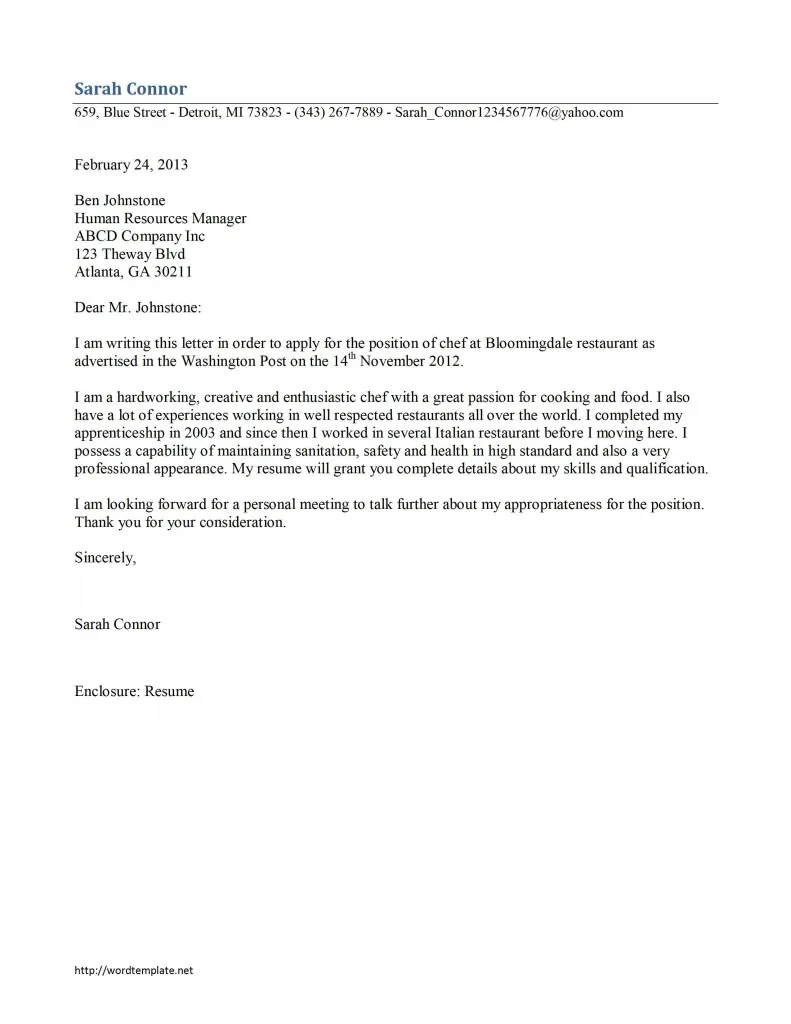
Crafting a Winning Chef Cover Letter
A chef cover letter is more than just a formality; it’s your first opportunity to make a strong impression and secure an interview. In the competitive culinary world, a well-crafted cover letter can be the key to unlocking your dream job. It provides a platform to showcase your personality, passion, and skills in a way that a resume alone cannot. By understanding the nuances of a chef cover letter, you can significantly increase your chances of standing out from the competition and landing that coveted position.
Understanding the Importance of a Chef Cover Letter
Your cover letter serves as your personal introduction to a potential employer, offering a glimpse into your culinary philosophy, work ethic, and career aspirations. It allows you to connect with the hiring manager on a more personal level, demonstrating your genuine interest in the specific role and restaurant. A compelling cover letter can differentiate you from other applicants who may possess similar qualifications on paper.
Why a Cover Letter Matters

In today’s job market, many candidates apply for the same positions. A well-written cover letter allows you to highlight your unique skills, experiences, and personality traits that make you the best fit for the job. It provides context to your resume and gives the hiring manager a better understanding of your career goals and what you can bring to their team. A cover letter can also address any potential gaps in your resume or explain specific situations that might be relevant to your application.
Highlighting Your Culinary Skills
Your culinary skills are the cornerstone of your profession, and your cover letter should effectively showcase them. Avoid simply listing skills; instead, provide specific examples of how you have utilized these skills to achieve positive results in previous roles. Highlight your expertise in various cooking techniques, cuisines, and menu planning. Quantify your achievements whenever possible. For example, mention the percentage increase in customer satisfaction or the cost savings achieved through efficient inventory management. Remember, employers want to see what you can do for them. You can demonstrate this best by explaining what you’ve already accomplished.
Showcasing Your Experience
Your work experience is a critical part of your application, and your cover letter should provide more detail than your resume allows. Go beyond simply listing your job titles and dates of employment. Instead, briefly describe your responsibilities and accomplishments in each role. Focus on the highlights and provide specific examples of your contributions to the success of the restaurants or kitchens you’ve worked in. Explain how your experience aligns with the requirements of the job you’re applying for. Mention any significant achievements, awards, or recognitions you’ve received. Tailor your experience to align with the requirements outlined in the job description.
Quantifying Your Achievements

Numbers speak volumes. Whenever possible, quantify your achievements to demonstrate the impact of your work. Instead of saying you improved efficiency, state that you reduced food waste by a specific percentage or increased kitchen productivity by a certain amount. If you developed a popular new menu item, mention the number of orders it generated. Quantifying your achievements shows employers the tangible value you bring to the table. It provides concrete evidence of your skills and abilities and sets you apart from candidates who provide only general statements. Include relevant metrics to illustrate your effectiveness.
Tailoring Your Cover Letter to the Job
A generic cover letter is easily spotted and often discarded. To impress employers, customize your cover letter for each job application. Take the time to research the restaurant or kitchen and tailor your letter to the specific requirements and preferences of the employer. This shows that you are genuinely interested in the role and have taken the time to understand their needs. Personalization is key; it demonstrates your commitment to the application process.
Researching the Restaurant or Kitchen
Before writing your cover letter, research the restaurant or kitchen. Visit their website, check out their social media profiles, and read reviews to understand their cuisine, style, and values. This information will help you tailor your letter to the specific needs of the employer. Mention specific dishes or aspects of their menu that resonate with you. This shows that you’ve done your homework and are genuinely interested in their establishment. Understanding the restaurant’s ethos allows you to demonstrate how your skills and experience align with their brand.
Matching Your Skills to the Job Description

Carefully review the job description and identify the key skills and qualifications the employer is seeking. Then, highlight your relevant skills and experiences in your cover letter, using specific examples to demonstrate how you meet those requirements. Use keywords from the job description throughout your letter to show that you understand the role and have the necessary qualifications. Tailor your letter to address the needs of the employer, demonstrating that you are a good fit for their team. Make sure the skills you highlight are relevant to the position, and provide examples of how you’ve successfully used those skills in the past.
Structuring Your Chef Cover Letter
The structure of your cover letter is just as important as its content. A well-structured letter is easy to read and allows the hiring manager to quickly grasp your qualifications and enthusiasm. Use a clear and concise format that highlights your key skills and experiences. Keep the tone professional yet engaging, and tailor your writing style to match the tone of the restaurant or kitchen. A well-organized cover letter shows attention to detail and professionalism, leaving a positive impression on the hiring manager.
Header and Contact Information
Begin your cover letter with a professional header that includes your name, address, phone number, and email address. If you have a professional online presence, such as a LinkedIn profile, include a link to it. Make sure your contact information is up-to-date and easy to read. Include the date and the hiring manager’s name and title (if available). If you don’t know the hiring manager’s name, address your letter to ‘Hiring Manager’ or ‘Chef de Cuisine.’
Professional Salutation

Start your cover letter with a professional salutation. Use ‘Dear Mr./Ms./Mx. [Last Name]’ if you know the hiring manager’s name. If you don’t know the name, use a general greeting such as ‘Dear Hiring Manager’ or ‘Dear Chef de Cuisine’. Avoid overly casual greetings, such as ‘Hello’ or ‘Hi’. Ensure your salutation reflects a professional and respectful tone. Addressing the recipient by name creates a more personal connection and shows you’ve done your research.
The Body of Your Cover Letter
The body of your cover letter is where you highlight your skills, experiences, and enthusiasm for the job. Structure the body into three or four paragraphs. Each paragraph should focus on a specific aspect of your qualifications and why you are the right fit for the role. Use clear, concise language and avoid jargon. Keep it engaging and ensure your writing style reflects your personality and professional approach.
Opening Paragraph
The opening paragraph should immediately grab the reader’s attention. State the position you are applying for and where you saw the job posting. Briefly mention your most relevant skills and experience. Express your enthusiasm for the role and the restaurant. Make it clear why you are interested in the specific position and why you are the ideal candidate. This first paragraph sets the tone for the rest of the letter, so make sure it’s engaging and professional. This is your chance to make a strong first impression.
Middle Paragraphs

The middle paragraphs should provide more detail about your skills, experience, and accomplishments. Use specific examples to illustrate your abilities and highlight how you have contributed to the success of previous employers. Quantify your achievements whenever possible. Tailor the content to match the requirements of the job description. Show how your skills and experience align with the needs of the restaurant or kitchen. Focus on your strengths and how they benefit the employer.
Closing Paragraph
In your closing paragraph, reiterate your interest in the position and express your enthusiasm for the opportunity. Summarize your key qualifications and reiterate why you are the ideal candidate. Thank the hiring manager for their time and consideration. Include a call to action, such as inviting them to contact you for an interview. Ensure this paragraph leaves a lasting positive impression and reiterates your commitment to the position. Highlight your eagerness to discuss the role further and demonstrate your enthusiasm for the opportunity.
Closing and Signature
End your cover letter with a professional closing, such as ‘Sincerely’ or ‘Respectfully’. Type your full name below the closing. If you are submitting a printed cover letter, leave space for your signature above your typed name. Ensure your closing and signature reflect a professional tone. Proofread everything to guarantee that your contact information is accurate and your letter is polished. Make sure your letter concludes with a strong and professional finish, emphasizing your suitability for the role and showcasing your interest in the opportunity.
Essential Skills to Include

Your cover letter should highlight a range of skills relevant to the chef position. Beyond culinary expertise, employers seek candidates with strong leadership, management, and organizational abilities. Focus on the skills that align with the requirements outlined in the job description. Showcase your ability to work under pressure, your passion for food, and your commitment to delivering exceptional results. Your goal is to showcase your complete range of skills.
Culinary Expertise
Highlight your culinary skills, including your knowledge of various cuisines, cooking techniques, and food preparation methods. Showcase your ability to create innovative dishes and menus. If you have any specializations, such as pastry or a specific cuisine, mention them. Provide specific examples of your culinary achievements, such as developing successful menu items or improving food quality. Your culinary expertise is at the heart of your job. Demonstrate your passion for food and your dedication to delivering exceptional culinary experiences.
Leadership and Management
If you have experience managing a kitchen team, highlight your leadership skills. Mention your ability to train and mentor staff, manage schedules, and handle conflicts. Provide examples of how you have motivated your team to achieve their goals. Showcase your ability to create a positive and productive work environment. If the job involves management responsibilities, these skills are essential. Demonstrate your skills in managing and motivating a culinary team. Show how you cultivate a positive work environment.
Menu Planning and Development

If you have experience with menu planning and development, showcase your ability to create innovative and profitable menus. Mention your knowledge of food costs, inventory management, and seasonal ingredients. Provide examples of successful menu creations and how they contributed to the restaurant’s success. Demonstrate your ability to develop and implement menus that meet the needs of the restaurant and its customers. This shows your understanding of how to use food to enhance a business.
Food Safety and Hygiene
Food safety and hygiene are critical in the culinary industry. Highlight your knowledge of food safety regulations and your commitment to maintaining a clean and safe kitchen environment. Mention any certifications or training you have received in food safety. Provide specific examples of how you have implemented food safety protocols and ensured compliance with health and safety standards. Ensure that your commitment to food safety is clear. Emphasize your compliance with health and safety regulations. This shows your dedication to a safe dining environment.
Common Mistakes to Avoid
Avoid these common mistakes to ensure your cover letter leaves a positive impression. Failing to avoid these errors can significantly diminish your chances of landing an interview. It is best to address these issues before sending out your application.
Generic Cover Letters
Avoid sending generic cover letters that could be sent to any employer. Customize your letter for each job application, showing that you’ve researched the restaurant and understand their specific needs. Generic letters demonstrate a lack of effort and a lack of genuine interest in the role. Personalize your letter to the specific job and employer. This shows your genuine interest and attention to detail.
Typos and Grammatical Errors
Typos and grammatical errors can undermine your credibility and professionalism. Proofread your cover letter carefully before submitting it. Have a friend or family member review it for you as well. Errors reflect poorly on your attention to detail and your overall professionalism. Always proofread carefully. Correct all errors before submitting the application to maintain credibility.
Focusing Solely on Your Needs
Your cover letter should focus on what you can offer the employer, not just on what you want from the job. While it’s important to express your career goals, the primary focus should be on your skills and how you can contribute to the restaurant’s success. Highlight your contributions and your commitment to helping the restaurant. Demonstrate that you understand the restaurant’s needs. Emphasize your ability to contribute to the success of the business.
Proofreading Your Cover Letter
Proofreading your cover letter is a crucial step in the application process. Errors can damage your credibility and lead to your application being overlooked. Always proofread your letter carefully. It’s also a good idea to have a friend, family member, or career counselor review your letter for errors. Ensure your cover letter is polished and free of errors. This demonstrates your attention to detail and professional approach. Use tools to avoid all errors before submission.
By following these guidelines, you can create a chef cover letter that effectively showcases your skills, experience, and passion for the culinary arts. A well-crafted cover letter is your opportunity to make a strong first impression and secure an interview. Remember to tailor your letter to each job application, highlight your achievements, and avoid common mistakes. Good luck with your job search!