Understanding the Importance of a Cover Letter
In the competitive landscape of a career change, a cover letter isn’t just a formality; it’s your primary tool for making a great first impression. It provides an opportunity to explain your career transition and to showcase the skills that make you a strong candidate, even if your experience doesn’t perfectly align with the new role. A well-crafted cover letter demonstrates your genuine interest in the position and the company. It allows you to connect your past experiences to your future aspirations. Furthermore, it is your chance to tell your story, demonstrating why you’re a great fit, even though you’re changing careers. Ignoring the cover letter is a missed opportunity. It’s a chance to distinguish yourself from other applicants and persuade the hiring manager to delve deeper into your resume. It is the key to unlocking the door to your next career. Therefore, mastering the art of cover letter writing is important in your career change journey.
Why a Cover Letter is Crucial for Career Changers
For those changing careers, a cover letter becomes even more vital because it gives context to the shift. It is where you explain why you’re making the change and what motivates you to pursue this new path. The resume focuses on your skills and experience, but the cover letter adds the personal touch that can set you apart. It’s your chance to show enthusiasm for the new field and explain how your previous experiences have prepared you for this new venture. Since you’re changing careers, there may be gaps in your resume or skills that don’t directly correlate to the new role. Therefore, the cover letter provides an explanation, bridging these gaps and making your application more compelling. It showcases how your transferable skills are relevant to the new role. This is critical when your resume alone may not fully communicate your potential. The cover letter transforms your application from a mere list of qualifications to a compelling narrative. It is your narrative and it shows you’re adaptable and determined to succeed.
Highlighting Transferable Skills

One of the most important aspects of a career change cover letter is highlighting your transferable skills. These are the skills and abilities you’ve gained in your previous roles that are valuable and relevant to the new career. Think about things such as project management, communication, problem-solving, leadership, or teamwork. Even if your past jobs weren’t in the same industry or function, they still honed valuable skills. Identify these skills and then describe how you’ve used them in your previous roles. Provide concrete examples of how you’ve demonstrated these skills. Quantify your achievements whenever possible. For example, instead of saying you ‘improved customer service,’ say you ‘reduced customer complaints by 20%.’ This makes your skills more tangible and persuasive. Make sure to tailor your transferable skills to match the requirements of the job you’re applying for. Review the job description, identify the key skills the employer is looking for, and then emphasize the ones you possess in your cover letter. This shows that you have the essential skills necessary for success.
Identifying Your Core Skills
Start by creating an inventory of all the skills you have. This includes both hard skills (technical skills like coding, data analysis, or accounting) and soft skills (interpersonal skills like communication, leadership, and problem-solving). Then, look at the job description of the role you want. What skills does the employer emphasize? What are their stated needs? Focus on these skills in your cover letter. Don’t try to include everything you know; instead, prioritize the ones that are most relevant to the job. Use action verbs to describe your skills. Instead of saying, ‘I have experience in project management,’ say ‘I managed projects, delivering them on time and under budget.’ This makes your skills more dynamic and more impactful. Think of specific situations where you’ve used these skills. This helps demonstrate how you would apply those skills in the new role, strengthening your narrative and making your cover letter more compelling. The more specific and detailed your examples are, the more persuasive your letter will be.
Matching Skills to the New Role
Once you’ve identified your core skills, you must match them to the new role. The most important step is to carefully review the job description. What are the primary requirements and qualifications? Then, align your skills and experience with those needs. Provide examples. If the job requires leadership skills, describe situations where you’ve led teams or initiatives. Use the same keywords and phrases from the job description in your cover letter. This helps the hiring manager quickly see how your skills align with the job requirements. Don’t be afraid to quantify your achievements. For example, you could say, ‘I led a team that increased sales by 15% in one quarter.’ This provides concrete evidence of your abilities. Focus on the most relevant skills and experiences first, and then briefly mention other skills. This ensures that your cover letter directly addresses the needs of the hiring manager. You want to show them how your skills can bring value to their team and to their organization.
Structuring Your Career Change Cover Letter

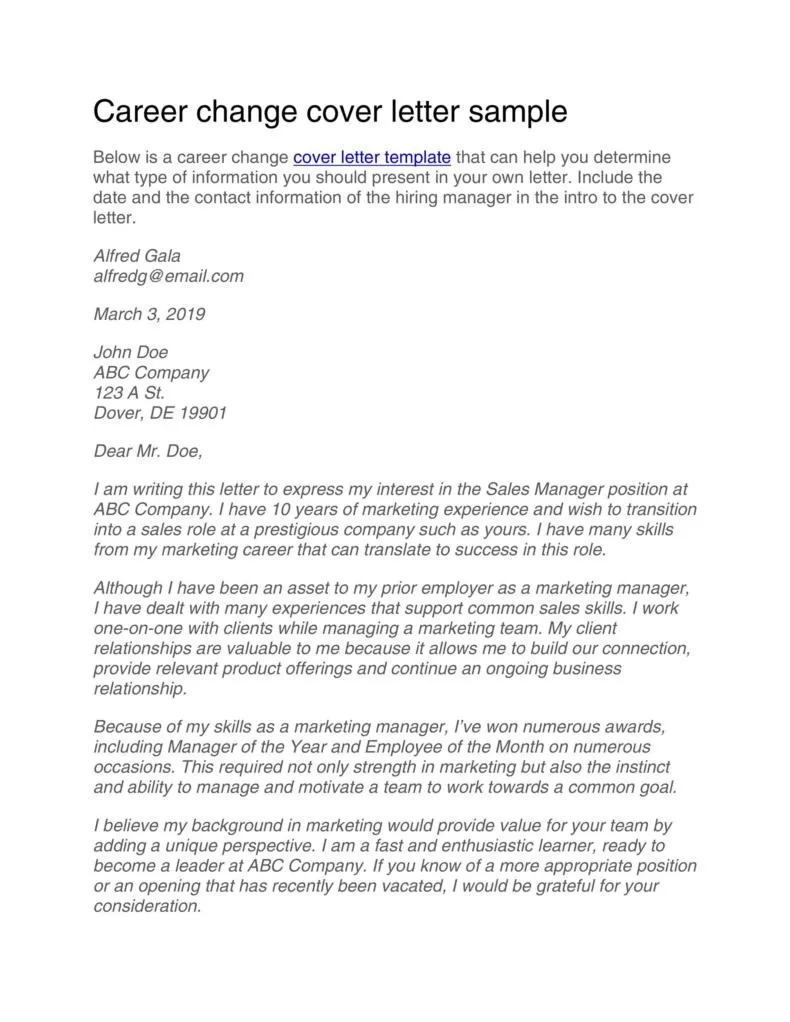
The structure of your cover letter is just as important as its content. A well-organized cover letter makes it easier for the hiring manager to understand your career change and how your skills align with the new role. Start with a strong header that includes your contact information and the date. Then, address the hiring manager by name, if possible. This shows that you’ve taken the time to research the company and the position. The opening paragraph should immediately capture the reader’s attention. Briefly state the position you’re applying for and why you’re excited about it. Then, the body paragraphs should highlight your key skills and experiences. Provide specific examples to demonstrate how your skills are relevant to the job requirements. Use clear and concise language, and avoid jargon. The closing paragraph should reiterate your interest in the position and thank the hiring manager for their time. End with a call to action, such as requesting an interview. Make sure your cover letter is easy to read, with clear paragraphs and concise sentences. The overall structure should make it easy for the reader to follow your narrative and quickly understand why you’re a great fit for the job.
Header and Contact Information
The header of your cover letter sets the stage for your entire application. It should be accurate and professional. It must include your full name, your contact information, which includes your phone number and email address. Ensure that your email address sounds professional. Include the date you are submitting the cover letter. This is especially important if you are submitting your application via mail. The header should also include the name of the hiring manager and their title, if you know it. If the job description mentions a specific person to contact, always address the letter to that person. If you’re applying online, this information might not be available, so use a general greeting such as ‘Dear Hiring Manager.’ Use a clean, easy-to-read font and format the header in a way that’s visually appealing. The header provides easy access to contact information if the hiring manager wants to reach out.
Opening Statement for Career Changers
The opening statement is your first opportunity to make a strong impression. For career changers, this statement needs to explain why you’re making the transition, and how your past experiences have prepared you for the new role. Start by stating the position you’re applying for and where you saw the job posting. Then, briefly mention why you’re interested in the position. Show enthusiasm and explain why you’re excited about this opportunity. Directly address your career change in the opening, acknowledging that you’re shifting from a different field. This shows you’re aware of the situation and you are being transparent. Use this opportunity to convey your passion for the new field. Explain what motivates you to make this career change and what interests you about the new role. Briefly mention your transferable skills and experiences that are relevant to the job. This gives the reader a preview of what’s to come and encourages them to keep reading. The opening should clearly and concisely communicate your intentions. It should highlight why you’re a good fit and what you have to offer the company.
Body Paragraphs Showcasing Skills

The body paragraphs are the meat of your cover letter. This is where you provide specific examples of your skills and experiences. Focus on the skills and experiences that are most relevant to the job you’re applying for. Use the job description as a guide and tailor your letter to the specific requirements. Provide concrete examples of how you’ve used your skills in the past. Describe a situation, your actions, and the results you achieved. Quantify your achievements whenever possible. For example, instead of saying, ‘I improved customer satisfaction,’ say, ‘I improved customer satisfaction by 15% within one quarter.’ This adds credibility to your claims. Use action verbs to start your sentences. This adds dynamism and makes your writing more engaging. Avoid generic statements and instead focus on specific achievements. The body paragraphs should be concise, well-organized, and easy to read. Break up long paragraphs into shorter ones to make your letter more visually appealing. Each paragraph should focus on a specific skill or achievement, making it easier for the reader to follow your narrative. By including specific examples and quantifying your accomplishments, you showcase that you are a good fit for the job.
Closing and Call to Action
The closing paragraph is your final opportunity to make a lasting impression. Reiterate your interest in the position and your enthusiasm for the company. Thank the hiring manager for their time and consideration. This shows your appreciation for their efforts. Include a clear call to action. Let them know that you’re available for an interview and how they can contact you. Make it easy for them to take the next step. Express your excitement about the opportunity to discuss your qualifications further. This shows that you’re proactive and eager to move forward in the hiring process. Review your cover letter to make sure your closing statement is professional and enthusiastic. Avoid sounding desperate or entitled. Keep it concise, and end on a positive note. A strong closing paragraph is essential for leaving a good impression and increasing your chances of getting an interview.
Key Elements to Include in Your Cover Letter
There are several key elements that you should always include in your career change cover letter. First, explain why you’re changing careers. Be honest and straightforward about your reasons for making this shift. Secondly, clearly state your interest in the new field. Explain what attracts you to the role and the industry. Thirdly, highlight your transferable skills. Focus on the skills you’ve gained in your previous roles that are relevant to the new job. Next, provide specific examples of your accomplishments. Use the STAR method (Situation, Task, Action, Result) to describe how you’ve used your skills in the past. Finally, tailor your cover letter to each job. Review the job description and customize your letter to match the specific requirements. Be genuine and enthusiastic. Your passion for the new field should come through in your writing. A well-crafted cover letter, packed with these elements, increases your chances of getting noticed and landing an interview.
Expressing Enthusiasm for the New Field

Expressing your enthusiasm for the new field is crucial. Show genuine interest in the new field by explaining why you’re excited about the job. Share your passion for the work and the industry. If the job involves specific aspects or tasks, explain what intrigues you about those elements. Show your genuine interest in the company and its mission. Mention the company’s work and how it aligns with your values. Mention your interest in the job posting. Share what made the opportunity stand out to you. Research the industry and show that you are knowledgeable about current trends. This shows your drive to be updated on the current news. Show that you’re not just looking for a job; you’re genuinely interested in pursuing a career in this new field. Expressing your enthusiasm is key to winning over the hiring manager. It shows that you’re genuinely motivated and ready to contribute.
Addressing the Career Change Directly
The career change cover letter must address the career change head-on. Acknowledge the shift in your professional path and explain why you’re making the change. Your explanation should be clear, concise, and positive. You can describe the reasons for your change and express your excitement for the new field. Highlight how your previous experiences have prepared you for this new role, and focus on your transferable skills. Frame your career change as a strategic decision. Show that you’ve thought about the transition carefully. Share your motivations, such as a new interest or a better alignment with your skills. Avoid dwelling on negative aspects of your previous job. Instead, focus on the positive aspects of your past experiences. Your cover letter shouldn’t be a list of complaints. Ensure that the language is positive and enthusiastic. Emphasize what you’re looking forward to in the new role. Address your career change with confidence and assurance. It’s about showing that you’re adaptable and eager to learn.
Showcasing Accomplishments and Achievements
Showcasing accomplishments and achievements helps you demonstrate the value that you can bring to the new role. Provide concrete examples of your skills and experiences. Use the STAR method to describe how you’ve used your skills. Start with the situation, then the task, then your actions, and finally the results. Quantify your achievements whenever possible. Instead of saying ‘I improved customer service,’ say, ‘I reduced customer complaints by 15%.’ This makes your accomplishments more tangible and credible. Focus on achievements that are relevant to the new job. Review the job description and select the accomplishments that best align with the requirements. Tailor your examples to the specific needs of the employer. This shows that you have the necessary skills and the ability to deliver results. The use of accomplishments is essential to setting your application apart from others. It provides tangible evidence of your skills and demonstrates that you are a top candidate.
Customizing Your Cover Letter for Each Job

Customization is essential. Never use a generic cover letter. Each cover letter should be tailored to the specific job and the company you’re applying to. Start by thoroughly reviewing the job description. Identify the key requirements and qualifications. Then, align your skills and experiences with those needs. Use the same keywords and phrases from the job description in your cover letter. This helps the hiring manager see how your skills match the job requirements. Research the company. Learn about their mission, values, and culture. Customize your letter to reflect your understanding of the company and its needs. Before submitting your cover letter, proofread it carefully. Ensure that it’s free of errors and that the formatting is consistent. Make sure your cover letter is as specific as possible and personalized to the company and role.
Researching the Company Culture
Researching the company’s culture is important. Understand their values and mission statement and show that your values align. Demonstrate that you’ve taken the time to understand the company’s work and goals. Look for information about the company culture on their website, social media, and employee reviews. Tailor your cover letter to reflect the company’s values and culture. For example, if the company values teamwork, emphasize your collaborative skills. If the company values innovation, highlight your creative problem-solving abilities. By showing that you understand and appreciate the company’s culture, you increase your chances of making a strong impression. Customize your letter to the company, using their language and tone. This shows that you are committed to contributing to the company’s environment. This will help set your cover letter apart.
Tailoring Your Letter to the Job Description
Tailoring your cover letter to the job description is a critical step. Start by carefully reviewing the job description, as it is the employer’s wish list of skills and experience. Highlight the key requirements and qualifications the employer is seeking. Then, map your skills and experiences to those requirements. Make sure to use the same keywords and phrases from the job description in your cover letter. This helps the hiring manager quickly see how your skills align with the job requirements. Provide specific examples of how you’ve demonstrated your skills. Use the STAR method to describe the situations, the tasks, your actions, and your results. Provide concrete evidence of your ability to perform the job. Focus on the most relevant skills and experiences first, and then briefly mention other skills. This ensures that your cover letter is tailored to the job and to the specific needs of the employer. The goal is to show that you’re a perfect fit for the role, that the skills you have are what they’re looking for, and to show your interest and passion for the job. It’s your chance to demonstrate your ability to meet their needs.
Proofreading and Editing for Perfection

Proofreading and editing are essential steps to make your cover letter impeccable. Check for any grammatical errors, typos, and spelling mistakes. These errors can damage your credibility and make a poor impression. Read your cover letter multiple times, slowly, and carefully. Use a spell-checker and grammar checker, but don’t rely on them completely. These tools can miss errors. Ask a friend, family member, or career counselor to review your cover letter. A fresh pair of eyes can often catch errors that you’ve missed. Make sure your cover letter is clear, concise, and easy to read. Avoid using jargon or complex language. Your cover letter should be professional and polished. Pay attention to the formatting. Ensure your cover letter is well-organized and visually appealing. Proofreading and editing will ensure your cover letter is ready for the application process and will show your attention to detail and commitment to excellence.