Crafting a Compelling Case Manager Cover Letter
A well-crafted cover letter is your first opportunity to make a strong impression on a potential employer. For case manager positions, where empathy, organization, and communication are paramount, your cover letter serves as a crucial tool to highlight your relevant skills and experience. This guide provides actionable steps and insights into creating a cover letter that not only impresses but also secures you an interview. Learn how to present yourself as the ideal candidate and increase your chances of landing your dream job.
Understanding the Importance of a Case Manager Cover Letter
In the competitive field of case management, a compelling cover letter does more than just introduce you it tells a story. It’s your chance to demonstrate your understanding of the role, your passion for helping others, and your ability to meet the specific needs of the organization you’re applying to. It allows you to expand upon the details in your resume, explaining how your experiences have prepared you to excel in the position. It is an effective tool to get you noticed.
Key Elements of a Successful Case Manager Cover Letter

Header & Contact Information
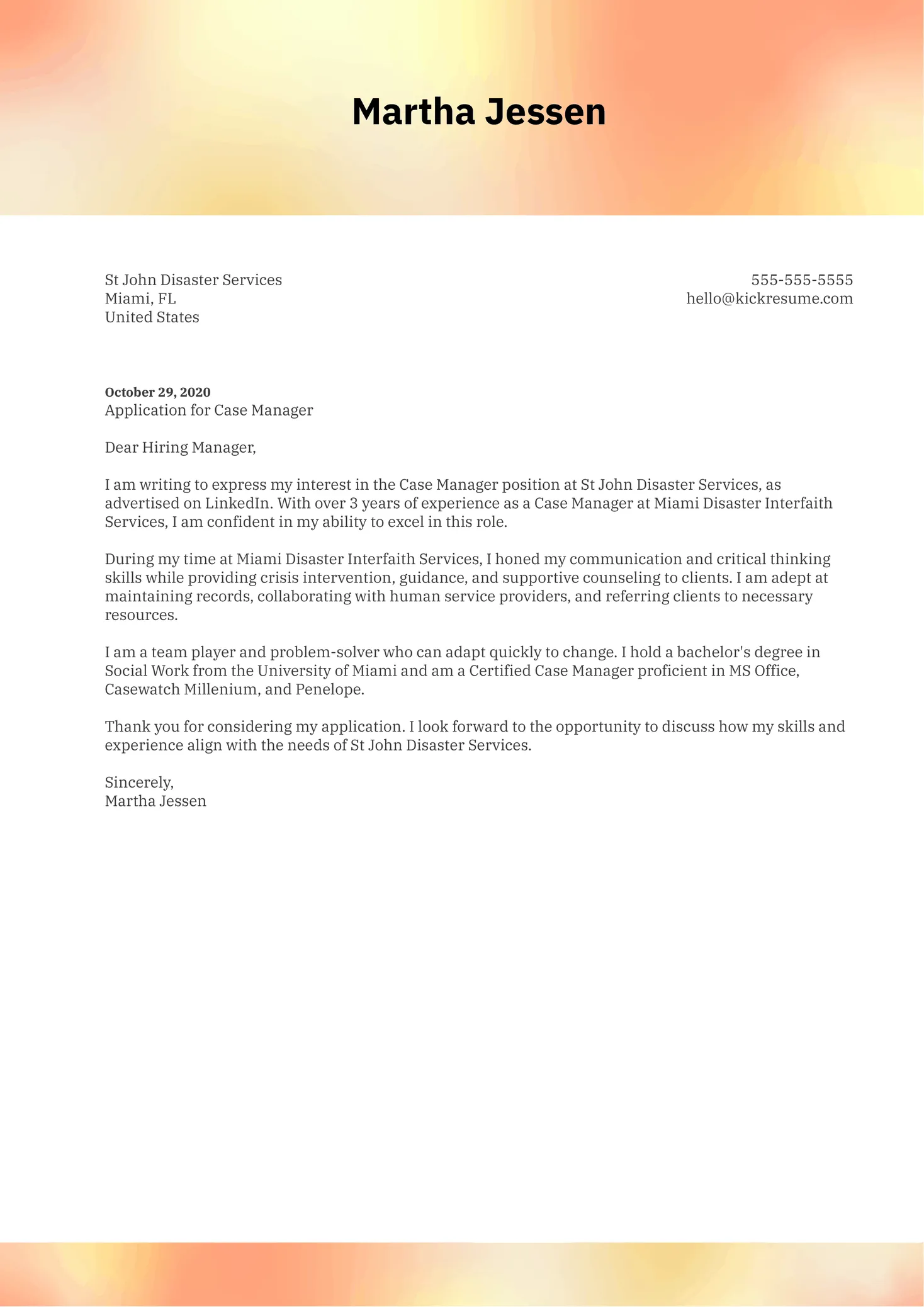
Begin your cover letter with a professional header. This includes your name, address, phone number, and email address. Ensure that the information is up-to-date and easy to read. The header sets the tone for the entire document, so attention to detail here is key. A clean, well-formatted header immediately communicates professionalism and organization, both vital qualities for a case manager.
Formatting the Header
Format your header consistently. Use a simple font and clear spacing. Consider placing your contact information on the left or right side of the page, or even centered. The goal is to make it easy for the hiring manager to quickly find your contact details. Remember, the header is the first thing they will see. Proper formatting leaves a good impression.
Professional Salutation

Use a professional salutation, such as “Dear Mr./Ms./Mx. [Last Name],” if you know the hiring manager’s name. If you are unsure, options include “Dear Hiring Manager,” or “Dear [Department Name] Team.” Avoid generic greetings like “To Whom It May Concern.” Personalizing your salutation demonstrates that you have done your research and are genuinely interested in the position. Always double-check the correct spelling of the person’s name.
Opening Paragraph
The opening paragraph should grab the reader’s attention immediately. State the position you are applying for and how you learned about it. Briefly mention your most relevant skills or experience that align with the job requirements. Express your enthusiasm for the role and the organization. For instance, you might say: “I am writing to express my keen interest in the Case Manager position at [Organization Name], as advertised on [Platform]. With my [Number] years of experience in case management and a deep commitment to providing compassionate care, I am confident I can contribute significantly to your team.”
Highlighting Relevant Skills and Experience
Showcasing Case Management Skills

Detail your specific case management skills, such as assessment, care planning, advocacy, and crisis intervention. Provide examples of how you have successfully applied these skills in previous roles. Explain your experience working with diverse populations and your ability to navigate complex systems. Make sure to align your skills with the specific requirements listed in the job description. The more precise, the better.
Demonstrating Empathy and Communication
Case managers need excellent communication skills, both written and verbal, to effectively interact with clients, families, and other professionals. Highlight your ability to actively listen, build rapport, and communicate complex information clearly and concisely. Emphasize your empathy and your commitment to providing compassionate care and support. Give examples of how you have resolved conflicts, facilitated difficult conversations, or advocated for your clients.
Quantifying Achievements
Use numbers and data to showcase your achievements. For example, you could state, “Increased client satisfaction scores by 15% through improved care coordination” or “Successfully managed a caseload of [Number] clients while maintaining a [Percentage]% success rate.” Quantifiable results make your accomplishments more impactful and demonstrate your value to the organization. Provide the hiring manager with tangible proof of your abilities.
Tailoring Your Cover Letter to the Job Description
Researching the Organization
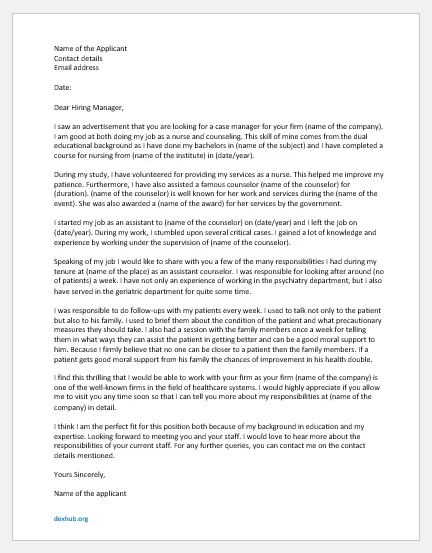
Before writing your cover letter, research the organization. Understand its mission, values, and the specific needs of the role. Tailor your cover letter to reflect your understanding of the organization and explain how your skills and experience align with their goals. Demonstrate that you are genuinely interested in working for that particular organization, not just any case management role. The more relevant you are, the better.
Matching Skills and Requirements
Carefully review the job description and identify the key requirements. Use these keywords and phrases throughout your cover letter. Provide specific examples of how you have met these requirements in your past roles. This ensures that your cover letter directly addresses the needs of the employer and increases your chances of being considered. Your goal is to convince the hiring manager you are the perfect fit.
Formatting and Tone for Impact

Using a Professional Tone
Maintain a professional, yet personable, tone throughout your cover letter. Avoid overly casual language or jargon. Use clear, concise language, and write in an active voice. Show enthusiasm for the role without being overly effusive. Your tone should reflect your professionalism and your ability to communicate effectively with clients, colleagues, and other stakeholders. The goal is to strike the right balance.
Proofreading and Editing
Proofreading is an essential step. Ensure your cover letter is free of grammatical errors and typos. Read it multiple times and consider having someone else review it. Errors can create a negative impression and detract from your qualifications. Always check for correct spelling, punctuation, and grammar. A well-written, error-free cover letter demonstrates your attention to detail and your commitment to excellence. Proofreading can be tedious but it is a must.
Closing Your Cover Letter

Expressing Enthusiasm and Gratitude
In your closing paragraph, reiterate your enthusiasm for the position and express your gratitude for the hiring manager’s time and consideration. Thank them for the opportunity to apply. Reiterate your interest in the organization and your eagerness to contribute to their mission. Express your hope for an interview.
Call to Action
End with a clear call to action, such as “I am eager to discuss my qualifications in an interview and can be reached at [Phone Number] or [Email Address].” Make it easy for the hiring manager to contact you. This shows that you are proactive and interested in moving forward in the hiring process. A well-crafted call to action can significantly increase your chances of securing an interview and landing the job.