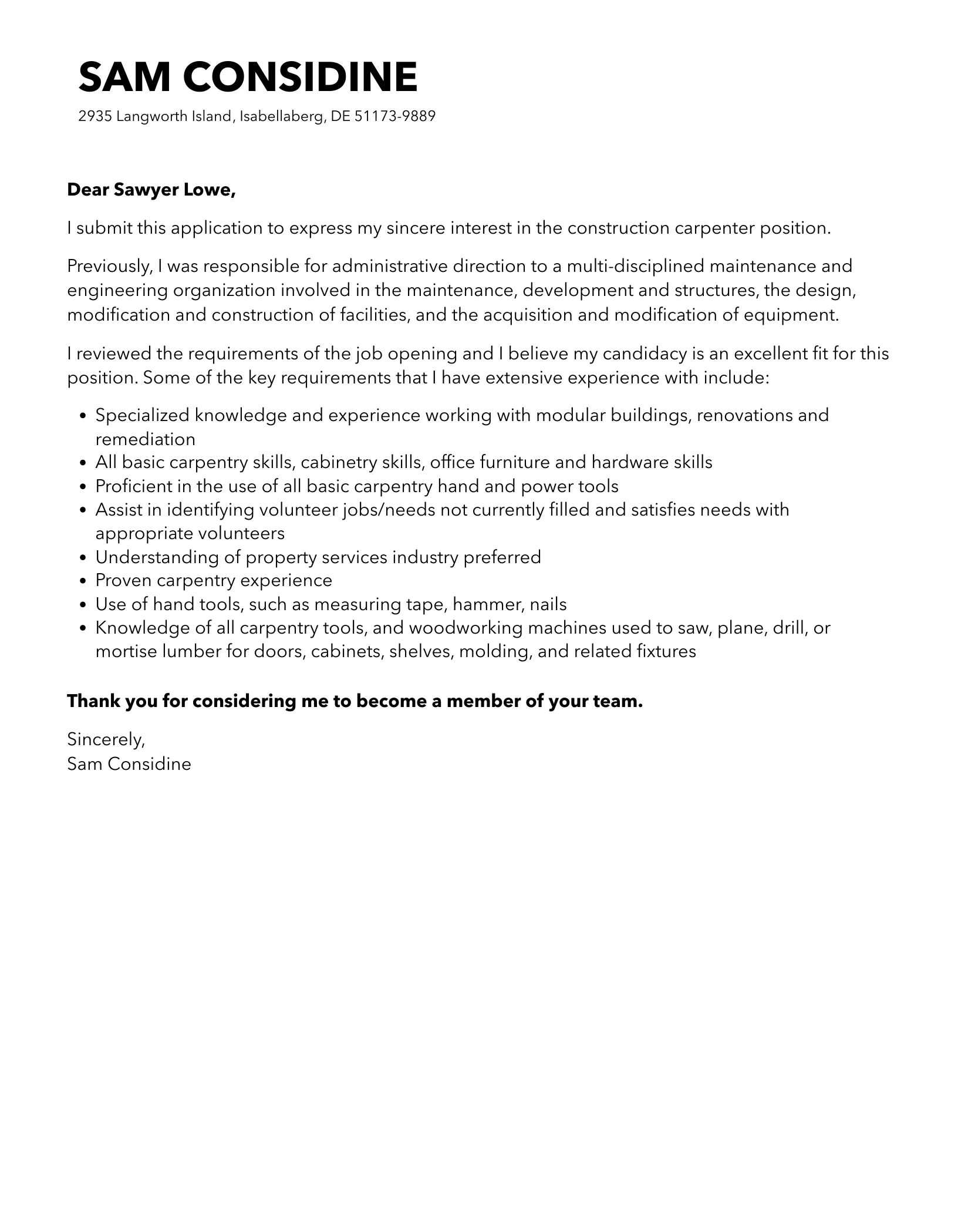
Understanding the Importance of a Carpenter Cover Letter
In the competitive field of carpentry, a well-crafted cover letter is your first opportunity to make a strong impression on potential employers. It serves as a crucial introduction, allowing you to showcase your skills, experience, and enthusiasm for the role. Unlike a resume, which provides a factual overview of your qualifications, a cover letter lets you connect with the hiring manager on a personal level, demonstrating your personality and genuine interest in the position. It is a chance to explain why you are the best fit for the job and how your unique skills and experiences align with the company’s needs. Your cover letter can be the difference between getting an interview and your application being overlooked, making it a vital tool in your job search.
Why a Cover Letter Matters for Carpenters
A cover letter gives carpenters the opportunity to highlight specific achievements and skills that are relevant to the job. A cover letter allows you to elaborate on your resume, providing context and detail to your experience. Many carpenters underestimate the importance of a cover letter, often sending only their resume and missing a significant opportunity to stand out. By explaining your background and qualifications, your cover letter helps hiring managers to understand how your skills can benefit their company. It’s your chance to demonstrate your communication skills and how you can be an asset.
The job market is extremely competitive, and a well-written cover letter can significantly increase your chances of getting an interview. It is important to remember to tailor your cover letter to each specific job, highlighting the skills and experiences that are most relevant to that position. You can highlight your unique qualities and experiences that set you apart from other candidates by writing a thoughtful cover letter.
Highlighting Your Skills and Experience

Highlighting your skills and experience is very important. Start by identifying the key skills and experiences that are most relevant to the job you are applying for. This may include specific carpentry techniques, such as framing, finishing, or cabinet making, as well as experience with various tools and materials. Use specific examples to illustrate your accomplishments. For example, instead of saying, ‘Managed construction projects,’ you could say, ‘Successfully managed and completed three residential construction projects, including framing, roofing, and interior finishing, within budget and on schedule.’ This demonstrates your ability to manage and deliver results.
Always quantify your achievements whenever possible. For example, ‘Increased efficiency in the framing process by 15% by implementing new workflow strategies.’ When describing your experience, provide details about the projects you have worked on, the roles you have held, and the responsibilities you have undertaken. Use action verbs to describe your accomplishments and showcase your active involvement in past projects, which will demonstrate your dedication to excellence and willingness to go the extra mile.
Essential Components of a Carpenter Cover Letter
Contact Information and Salutation
Your cover letter should start with your contact information, including your name, address, phone number, and email address. Make sure to include the date and the hiring manager’s name and title, if available. If you are unable to find the hiring manager’s name, you can use a general salutation, such as ‘Dear Hiring Manager’. A professional and respectful tone sets the tone of your letter and shows your seriousness and attention to detail.
Crafting a Compelling Opening Paragraph

Your opening paragraph is your chance to capture the reader’s attention and make a strong first impression. State the position you are applying for and where you saw the job posting. Clearly state your enthusiasm for the role and why you are interested in the company. You should also briefly summarize your key qualifications and skills. Demonstrate your understanding of the company’s mission and values and how your goals align with their goals. When you make it clear that you have a strong interest in the company, that will help you stand out to the hiring manager.
Showcasing Your Carpentry Skills
In the body of your cover letter, go into detail about your carpentry skills. Mention specific skills such as framing, finish carpentry, cabinet making, or any other specialized areas. Provide examples of how you have used these skills in previous projects and highlight your ability to work with various materials, such as wood, metal, and composite materials. Your cover letter is a good place to show what you have worked on.
Quantifying Your Achievements
Provide specific metrics or numbers to quantify your achievements. Quantifying your achievements is more compelling than just listing your skills. Did you complete a project ahead of schedule? Did you improve efficiency or reduce costs? Did you receive positive feedback from clients or supervisors? These kinds of details can impress employers. Use this opportunity to talk about how your background and experience can help their company. This will improve your chances of getting the job.
Highlighting Relevant Experience

Detail your relevant experience, mentioning the companies you have worked for, your job titles, and the duration of your employment. Describe the projects you worked on and your role in each project. Emphasize projects that are similar to the requirements of the job you are applying for. For example, if you have experience in residential construction, and the job is for residential work, be sure to mention that experience. When you present the details in a cover letter, it can help hiring managers see how your skills and experiences match their job requirements.
Demonstrating Your Knowledge of Tools and Materials
List the tools and materials you are proficient with. Include all the tools you are experienced with, such as power saws, hand tools, and measuring devices. The more tools and materials you are able to work with, the more valuable you will be to any company. If you have experience with specialized materials, such as engineered wood products or sustainable building materials, highlight these as well. Your knowledge shows your versatility.
Expressing Your Enthusiasm and Interest
Let your passion for carpentry shine through. Show genuine enthusiasm for the company and the specific role you are applying for. Explain why you are interested in the company and what you admire about its work. Mention anything that has inspired you about the company, such as their commitment to quality, innovation, or sustainability. When you show your excitement, it demonstrates your commitment to the company and shows why you deserve the job.
Closing the Letter and Call to Action

In your closing paragraph, reiterate your interest in the position and thank the hiring manager for their time and consideration. Indicate your availability for an interview and how they can contact you. Include a clear call to action, such as ‘I am eager to discuss how my skills and experience can contribute to your team.’ You can also mention your contact information again. By taking initiative, you show your interest.
Formatting and Design for a Professional Look
Choosing the Right Font and Font Size
Use a professional and easy-to-read font, such as Times New Roman, Arial, or Calibri. Keep the font size between 10 and 12 points for optimal readability. Avoid using overly decorative or stylized fonts, as they can be distracting and difficult to read. Your goal is to create a clean and professional look that allows your skills to stand out.
Proper Use of White Space and Margins

Use white space to make your cover letter visually appealing and easy to read. Use standard one-inch margins on all sides of the document. Use line breaks to separate paragraphs and sections. A well-organized and visually appealing cover letter will make it easier for the reader to quickly scan your qualifications.
Proofreading and Editing for Errors
Proofread your cover letter carefully for any spelling, grammar, or punctuation errors. Have a friend, family member, or career counselor review your letter as well. It is very easy to miss mistakes when you are reading your own work. Check all your contact information to make sure it is accurate. Your goal is to submit a cover letter free of errors.
Common Mistakes to Avoid in Your Cover Letter
Generic and Unfocused Content

Avoid using generic or vague language that could apply to any job. Tailor your cover letter to the specific requirements of each job you apply for. Use the company’s name, and demonstrate that you understand their mission, needs, and the specific requirements of the role. Employers will quickly notice a cover letter that is not related to the specific job posting.
Typos and Grammatical Errors
Typos and grammatical errors can undermine your credibility and make you seem unprofessional. Always proofread your cover letter carefully before submitting it. Use spell-check and grammar-check tools, but also have someone else review your letter to catch any mistakes you may have missed. A flawless cover letter will demonstrate your attention to detail and professionalism.
Lying or Exaggerating Skills
Never lie or exaggerate your skills or experience. While it is important to highlight your achievements, it is equally important to be truthful. Dishonesty can easily be uncovered during the interview process or later on, which can lead to the loss of a job opportunity or even termination. Be honest and accurate when describing your skills and experience. Honesty builds trust.
Providing Examples of Carpenter Cover Letters

Reviewing examples can give you the ability to create your own. Below are examples for a variety of experiences.
Example 1 Experienced Carpenter
This example is for a carpenter with many years of experience in various carpentry fields, the body will describe the skills gained over the years. Your body should highlight a wide range of skills from rough framing to finishing and describe your role in projects.
Here’s the format for Example 1
- Contact Information
- Salutation
- Opening Paragraph
- Body Paragraphs (Highlight Experience and Skills)
- Closing Paragraph
- Sign Off
Example 2 Entry-Level Carpenter
This example is for an entry-level carpenter. Highlight your experience with any previous projects or your educational background. You can use your cover letter to showcase your enthusiasm for the field. Here is the format for example 2.
- Contact Information
- Salutation
- Opening Paragraph
- Body Paragraphs (Focus on relevant experience and skills)
- Closing Paragraph
- Sign Off
Example 3 Specialized Carpenter
This example is for a specialized carpenter. A specialized carpenter focuses on a unique skill set. Your cover letter should focus on your specialized carpentry skills. The format should follow the example below.
- Contact Information
- Salutation
- Opening Paragraph
- Body Paragraphs (Focus on specialized skills)
- Closing Paragraph
- Sign Off
Tailoring Your Cover Letter to the Job
Researching the Company and Job Requirements
Before writing your cover letter, research the company and the specific job requirements. Understand the company’s mission, values, and recent projects. Review the job description carefully, paying attention to the required skills, experience, and qualifications. When you research the company and the job, it will give you the ability to tailor your application.
Customizing Your Letter for Each Application
Customize your cover letter for each job application. Do not use a generic cover letter. Use the information you gathered to highlight how your skills and experience align with the specific requirements of the job. Tailoring your cover letter shows your attention to detail and your genuine interest in the position. Hiring managers can recognize a generic cover letter, and this is a major drawback in your application.
Key Skills to Include in Your Carpenter Cover Letter
Carpentry Skills and Techniques
List your carpentry skills and techniques. If you know how to frame, install doors, windows, and trim, be sure to include those skills in your cover letter. Include your experience with tools and materials, such as hand tools, power tools, and knowledge of various types of wood and construction materials. Be sure to mention if you have any experience with any special skills or techniques.
Relevant Soft Skills
Include your soft skills, such as problem-solving, communication, and teamwork. Carpenters who can solve problems will have a higher chance of being hired. Highlight your ability to work independently and your ability to collaborate with others. Communication and teamwork are critical in carpentry, so it’s important to express your skills. Mention your ability to manage projects, and how you have been able to handle those projects.
How to Follow Up on Your Application
After submitting your cover letter and resume, follow up with the hiring manager or the company’s human resources department. Send a brief email or make a phone call within a week or two to reiterate your interest in the position and inquire about the status of your application. When you follow up, make sure you thank the hiring manager again. When you show your interest, you improve your chances of being called for an interview.
By following these guidelines, you can write a compelling carpenter cover letter that highlights your skills, experience, and enthusiasm. Your cover letter will significantly increase your chances of landing a job. Remember to tailor your letter to each job application and proofread it carefully before submitting it. Good luck with your job search!