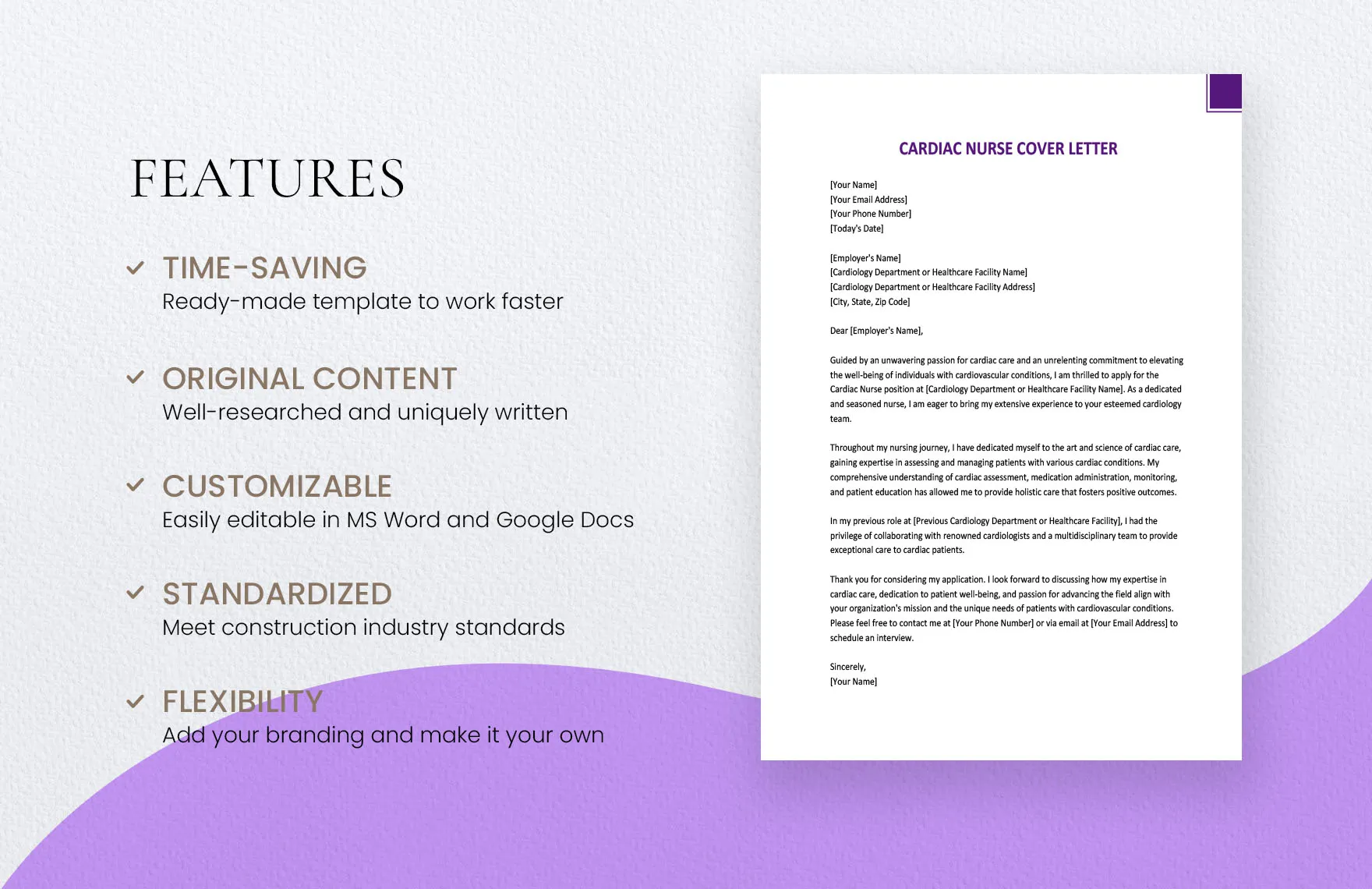
Understanding the Cardiac Nurse Cover Letter
A cardiac nurse cover letter is your first opportunity to make a strong impression on a potential employer. It serves as a personalized introduction, supplementing your resume by highlighting your skills, experience, and passion for cardiac nursing. Unlike a generic resume, a well-crafted cover letter allows you to tell your story, explain your qualifications, and express your enthusiasm for the specific position and the healthcare facility. It’s a chance to demonstrate your understanding of the role and what you can bring to the table, setting you apart from other applicants. A compelling cover letter provides context to your resume, emphasizing your most relevant achievements and career goals in the field of cardiac nursing. This document plays a vital role in showcasing your unique value proposition and increasing your chances of securing an interview.
Why a Cover Letter Matters
In the competitive field of healthcare, especially in cardiac nursing, a cover letter is not just an option; it is a necessity. It is a chance to communicate your understanding of the hospital’s mission, values, and how your professional background aligns. Furthermore, a cover letter allows you to provide a narrative, which your resume alone cannot convey. Your letter should detail why you are interested in the specific role and what motivates you to work in cardiac care. It allows you to highlight accomplishments that demonstrate your skills, empathy, and commitment to patient care. Recruiters often use cover letters to gauge your personality, communication skills, and whether you’re a good fit for the team. By showing that you have researched the position and the facility and are tailoring your application accordingly, you demonstrate initiative and genuine interest in the role, increasing your chances of getting an interview.
Key Components of a Strong Cover Letter

A successful cover letter should be clear, concise, and tailored to the specific job description. It should follow a logical structure, starting with a compelling introduction that grabs the reader’s attention, quickly stating the position you are applying for. The main body should highlight your most relevant experience and skills, providing specific examples of your achievements. Focus on qualities that align with the employer’s needs. This could include experience with EKG monitoring, post-operative care, or patient education. Finish by summarizing your qualifications and reiterating your interest in the position. Proofread carefully to ensure that your letter is free from errors in grammar and spelling. Your cover letter is an opportunity to showcase your professionalism and attention to detail.
Header and Contact Information
The header of your cover letter should include your full name, address, phone number, and professional email address. Make sure this information is accurate and up-to-date. If you have a LinkedIn profile, consider including the URL as well. Directly below your contact information, include the date and the hiring manager’s name (if available), and the name of the hospital or clinic. Addressing the hiring manager by name shows that you have taken the time to research the facility and the specific role. If you cannot find the hiring manager’s name, use a general greeting such as “Dear Hiring Manager”.
Professional Greeting
Begin your cover letter with a professional greeting. If you know the hiring manager’s name, use “Dear Mr./Ms./Dr. [Last Name]”. If you are unsure, “Dear Hiring Manager” or “Dear [Department Name] Hiring Team” are acceptable alternatives. Avoid generic greetings like “To Whom It May Concern” as they do not convey personal attention. Ensure your greeting aligns with the tone of the cover letter. Consider the hospital’s culture to match its formal and informal styles. A well-crafted greeting sets the tone for your application and makes the letter feel more personalized. The goal is to immediately engage the reader and make them feel like you have done your homework.
Body Paragraphs

The body paragraphs form the heart of your cover letter. They should showcase your skills, experience, and passion for the position, highlighting your most relevant qualifications. Begin by stating the position you are applying for and where you saw the job posting. Then, explain why you are the perfect candidate by detailing specific experiences and skills that align with the job requirements. Use the job description as a guide to identify the key responsibilities and desired skills. For each skill or experience you mention, provide a brief example or anecdote to demonstrate how you have successfully applied it in the past. This provides tangible evidence of your capabilities and commitment.
Highlighting Relevant Skills and Experience
Focus on the most relevant skills and experiences for a cardiac nurse position. Emphasize your expertise in areas such as EKG monitoring, critical care, post-operative care, medication administration, and patient education. Include any certifications you hold, such as ACLS or BLS. Mention any experience with specific cardiac procedures or technologies. Tailor your skills section to the specific requirements of the job, referring back to the job description. Your letter must showcase your hands-on experience in cardiac nursing as well as your technical and soft skills. Highlight any experience with electronic health records or other tools, and demonstrate your knowledge of healthcare regulations and ethical practices.
Quantifying Achievements
Instead of just listing your responsibilities, quantify your achievements whenever possible. Use numbers and data to demonstrate your impact and value. For example, instead of saying “managed patient care”, say “managed care for 15 patients daily, resulting in a 10% decrease in readmission rates”. Quantifying your achievements provides concrete evidence of your capabilities. Use metrics to show that you have improved patient outcomes, reduced errors, and enhanced efficiency. For example, if you’ve implemented a new protocol that improved patient satisfaction, mention the percentage increase in satisfaction. When you can back up your claims with quantifiable results, you will make your cover letter more compelling and persuasive.
Tailoring to the Specific Job

Each cover letter should be unique to the specific job and hospital. Read the job description carefully to understand the requirements and expectations. Research the healthcare facility and its mission to understand its values and priorities. Then, customize your cover letter to address these specific points. Show that you understand the facility’s focus and how your skills and experience align with their needs. Explain why you are interested in working for that particular hospital or clinic. Tailoring your letter will demonstrate that you care enough to go the extra mile, increasing your chances of getting an interview. Mention the specific values that resonate with you and tailor your application for the facility.
Showcasing Passion for Cardiac Nursing
Let your passion for cardiac nursing shine through. Share why you are drawn to this field, the type of patients you want to help, and the impact you hope to make. Talk about your interest in improving patient outcomes and patient safety. You can share stories, and anecdotes from previous experiences that illustrate your passion. Your enthusiasm will make your application more memorable and will help the hiring manager see you as a dedicated candidate. Demonstrate your empathy and caring nature. Make sure the tone of your letter reflects your commitment. Your genuine interest in cardiac nursing will make a lasting impression.
Formatting and Style Tips
The format and style of your cover letter are essential for making a good first impression. Keep it clean, easy to read, and professional. Use a standard font such as Times New Roman, Arial, or Calibri, in a 10-12 point size. Use single spacing with a blank line between paragraphs. Keep your letter concise, ideally no more than one page. Use clear and direct language, avoiding jargon or overly complex sentences. Proofread carefully for any errors in grammar and spelling. A well-formatted cover letter demonstrates your attention to detail and your respect for the employer’s time.
Font and Readability

Choose a professional font that is easy to read, like Times New Roman, Arial, or Calibri. These fonts are widely accepted and ensure that your letter looks clean and organized. Make sure the font size is appropriate, typically between 10 and 12 points. Consistent formatting throughout your letter is essential. Use the same font, size, and spacing for your contact information, date, salutation, body paragraphs, and closing. Poor readability will make your letter difficult to read and can discourage the reader. Ensure that the text is clearly legible. Proper formatting showcases your professionalism and attention to detail. Avoid unusual or overly decorative fonts that could distract from the content.
Concise and Engaging Language
Use concise and engaging language throughout your cover letter. Get straight to the point and avoid unnecessary words or phrases. Use strong action verbs to describe your accomplishments and experiences. Avoid passive voice whenever possible. Keep sentences short and use clear language, avoiding medical jargon unless absolutely necessary. Use language that is easy to understand and demonstrates your communication skills. Break up long paragraphs into shorter ones for better readability. Your cover letter should not be a rehash of your resume. Instead, it should be a compelling narrative that highlights your value.
Proofreading and Editing
Thoroughly proofread and edit your cover letter before submitting it. Errors in grammar, spelling, and punctuation can undermine your credibility and professionalism. Read your letter multiple times, and consider asking a friend or colleague to review it as well. Look for any typos, grammatical errors, or awkward phrasing. Check your letter for consistency in formatting and language. Ensure that your contact information is correct. A polished cover letter demonstrates your attention to detail and your commitment to excellence. Proofreading ensures that your cover letter conveys the right message and presents you in the best possible light. Take your time and make any necessary revisions to perfect your cover letter.
Call to Action and Closing

The closing of your cover letter should include a call to action and a professional closing. Summarize your qualifications, restate your interest in the position, and express your willingness to discuss your qualifications further in an interview. Thank the hiring manager for their time and consideration. Your closing statement should be polite and professional. Your cover letter must end on a strong note and encourage the employer to move forward with the next step. The conclusion is your final opportunity to impress your potential employer.
Expressing Gratitude
Express gratitude to the hiring manager for their time and consideration. A simple “Thank you for considering my application” is often sufficient. You can also express your appreciation for the opportunity to be considered. This shows respect for the reader’s time. Expressing gratitude is a way of thanking the person for considering your application. It demonstrates your good manners and professionalism. This will leave a positive impression on the hiring manager.
Professional Closing
End your cover letter with a professional closing such as “Sincerely,” “Best regards,” or “Respectfully.” Avoid casual closings like “Thanks” or “Cheers.” Type your full name below the closing. If you are submitting a physical copy, leave space for your signature above your typed name. A professional closing reinforces your professionalism. Make sure that your closing is consistent with the tone of your cover letter. This final touch creates a good impression.
Additional Resources
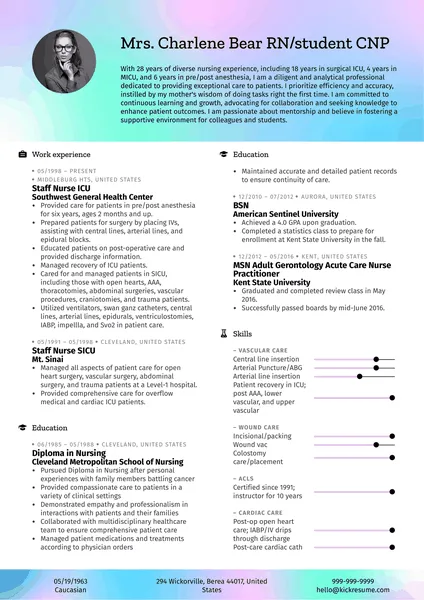
There are numerous resources available to help you write a compelling cover letter for a cardiac nurse position. Use online templates and examples as a guide, but always tailor your letter to your experience. Career websites offer cover letter writing guides and templates. Review job descriptions and the hospital websites. Visit professional nursing associations for guidance. Search for sample cover letters and templates. Make sure you follow the formatting guidelines. By utilizing these resources, you can create a cover letter that accurately reflects your skills and qualifications.