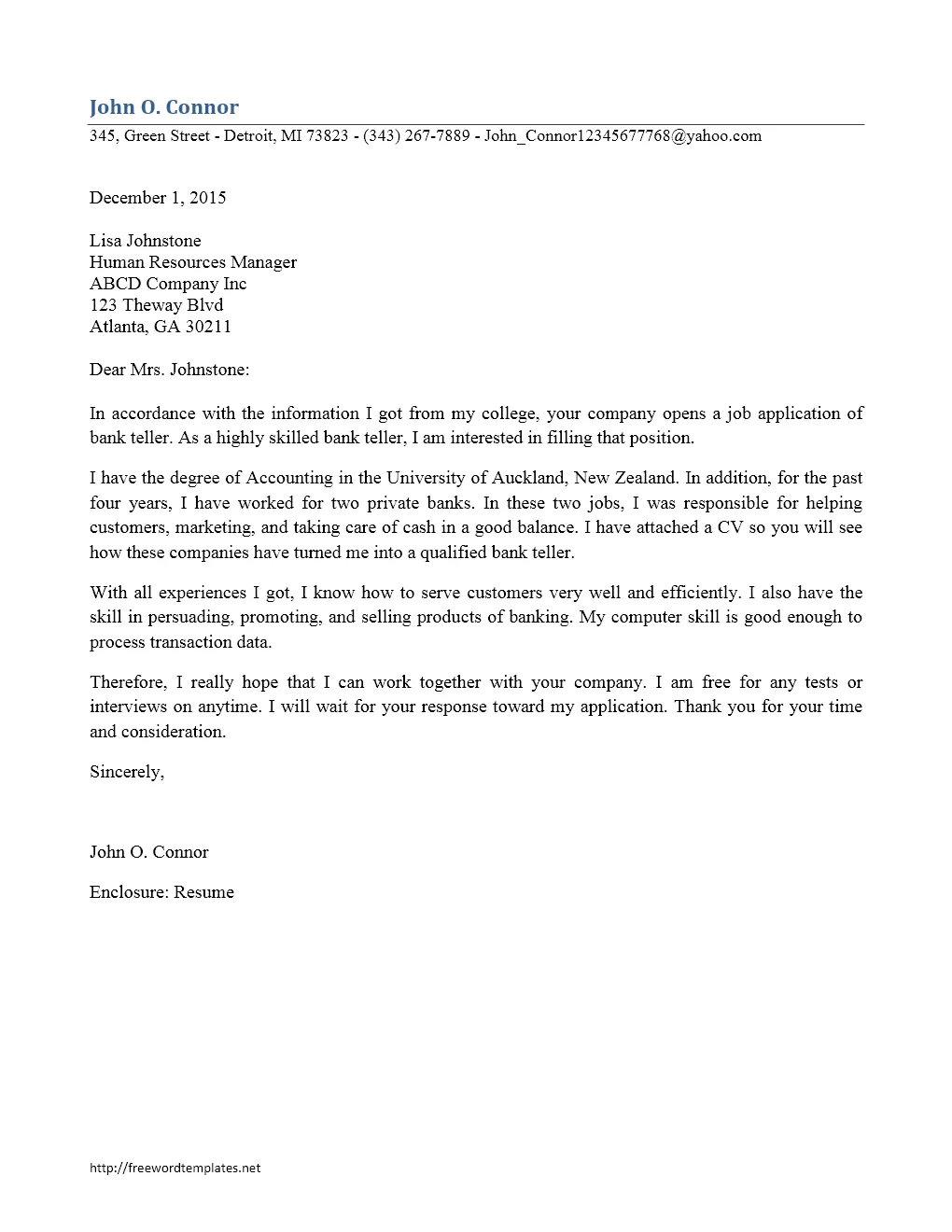
Highlighting Your Skills for Bank Teller Roles
A compelling bank teller cover letter is your first step toward landing that coveted position. It’s your chance to showcase your abilities, experience, and personality to a potential employer. This document serves as a crucial introduction, often determining whether your application progresses to the next stage. By strategically highlighting your most relevant skills and tailoring your letter to the specific bank and role, you significantly increase your chances of standing out from the competition and securing an interview. Remember that your cover letter should complement your resume, providing a narrative that brings your qualifications to life and demonstrates your enthusiasm for the opportunity.
Key Skills to Showcase
Banks seek individuals who excel in several key areas. Your cover letter should clearly demonstrate these essential skills, using concrete examples to illustrate your abilities. Employers want to see that you have the right combination of technical skills, soft skills, and a strong work ethic. Highlighting these skills directly correlates to how well you can perform the bank teller responsibilities. Be sure to weave in examples and quantifiable results when possible. Don’t just state that you have these skills; provide evidence of how you’ve utilized them effectively in the past to achieve positive outcomes.
Customer Service Excellence

Exceptional customer service is paramount in a bank teller role. It involves effectively assisting customers with their banking needs, resolving issues promptly, and creating a positive banking experience. Your cover letter should emphasize your ability to build rapport, actively listen, and communicate clearly and empathetically. Showcase instances where you’ve gone the extra mile to satisfy a customer, demonstrating your commitment to their needs and your ability to handle challenging situations with professionalism and grace. Mention any customer service awards or positive feedback you’ve received.
Attention to Detail
Accuracy is critical in banking. Your cover letter should highlight your meticulousness and ability to avoid errors. Provide examples of your experience with data entry, reconciliation, or any tasks that demanded precision. You might mention any systems or software you’re familiar with and any training you’ve undertaken to enhance your accuracy. Showing your commitment to accuracy assures the employer that you take your duties seriously and have the skills to perform them successfully and efficiently. Include any specific strategies you use to ensure accuracy in your work, such as checklists or double-checking procedures.
Cash Handling Proficiency
Handling cash and balancing transactions are essential parts of a bank teller’s duties. Mention your experience with cash drawers, point-of-sale systems, and any training you have in loss prevention or fraud detection. Demonstrate your ability to count money accurately, follow established procedures, and maintain a balanced till. If you have experience in handling large sums of money or have received any certifications in cash handling, include this information. Mention any instances where you’ve successfully identified or prevented discrepancies or fraud.
Communication and Interpersonal Abilities

Effective communication is essential for interacting with customers and colleagues. Highlight your ability to communicate clearly and concisely, both verbally and in writing. Mention your active listening skills and ability to explain complex financial information in a way that is easy for customers to understand. Provide examples of your experience in resolving conflicts, handling complaints, and building positive relationships with customers. Showcase how you interact in a team environment and how you maintain professionalism under pressure. Also mention your ability to adapt your communication style to different audiences.
Structuring Your Bank Teller Cover Letter
A well-structured cover letter is easy to read and understand. It should follow a standard format, ensuring that your key qualifications are prominently displayed. Each section should serve a specific purpose, guiding the reader through your skills, experience, and motivation for the role. A clear structure demonstrates professionalism and makes it easy for the hiring manager to grasp your key attributes quickly. Avoid unnecessary jargon and keep the language straightforward and professional.
Contact Information and Salutation
Begin your cover letter with your contact information at the top, including your name, address, phone number, and email address. Use a professional salutation, such as “Dear Mr./Ms./Mx. [Last Name],” if you know the hiring manager’s name. If you do not know the name, use “Dear Hiring Manager.” Ensure your salutation is polite and respectful. Double-check all contact details for accuracy to avoid any communication issues.
Opening Paragraph Grab Attention

Your opening paragraph should immediately grab the reader’s attention. State the position you are applying for and where you found the job posting. Briefly mention your most relevant skills or experience to show that you are a strong candidate. Clearly state your enthusiasm for the role and the bank. You might consider mentioning a specific achievement or a particular aspect of the bank’s mission that resonates with you. The opening paragraph should create a positive first impression and encourage the hiring manager to read the rest of your letter.
Body Paragraphs Skills and Experiences
The body paragraphs are where you elaborate on your skills and experience. Use 2-3 paragraphs to highlight the skills most relevant to the bank teller role. Provide specific examples of how you have demonstrated these skills in past roles. Use the STAR method (Situation, Task, Action, Result) to structure your examples. Explain the situation, the task you were assigned, the action you took, and the positive result you achieved. Quantify your achievements whenever possible, e.g., “Increased customer satisfaction scores by 15%.” This approach helps the reader clearly understand your capabilities and the value you can bring to the role. Be sure to tailor your examples to match the job description.
Closing and Call to Action
In your closing paragraph, reiterate your interest in the position and express your gratitude for the opportunity to be considered. Thank the hiring manager for their time and consideration. Include a clear call to action, such as “I look forward to hearing from you soon” or “I am eager to discuss my qualifications further in an interview.” Provide your contact information again and express your willingness to follow up, if appropriate. End with a professional closing, such as “Sincerely” or “Best regards.”
Formatting Your Cover Letter for Success

Proper formatting enhances readability and presents you as a professional candidate. Consistent formatting makes your cover letter easier to scan and understand. Pay close attention to font, spacing, and overall layout to ensure that your letter is visually appealing and easy to read. A well-formatted cover letter reflects your attention to detail and your commitment to excellence. Poor formatting may be interpreted as carelessness or a lack of professionalism, which can negatively impact your chances of getting the job. The goal is to create a polished document that showcases your capabilities and professionalism.
Choosing the Right Font and Format
Select a professional font, such as Times New Roman, Arial, or Calibri. Use a font size between 10 and 12 points for readability. Use standard 1-inch margins on all sides. Ensure that the text is left-aligned with a single space between each line of text. Use a consistent format for headings, bullet points, and paragraphs. Avoid using excessive formatting, such as bolding or underlining, as it can distract the reader. Keep the layout clean and uncluttered. Make sure that the document looks balanced and organized. Save your cover letter as a PDF file to maintain the formatting across different devices and operating systems.
Proofreading and Editing
Proofread your cover letter multiple times to catch any errors. Check for spelling mistakes, grammatical errors, and punctuation errors. Read the letter aloud to ensure that it flows smoothly and makes sense. Have a friend or family member review your cover letter for any errors or areas for improvement. Pay close attention to the tone and language used to ensure that they are professional and appropriate for the role. A polished, error-free cover letter demonstrates your attention to detail and your professionalism. A well-proofread cover letter conveys your capabilities effectively. Consider using grammar-checking tools, but always review the results carefully.
Tailoring Your Cover Letter

Customize your cover letter to each specific job and bank. Research the bank’s mission, values, and the specific requirements of the bank teller position. Address the hiring manager by name whenever possible. Use keywords from the job description to demonstrate that you meet the requirements. Highlight the skills and experiences that are most relevant to the specific role. Explain why you are a good fit for the bank, using specific examples. Tailoring your cover letter increases your chances of getting the job because it shows the employer that you have taken the time to understand their needs and expectations. This personalized approach greatly enhances your application.
In conclusion, writing an effective bank teller cover letter is vital for making a positive first impression. By highlighting your relevant skills, using a clear structure, and tailoring your letter to each specific job, you can significantly improve your chances of getting hired. Remember to showcase your customer service skills, attention to detail, and cash handling proficiency. Focus on a professional and polished presentation. Good luck with your job search!