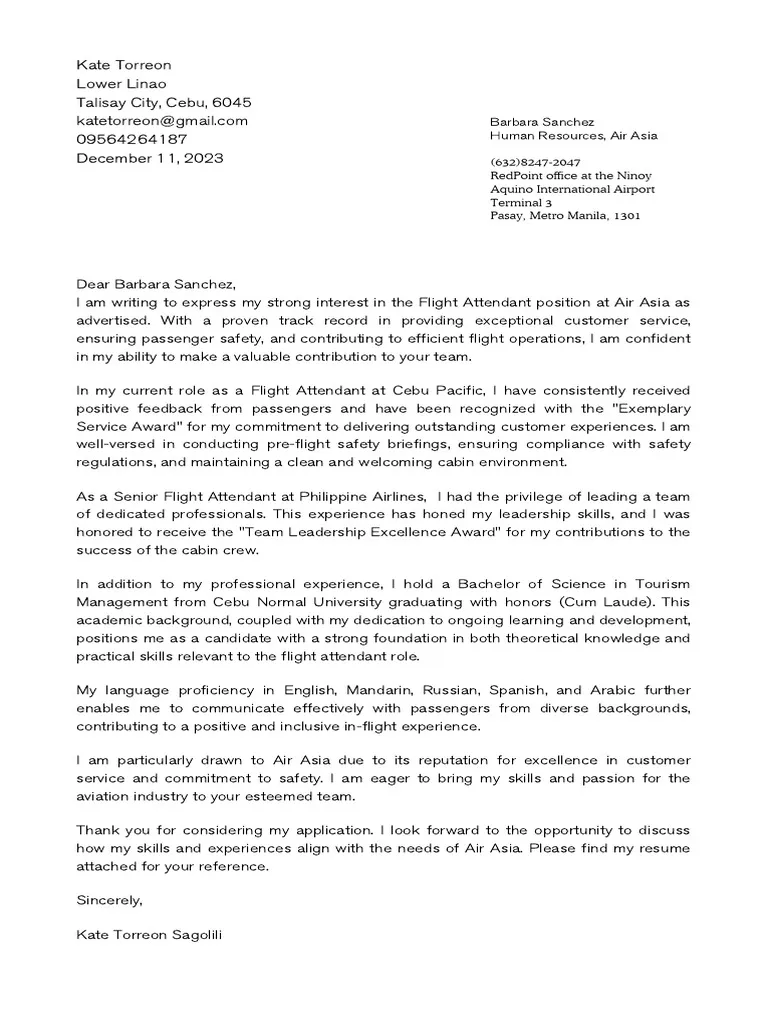
Crafting Your Aviation Cover Letter
An entry-level aviation cover letter is your initial introduction to potential employers, acting as a crucial tool in your job search. It’s far more than just a formality; it’s your chance to make a compelling first impression and demonstrate your genuine interest in the aviation industry. A well-written cover letter complements your resume, providing a narrative that showcases your skills, experience, and enthusiasm, ultimately setting you apart from other applicants. The goal is to get the hiring manager to read your resume, so it’s important to make a good impression, a cover letter is your ticket to an interview. A thoughtfully crafted cover letter will increase your chances of landing an interview and ultimately, your dream job within the aviation sector. Mastering the art of the cover letter is paramount in a competitive job market, so it’s important to craft a good one.
Understanding the Aviation Industry
Before you begin writing, understanding the aviation industry is essential. This involves familiarizing yourself with the different sectors within aviation, such as commercial airlines, general aviation, aerospace manufacturing, and aviation maintenance. Each sector has unique requirements and focuses, so tailoring your cover letter to the specific industry you are targeting is key. Research current trends, challenges, and opportunities within the industry to demonstrate your awareness and proactive approach. Your cover letter should reflect this knowledge. For instance, if you’re applying to a role in sustainable aviation, mentioning your awareness of environmental initiatives will resonate with the employer. Understanding the aviation industry allows you to highlight the most relevant skills and tailor your message accordingly, increasing your chances of success.
Researching Companies

Thorough research into the companies you are applying to is a non-negotiable step. Visit their websites, read their mission statements, and explore their recent projects or initiatives. This will help you understand their values, culture, and what they look for in potential employees. Look for any recent news or updates about the company. This might give you insight into their current projects or needs. This research allows you to personalize your cover letter, referencing specific aspects of the company that resonate with you. Mentioning specific projects, values, or achievements of the company shows your genuine interest and attention to detail. Understanding the company allows you to align your skills and experiences with their needs, increasing the effectiveness of your cover letter. Also, it’s wise to seek out employee reviews or testimonials; these sources provide further understanding of the company’s environment.
Identifying Key Skills for Aviation Roles
Entry-level positions in aviation require a blend of technical and soft skills. Highlighting these skills in your cover letter demonstrates your readiness to contribute to the team. Understand the specific skills needed for the role you are applying for and adjust your cover letter. While specific technical skills vary depending on the job, emphasizing transferable skills and your eagerness to learn will make you a competitive candidate. Focusing on your skills and experience will show the employer what you bring to the table. It is crucial to identify and highlight the skills most relevant to the job you’re applying for to impress the hiring manager and increase your chances of getting hired. Being able to match your skillset to the job description is a key way to make sure you stand out from the crowd.
Technical Skills
Technical skills in aviation can range widely, from aircraft maintenance and pilot proficiency to air traffic control and engineering. If the job posting specifies technical skills, be sure to address these skills in your cover letter. Even if you don’t have professional experience, mention any relevant coursework, certifications, or training you’ve completed. If you have experience with aviation software, maintenance tools, or specific aircraft types, highlight these. Use the same vocabulary as the job description to show you understand the requirements. For instance, if you’re applying for a maintenance role, mention any relevant certifications or hands-on experience with aircraft systems. Clearly articulating your technical capabilities will help you stand out.
Soft Skills

Soft skills are essential for success in any aviation role. Emphasize your communication, teamwork, problem-solving, and adaptability skills. Aviation is a collaborative industry where effective communication is critical for safety and efficiency. Include any experience working in teams, resolving conflicts, or adapting to changing situations. Highlight examples where you demonstrated these skills, such as completing projects with tight deadlines, working with diverse teams, or overcoming challenges. Employers in aviation value individuals who are reliable, detail-oriented, and able to perform under pressure. Showcase your ability to stay calm, focused, and make quick decisions. The inclusion of soft skills will show your value as an employee and help you increase your odds of being hired for an entry-level aviation position.
Structuring Your Aviation Cover Letter
A well-structured cover letter is easy to read and effectively conveys your qualifications. Adhering to a standard format ensures that your key information is presented in a clear, organized manner. The general format should include a header, an opening paragraph, body paragraphs that highlight qualifications, and a closing paragraph. Ensure your cover letter is formatted clearly and professionally. Use a clean font, proper margins, and consistent formatting throughout the document. The goal of your cover letter is to provide the reader with the information they are looking for quickly and efficiently, so make sure you format your letter properly. A well-structured cover letter will significantly enhance your chances of making a strong first impression.
Header and Contact Information
Your header should include your name, contact information (phone number, email address, and LinkedIn profile URL if applicable), and the date. Always include the company’s name and the hiring manager’s name. The proper header sets the tone for your cover letter and provides the necessary contact information. This allows the hiring manager to easily reach you if they’re interested in moving forward with your application. Make sure your email address and phone number are professional. Double-check for any errors in your contact details. Including a LinkedIn profile can give the hiring manager an additional way to assess your qualifications and experience.
The Opening Paragraph

The opening paragraph is your chance to immediately capture the reader’s attention. Start with a strong hook, such as mentioning the specific position you are applying for and where you saw the job posting. Quickly state your primary purpose for writing the letter. If you know the hiring manager’s name, address your letter to them personally. Express your enthusiasm for the opportunity and the company. Keep the opening paragraph concise and focused. Clearly stating the role you are applying for and why you are interested in the position establishes the context of your cover letter. The first paragraph should make the reader want to continue reading.
Highlighting Your Qualifications
The body of your cover letter should showcase your qualifications. Briefly summarize your relevant skills and experience. Tailor this section to the specific requirements of the job description. Provide specific examples of how you’ve used your skills to achieve results. Use action verbs and quantify your accomplishments whenever possible. This section should demonstrate how your skills and experiences align with the requirements of the role. Highlight the key aspects of your resume to draw the reader’s attention. Make sure to clearly connect your abilities to the job. Using concrete examples and providing evidence of your accomplishments will make a more impactful statement.
Demonstrating Passion
Demonstrate your genuine passion for aviation. Share your enthusiasm for the industry and why you are interested in this particular role. Mention any personal experiences or motivations that led you to pursue a career in aviation. This helps you to stand out and connect with the hiring manager on a personal level. Showcase your commitment and enthusiasm for the industry by referencing your personal interest in the aviation field. This can include any projects you’ve worked on, or specific interests you’ve pursued that demonstrate your enthusiasm for aviation. Sharing why you are interested in the industry will make the hiring manager want to learn more about you.
Showcasing Relevant Experience

Highlight the experience you’ve gained, including any internships, volunteer work, or relevant projects. Focus on accomplishments and results. Quantify your achievements whenever possible. For example, if you’ve improved a process or contributed to a successful project, provide specific numbers. Use the STAR method (Situation, Task, Action, Result) to structure your examples. This method helps you clearly communicate your accomplishments. Briefly describe the situation or challenge, your task, the actions you took, and the results you achieved. This method provides a structured and easy-to-understand overview of your experience and contributions. Use this method to show what you’ve done and how you’ve made a difference.
The Closing Paragraph
In your closing paragraph, restate your interest in the position and thank the reader for their time and consideration. Express your eagerness for an interview and provide your contact information again. A strong closing paragraph should reiterate your enthusiasm, provide a clear call to action, and show appreciation. Your closing paragraph should clearly state your next steps and expectations. By concisely summarizing your interest and emphasizing the importance of an interview, you will encourage the hiring manager to take the next step in the hiring process. Include an appropriate closing phrase, such as “Sincerely,” or “Best regards,” followed by your name and contact information.
Proofreading and Formatting
Proofreading and formatting are critical steps to ensure your cover letter presents you in the best possible light. A cover letter riddled with errors will be perceived poorly and may lead to your application being dismissed. Proper formatting makes your letter easy to read, while proofreading catches errors that can damage your credibility. Paying close attention to the format and correcting any errors will show you possess attention to detail and a commitment to excellence. Always prioritize formatting and proofreading to ensure your cover letter is as polished as possible. Take the time to perfect the letter before submitting it.
Formatting for Readability

Format your cover letter for easy readability. Use a professional font, such as Times New Roman, Arial, or Calibri, with a font size between 10 and 12 points. Maintain consistent formatting throughout the document. Use clear and concise language. Keep paragraphs short and to the point. Use bullet points to highlight key accomplishments or skills. The formatting of your cover letter should be neat, with adequate spacing and margins. A well-formatted cover letter presents a professional image and makes the content easier to digest. Ensure your letter is easily readable, as this is critical for the reader to quickly understand your message.
Proofreading for Errors
Thoroughly proofread your cover letter for any grammatical errors, spelling mistakes, and typos. Check for inconsistencies in formatting or language. Proofreading is essential to make sure your cover letter is as polished as possible. Use a spell checker, but also read the letter aloud to catch any errors. Ask a friend, family member, or career counselor to review your cover letter before submitting it. Fresh eyes can often catch mistakes you might have missed. Make sure you double-check any company names, contact details, or job titles. Proofreading shows your attention to detail and professionalism. An error-free cover letter will help you leave a positive impression.
Tips for Success
To increase your chances of success, consider these additional tips. Tailor each cover letter to the specific job description and company. Use action verbs to describe your accomplishments. Always follow up after submitting your application. You can significantly improve your chances of landing an interview by taking these measures. Tailoring your cover letter to a specific job description will also increase your odds of succeeding. When you tailor your cover letter, you demonstrate to the hiring manager that you have what it takes to perform the job.
Tailoring to the Job Description

Carefully review the job description and identify the key requirements and qualifications the employer is seeking. Customize your cover letter to align with these requirements. Highlight the skills, experiences, and accomplishments that match the job description. Use the same keywords and phrases used in the job posting. This will make it easier for the hiring manager to see that you are a good fit for the role. Customizing your cover letter for each job can be time-consuming, but it significantly increases your chances of success. Take the time to personalize each cover letter to the specific job. This shows you are genuinely interested in the role and have the required qualifications. By carefully tailoring your cover letter to the job description, you can demonstrate your understanding of the role and how your skills align with the company’s needs.
Using Action Verbs
Use strong action verbs to describe your skills and accomplishments. Verbs add impact and make your letter more engaging. Action verbs show what you have done and the results you achieved. Start each bullet point or sentence with an action verb to showcase your capabilities and accomplishments. Examples of effective action verbs include “managed,” “developed,” “implemented,” “achieved,” and “led.” Avoid passive language. Strong action verbs will help showcase your qualifications and make your cover letter more dynamic and appealing. Action verbs bring your qualifications to life and make your achievements more memorable.
Following Up
Following up after submitting your application demonstrates your continued interest and professionalism. Send a polite email to the hiring manager a week or two after submitting your cover letter and resume. Briefly reiterate your interest in the position and inquire about the status of your application. Keep your follow-up email concise and professional. Express gratitude for their time and consideration. Following up shows that you are proactive and genuinely interested in the opportunity. It keeps your application fresh in the hiring manager’s mind. If you haven’t heard back after a second follow-up, consider it a sign to move on. Although you might not receive an immediate response, the follow-up highlights your enthusiasm for the role and enhances your application.