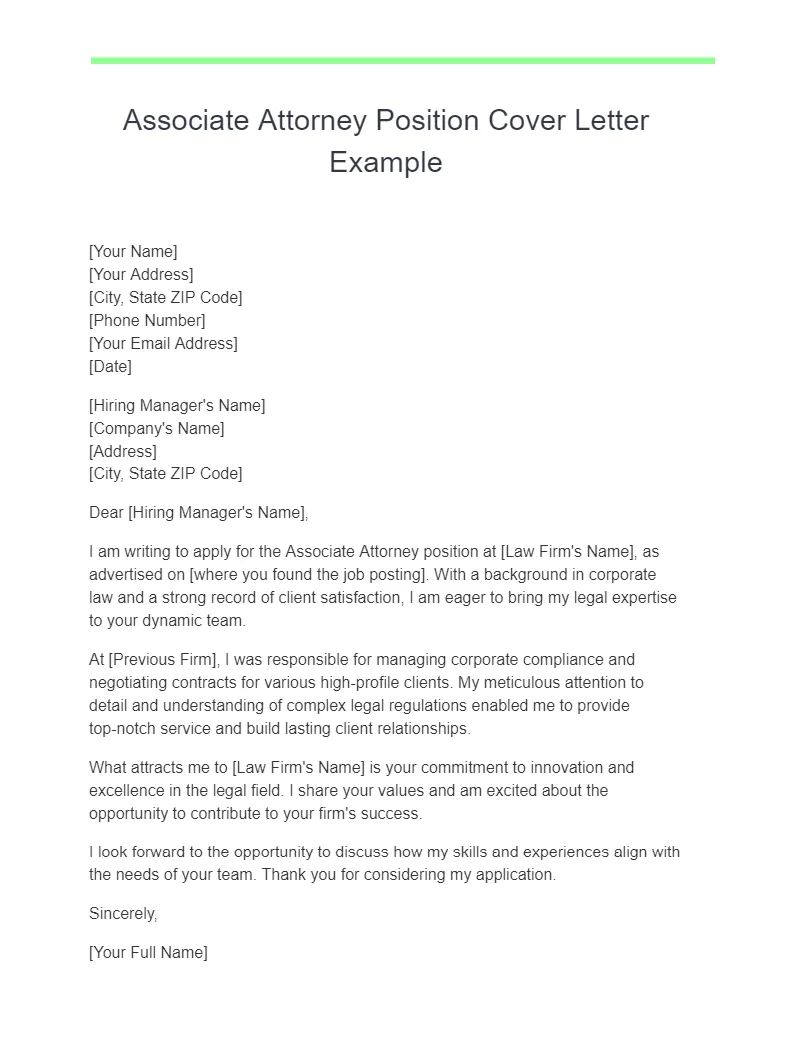
What is an Attorney Cover Letter
An attorney cover letter is a crucial document that accompanies your resume when applying for legal positions. It’s your first chance to make a strong impression and showcase your qualifications to potential employers. Unlike a resume, which provides a factual overview of your experience, a cover letter allows you to elaborate on your skills, express your interest in the specific role and the law firm, and demonstrate your personality and writing abilities. It’s a targeted document designed to complement your resume, providing context and highlighting why you are the ideal candidate for the job. A well-crafted cover letter can significantly increase your chances of getting an interview and ultimately landing your dream legal job.
Why a Great Cover Letter Matters
In the competitive field of law, a great cover letter can be the deciding factor in whether you get an interview or your application ends up in the rejection pile. It’s more than just a formality; it’s an opportunity to differentiate yourself from other applicants. A well-written cover letter demonstrates your communication skills, attention to detail, and understanding of the specific job requirements. It allows you to personalize your application, showing that you’ve taken the time to research the firm and understand their needs. A compelling cover letter helps you make a strong first impression, highlight your key achievements and skills, and convince the hiring manager that you are the best fit for the role.
Key Components of a Strong Attorney Cover Letter

Creating a standout attorney cover letter involves several essential components that work together to present you as a strong candidate. Each section plays a vital role in conveying your qualifications and enthusiasm. A comprehensive and well-structured cover letter is more likely to capture the attention of a hiring manager. From the precise formatting to the final call to action, every element should be carefully considered. This section will delve into the crucial elements necessary for crafting a cover letter that impresses potential employers, ensuring your application stands out from the competition.
Contact Information and Formatting
Start with your full name, address, phone number, and email at the top of the letter. This should be followed by the date and the recipient’s contact information (name, title, law firm name, and address). Maintain a professional and clean format, using a standard font like Times New Roman or Arial in a size between 11 and 12 points. Ensure your cover letter is well-organized with clear paragraphs and appropriate spacing. A well-formatted cover letter demonstrates professionalism and attention to detail, both crucial qualities in the legal profession.
Professional Salutation
Address the letter to a specific person whenever possible, such as the hiring manager or the recruiting partner. Research the law firm’s website or use LinkedIn to find the correct name and title. If you are unable to find a specific name, using a general greeting like ‘Dear Hiring Manager’ or ‘Dear Recruiting Team’ is acceptable. Avoid generic salutations such as ‘To Whom It May Concern,’ as they can make your application seem impersonal. A personalized greeting shows that you have taken the time to research the firm and the specific job.
Opening Paragraph Grab Attention

The opening paragraph is your first opportunity to make a positive impression and capture the reader’s interest. Start with a strong statement that immediately grabs the attention of the hiring manager. Mention the specific position you are applying for and how you learned about it. Briefly state why you are interested in the role and the firm, highlighting any unique skills or experiences that make you stand out. This initial paragraph sets the tone for the rest of the letter and encourages the reader to continue reading. Consider including a brief statement of what you hope to achieve at the firm.
Highlighting Relevant Skills and Experience
The body of your cover letter should focus on highlighting your relevant skills and experience. Carefully review the job description and identify the key requirements. Provide specific examples of how your skills and experiences align with these requirements. Use action verbs to describe your accomplishments and quantify your achievements whenever possible. Showcase your legal expertise, writing abilities, and other relevant qualifications. Tailor this section to each specific job you are applying for, emphasizing the most relevant aspects of your background. Show rather than tell the readers about your skill and experience, and provide specific evidence to back your claims.
Quantifying Achievements
Whenever possible, quantify your achievements to provide concrete evidence of your skills and accomplishments. Instead of simply stating that you are a good writer, mention how many briefs you have written or how often you have won cases. For instance, you could say, ‘Successfully drafted over 50 legal briefs, resulting in a 75% success rate in favorable judgments.’ Use numbers and statistics to demonstrate the impact of your work. This helps the hiring manager understand the value you can bring to their firm. Quantifiable achievements are much more impactful than general statements.
Showcasing Legal Expertise

Highlight your specific legal expertise by mentioning the areas of law in which you have experience. Detail any specialized knowledge or certifications you possess. If you have experience in a particular area of law, such as corporate law, environmental law, or intellectual property, mention it. Provide details of relevant cases, projects, or experiences that demonstrate your competence in your area of expertise. This shows the hiring manager that you have a strong understanding of the legal field and are equipped to handle the challenges of the job.
Tailoring the Cover Letter to the Job
A generic cover letter is unlikely to make a strong impression. Tailor your cover letter to each specific job by carefully reading the job description and addressing the requirements. Research the law firm and understand its values, culture, and areas of practice. Customize your letter to reflect your understanding of the firm’s needs and how your skills and experience align with them. Show the hiring manager that you have taken the time to research the firm and are genuinely interested in the specific role.
Researching the Law Firm
Before writing your cover letter, thoroughly research the law firm. Visit their website, read about their attorneys, and understand their areas of practice and recent achievements. Look for information about the firm’s culture, values, and any recent news or events. Understanding the firm’s priorities and goals will help you tailor your letter to their specific needs. Use the knowledge you gained to demonstrate your genuine interest and to showcase your understanding of the firm’s mission.
Addressing Specific Requirements

Carefully review the job description and identify the specific requirements and qualifications. Highlight your skills and experiences that match these requirements. Provide concrete examples that demonstrate your ability to meet the needs of the role. If the job description requires experience in a certain area of law or specific software, make sure to mention your experience in those areas. Addressing the specific requirements shows the hiring manager that you are a strong fit for the role and understand what the firm is looking for.
Closing the Cover Letter Effectively
The closing of your cover letter should be just as impactful as the opening. Reiterate your interest in the position and the law firm. Summarize your key qualifications and reiterate why you are a good fit for the role. Ensure you end with a professional tone and leave a lasting impression. The closing is your last opportunity to convince the hiring manager that you are the right candidate. It should leave the reader with a clear understanding of your skills, experience, and enthusiasm for the position.
Expressing Enthusiasm and Interest
Express your genuine enthusiasm for the position and the law firm. Briefly mention why you are excited about the opportunity and what aspects of the role or the firm appeal to you. Personalize your letter by mentioning specific aspects of the firm’s work that resonate with you. Demonstrating your enthusiasm shows the hiring manager that you are genuinely interested in the opportunity and that you have taken the time to learn about the firm and its work. Enthusiasm can set you apart from other applicants.
Call to Action

End your cover letter with a clear call to action. Request an interview or express your availability for a meeting. Make it easy for the hiring manager to take the next step by providing your contact information and encouraging them to reach out to you. You can also express your willingness to provide any additional information they may need. A strong call to action encourages the hiring manager to move forward with your application, increasing your chances of getting an interview.
Proofreading and Editing for Perfection
Before submitting your cover letter, thoroughly proofread and edit it for any errors. Ensure that your grammar, spelling, and punctuation are impeccable. Check for clarity, conciseness, and a professional tone. Ask a colleague, mentor, or career advisor to review your cover letter and provide feedback. A well-written, error-free cover letter demonstrates your attention to detail and professionalism, which are essential qualities for an attorney. Proofreading your cover letter is crucial to ensure you are putting your best foot forward.
Common Mistakes to Avoid
Avoid these common mistakes to increase the effectiveness of your cover letter: using generic language, failing to tailor the letter to the specific job, including excessive jargon or overly complex language, making spelling or grammatical errors, providing irrelevant information, or writing a cover letter that is too long. Make sure the tone is confident and positive, not arrogant or negative. By avoiding these common pitfalls, you can significantly improve your chances of making a great first impression and securing an interview. Take your time to craft your cover letter carefully and thoughtfully.