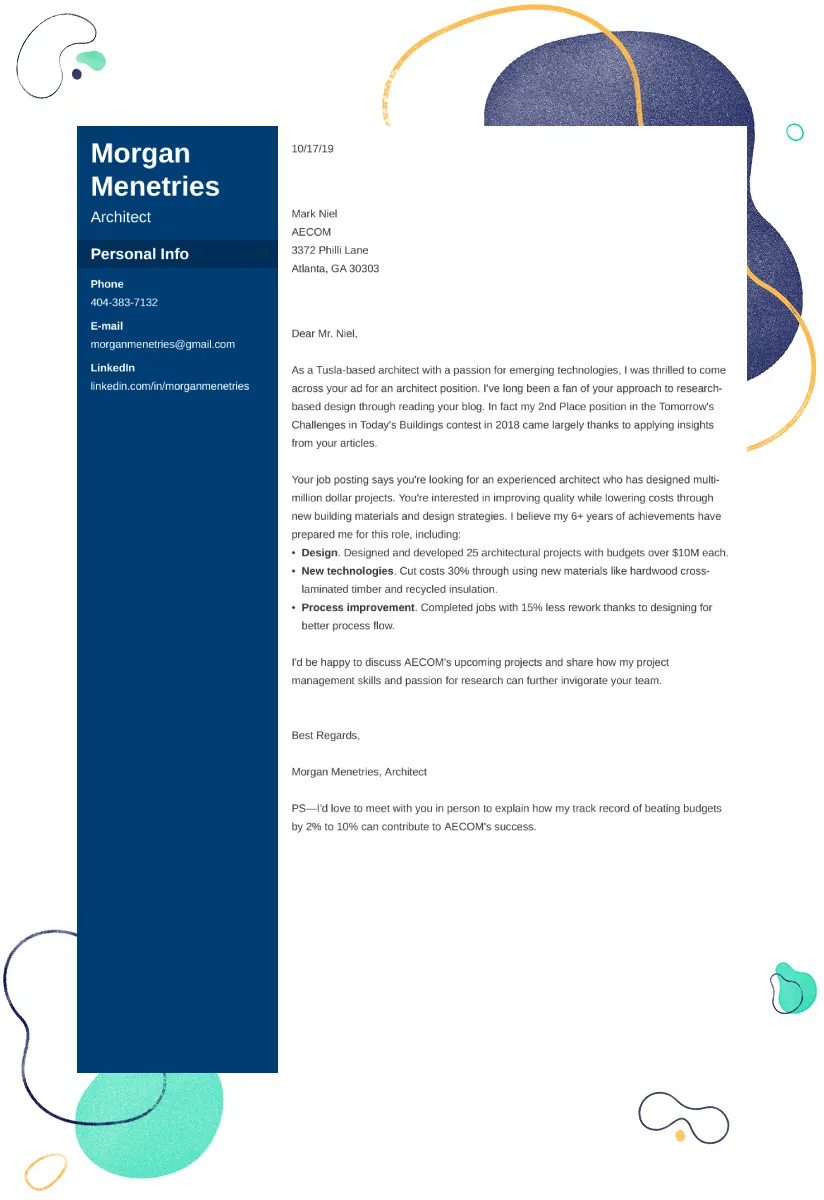
Crafting Your Architecture Cover Letter
A well-crafted architecture cover letter is your first opportunity to make a lasting impression on potential employers. It provides a platform to showcase your personality, passion for architecture, and relevant skills. This guide will provide an in-depth understanding of what a cover letter is, why it is important, and how to create one that stands out. The goal is to move beyond a simple recitation of your resume and to create a compelling narrative that highlights your suitability for the role and company. Learn how to showcase your architectural abilities, project experience, and formatting and structure.
Understanding the Purpose of a Cover Letter
The primary goal of an architecture cover letter is to introduce yourself, express your interest in a specific position or company, and persuade the hiring manager to review your resume. Think of it as a marketing tool; it sells your qualifications and highlights what makes you the best fit for the role. A cover letter provides a space to tell your story. It provides an opportunity to address gaps in your experience, elaborate on complex projects, and exhibit a genuine enthusiasm for architecture. A cover letter can be the most important step to get you the interview.
Highlighting Relevant Architectural Skills

When showcasing your skills, focus on those most relevant to the job description. This could include proficiency in software like AutoCAD, Revit, or SketchUp. Emphasize your design abilities, such as space planning, 3D modeling, and the ability to translate concepts into tangible designs. Include your experience with building codes, construction documents, and project management. Quantify your accomplishments whenever possible. If you led a design team, mention the number of projects completed or the budget size. This gives concrete evidence of your skills. Remember, architecture is a blend of creativity and technical skill. Your cover letter should reflect both.
Showcasing Project Experience
Your architecture cover letter should highlight your relevant project experience. Select a few projects that align with the job requirements, demonstrating your ability to handle similar tasks. For each project, briefly describe your role, the scope of work, and the outcome. Focus on specific achievements rather than simply listing your responsibilities. Highlight the challenges you faced and how you overcame them. Use quantifiable results such as budget management, project completion timelines, and client satisfaction. Remember to adapt your experience to match the specific needs of the architecture firm and the job description. This will make your application much more impactful.
Cover Letter Formatting and Structure
A well-formatted cover letter is essential. It is the first thing a hiring manager sees. Choose a professional and easy-to-read font like Arial or Times New Roman. Use single-spaced lines with a space between paragraphs. The overall length should be one page. Break the text into clear sections to make it easily scannable. Keep your formatting consistent and use headings and bullet points to emphasize key information. Well-structured cover letters highlight your professionalism and attention to detail. This is a fundamental element of creating a compelling and effective cover letter.
Header and Contact Information

Start your cover letter with a header that includes your name, address, phone number, and professional email address. Ensure your email address is appropriate and professional. Also, include the date and the hiring manager’s name and title, if known, along with the architecture firm’s address. If you are sending an email, include a clear and concise subject line that states the position you are applying for. The correct contact information shows that you pay attention to details and ensures the hiring manager can reach you.
Professional Salutation
Always start your cover letter with a professional salutation. Use the hiring manager’s name if you know it; it shows you have taken the time to research the firm. If you don’t know the name, use a general salutation like “Dear Hiring Manager.” Avoid generic greetings like “To Whom It May Concern.” Always maintain a professional tone throughout your cover letter. This sets a professional tone and demonstrates respect for the recipient, making a positive first impression and encouraging the hiring manager to continue reading.
Body Paragraphs Key Components
The body of your cover letter should consist of a few key paragraphs that explain your interest, skills, and experience. Each paragraph should have a clear purpose and contribute to the overall narrative. Use a concise and engaging writing style. Avoid overly long sentences or complex phrasing. Structure your points logically, building a compelling case for why you are a good fit for the role. The body of the cover letter is your opportunity to make a strong impression and convince the hiring manager of your potential.
Strong Opening Statement

Your opening statement should immediately grab the reader’s attention. Start with a strong and enthusiastic statement that clearly states the position you are applying for. Briefly mention where you found the job posting and express your interest in the architecture firm. Highlight one or two key qualifications that make you a good match. Avoid generic opening lines. Your goal is to make a strong first impression and set the tone for the rest of the cover letter. A great opening statement encourages the reader to continue and learn more about you.
Highlighting Relevant Skills and Experience
In the middle paragraphs, provide evidence of your skills and experience. Select a few relevant projects that showcase your abilities. Describe your role, the scope of the project, and the results you achieved. Quantify your achievements whenever possible. Demonstrate your proficiency in architectural software and any other technical skills required. Explain how your past experiences have prepared you for the role you are applying for. You should align your experience and skills with the requirements listed in the job description. This will confirm your capabilities and show your potential.
Expressing Interest in the Role and Company
Express genuine interest in the specific role and architecture firm. Research the firm’s values, mission, and recent projects. Mention what appeals to you about their work or company culture. Explain how your career goals align with the company’s vision. Showcase your knowledge of the company and the role. This expresses your long-term vision and commitment to the architecture field. It’s also a great sign of enthusiasm, which can set you apart from other candidates.
Call to Action and Closing

Conclude your cover letter with a clear call to action. Express your enthusiasm for an interview and reiterate your contact information. Thank the hiring manager for their time and consideration. Close with a professional sign-off, such as “Sincerely” or “Best regards.” Make sure the tone is appreciative and forward-thinking. A strong closing statement reinforces your interest and makes it easy for the hiring manager to contact you.
Tailoring Your Cover Letter
Customizing your cover letter for each job application is critical. Avoid using a generic template. Tailor the content to match the specific requirements of the job description. Highlight the most relevant skills and experiences for the role. Show that you understand the company’s culture and values. This personalization demonstrates that you have taken the time to research the role and firm. Customize your cover letter, showing potential employers that you are genuinely interested in the position and the company.
Researching the Architecture Firm
Before writing, research the architecture firm thoroughly. Visit their website, review their portfolio, and read about their history and values. Understand their current projects and any specializations they have. Identify what distinguishes them from other firms. This research will guide you in tailoring your cover letter to show a genuine interest in the firm and the role. Use the information to highlight the specific aspects of the firm that attract you. This demonstrates to the hiring manager that you value the opportunity.
Matching Your Skills to Job Requirements

Carefully review the job description and identify the key skills and requirements the firm is seeking. Use the same keywords and phrases from the description in your cover letter. Highlight the skills and experiences that match the required qualifications. Provide specific examples of how you have demonstrated those skills in past projects. By matching your skills, you are communicating that you understand the role and can fulfill its responsibilities. This strategic approach will make your cover letter more relevant and compelling.
Using Keywords from the Job Description
Incorporate relevant keywords from the job description throughout your cover letter. Use these terms in your skills section, project descriptions, and when explaining your experience. Be careful not to overdo it. Focus on naturally integrating the keywords to improve the letter’s readability and relevance. This will make your cover letter more likely to be seen by applicant tracking systems. Using the correct keywords will show the hiring manager that you meet the job’s specific needs.
Cover Letter Mistakes to Avoid
Avoid making common cover letter mistakes that can damage your application. These errors can make the hiring manager doubt your attention to detail, lack of enthusiasm, or overall suitability. By being aware of these pitfalls, you can ensure that your cover letter conveys a professional and positive image. Proofread meticulously and tailor each cover letter to each specific job, showing that you have the necessary requirements.
Generic Cover Letters

Sending a generic cover letter without tailoring it to the specific job and firm is a major mistake. Generic letters show a lack of interest and a “one-size-fits-all” approach. Each cover letter must be tailored to the role and the company. This indicates your effort and commitment to the opportunity. Use your research to highlight specific projects or values that align with the firm. Replace the generic language with personalized details. This ensures that your cover letter stands out and catches the hiring manager’s attention.
Typos and Grammatical Errors
Typos and grammatical errors can damage your professional image. They show a lack of attention to detail. Carefully proofread your cover letter before submitting it. Use a spell checker and grammar checker to catch any mistakes. Consider asking a friend or mentor to review your letter for you. This ensures that the hiring manager can see the correct version of your cover letter. A well-written, error-free cover letter shows you value the opportunity and will put your best foot forward.
Lack of Enthusiasm
A cover letter that lacks enthusiasm or passion can be a missed opportunity. Write with a tone that reflects your excitement for the role, company, and architecture field. Avoid vague or passive language. Express your interest with clear and engaging statements. Highlight what inspires you about the firm’s work or the project. Use active voice to show confidence in your abilities. Your enthusiasm will persuade the hiring manager that you are a motivated and dedicated candidate, making you a strong contender for the position.
Cover Letter Examples

Reviewing cover letter examples can help you understand how to structure and tailor your own letter. These samples give you a good starting point. Use the samples as a basis for creating your own. Customize your content to match your experience and the specific job requirements. Ensure your letter is both well-formatted and written in a compelling way. Tailoring a cover letter to your needs can give you a winning advantage.
Cover Letter Sample for Entry-Level Architect
Entry-level architect cover letters should highlight your educational background, internships, and any relevant coursework or skills. Focus on your understanding of design principles, software proficiency, and teamwork abilities. Show your passion for architecture and your willingness to learn and grow within the firm. Mention any projects you worked on and any achievements you had, even in an internship. A great cover letter for an entry-level architect shows your potential and enthusiasm.
Cover Letter Sample for Experienced Architect
Experienced architects should highlight their professional experience, project management skills, and leadership abilities. Focus on your track record and achievements in previous roles. Include experience in various project types, such as commercial, residential, or institutional. Demonstrate your ability to manage projects, mentor team members, and maintain client relationships. If you have specialized knowledge of building codes, sustainable design practices, or specific software, be sure to mention it. The experience and the ability to take responsibility will be appreciated.
Cover Letter Sample for Project Architect
Project architect cover letters should emphasize your project management skills and experience. Focus on your leadership abilities, communication skills, and ability to manage budgets and timelines. Show your experience in coordinating with clients, contractors, and other professionals. Highlight your understanding of construction documentation, building codes, and project delivery processes. Show your ability to lead a team and deliver successful projects from start to finish. The project architect’s role is extremely important for any architectural project.
Finalizing Your Architecture Cover Letter
Before submitting your cover letter, there are a few steps to make sure your application is the best it can be. A final review of your cover letter will ensure that your application is polished and professional. These steps will help you make a good first impression. With the final touches, you can send the best application you can.
Proofreading and Editing
Proofread your cover letter meticulously. Check for any typos, grammatical errors, and formatting inconsistencies. Read it out loud to catch any awkward phrasing or unclear sentences. Ask a friend or mentor to review it. Editing and proofreading will make sure that your cover letter is polished and free of mistakes, presenting you as a detail-oriented professional. Errors can damage your application, so taking the time to proofread is vital.
Formatting for Readability
Ensure your cover letter is easy to read. Use a professional font, like Arial or Times New Roman. Make sure the font size is readable. Use single-spaced lines with space between paragraphs. Organize your content with clear headings and bullet points, where appropriate. Ensure that your formatting is consistent throughout the document. A well-formatted cover letter is more visually appealing and shows that you care about details. Make the process for the hiring manager as easy as possible.
Saving and Submitting Your Cover Letter
Save your cover letter in a professional format, such as PDF, before submitting it. This ensures that your formatting remains consistent regardless of the recipient’s software. Name the file appropriately, using your name and the job title. Follow the application instructions carefully. If the company has specific requirements, make sure to meet them. Always check that you have included the correct file before submitting your application. Double-check that everything is in place to make the best impression.