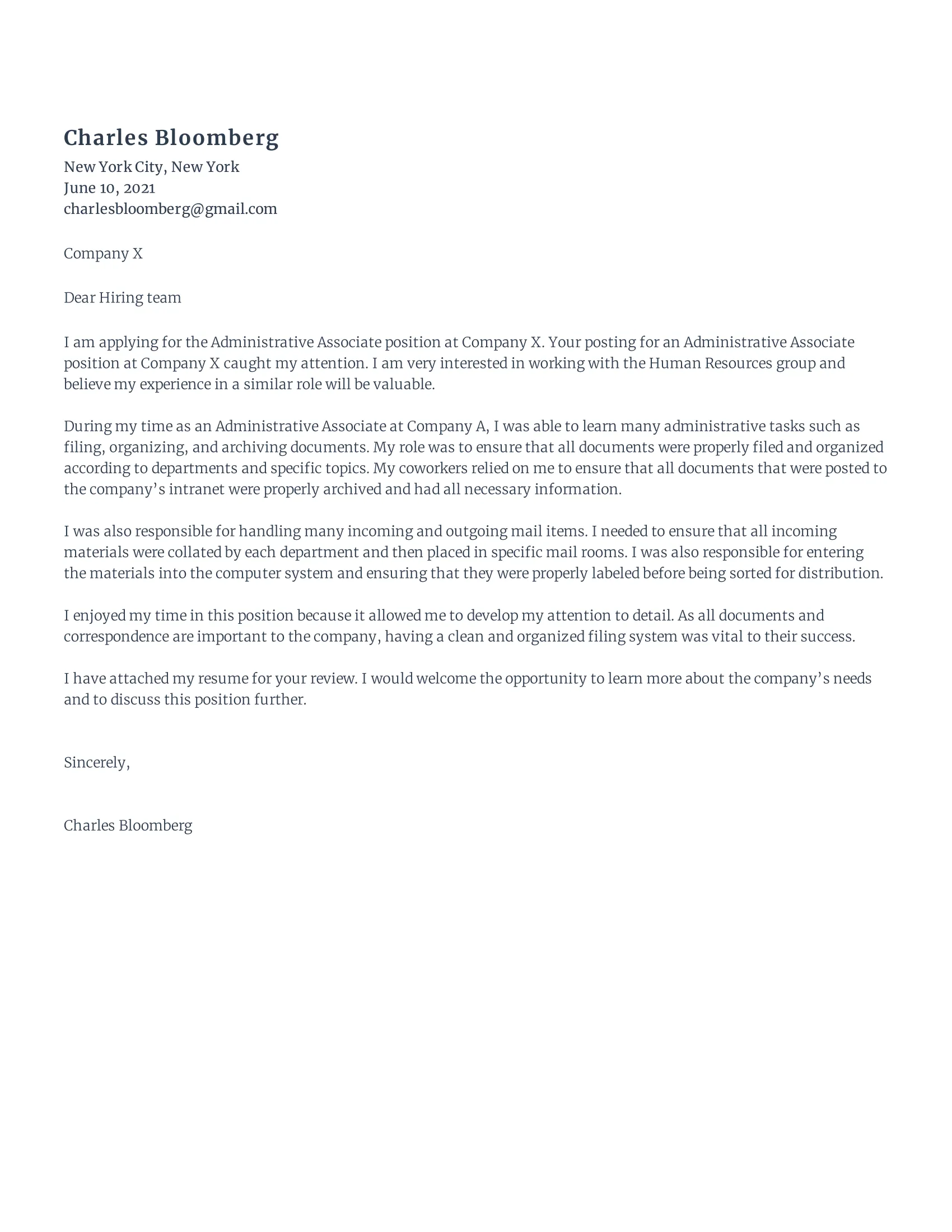
Crafting Your Administrative Assistant Cover Letter
Your administrative assistant cover letter is your first introduction to a potential employer. It’s your chance to make a strong first impression and showcase why you’re the perfect candidate for the job. A well-crafted cover letter is crucial, setting the stage for your resume and demonstrating your communication skills, attention to detail, and enthusiasm for the role. It’s not just a formality; it’s a marketing tool. A compelling letter will capture the hiring manager’s attention, highlighting your key strengths and aligning them with the specific requirements of the position. Remember, the goal is to convince the employer to read your resume and eventually invite you for an interview.
Researching the Company
Before you start writing, take the time to research the company. Understanding the company’s mission, values, and recent activities will allow you to tailor your cover letter and demonstrate a genuine interest in the organization. Visit their website, read news articles, and check their social media profiles. This research will give you insights into their culture, challenges, and goals. By showing that you’ve done your homework, you demonstrate initiative and a proactive approach, which are highly valued qualities in an administrative assistant. You can then incorporate this knowledge into your letter, showing how your skills align with their specific needs and values.
Highlighting Relevant Skills and Experience

Administrative assistant roles demand a specific set of skills, and your cover letter should prominently highlight these. Focus on the skills and experience that are most relevant to the job description. These may include proficiency in Microsoft Office Suite, experience with scheduling and calendar management, strong communication and interpersonal skills, and experience with managing office supplies and equipment. Use keywords from the job description to ensure your letter aligns with their requirements. When describing your experience, use action verbs to showcase your accomplishments and responsibilities. For example, instead of saying “I was responsible for answering phones,” say “Managed a high-volume phone system, efficiently directing calls and providing excellent customer service.”
Showcasing Your Accomplishments
Don’t just list your duties; showcase your accomplishments. Provide specific examples of how you’ve exceeded expectations in previous roles. Did you streamline a process that saved the company time and money? Did you implement a new system that improved efficiency? Did you receive positive feedback from clients or colleagues? Quantify your achievements whenever possible. Use numbers and data to demonstrate the impact of your work. For example, “Reduced office supply costs by 15% by negotiating with vendors” or “Managed the executive’s calendar, resulting in a 20% increase in meeting efficiency.” Highlighting your accomplishments proves that you’re not just capable but that you’re a valuable asset.
Quantifying Your Achievements
Quantifying your achievements is one of the most effective ways to make your cover letter stand out. Numbers provide concrete evidence of your capabilities and the value you bring to an organization. Use metrics to demonstrate your impact. For example, instead of saying “Improved customer service,” say “Improved customer satisfaction scores by 25% by implementing a new customer service protocol.” If you managed a project, specify the budget, timeline, and results. If you handled a large volume of tasks, mention the number of transactions, calls, or documents you processed. These quantifiable achievements will make a lasting impression and demonstrate your ability to achieve results. Use percentages, dollar amounts, and other measurable data to show your successes and potential impact on the new role.
Demonstrating Soft Skills

While technical skills are essential, administrative assistant roles also require a strong set of soft skills. These include communication, organization, time management, problem-solving, and interpersonal skills. Your cover letter is an opportunity to showcase these soft skills. Provide examples of how you’ve used these skills in previous roles. For example, describe how you effectively communicated with clients or colleagues, how you managed multiple projects simultaneously, or how you resolved a challenging situation. When possible, use the STAR method (Situation, Task, Action, Result) to structure your examples, providing context, your role, the actions you took, and the outcome. Demonstrating these skills shows that you can handle the day-to-day challenges of the job and work effectively with others.
Proofreading and Editing Your Cover Letter
Before you submit your cover letter, proofread it carefully. Errors in grammar, spelling, and punctuation can create a negative impression and undermine your credibility. Read your letter aloud to catch any awkward phrasing or mistakes you might have missed. It’s also a good idea to have a friend or family member review your letter for errors and clarity. Ensure that your cover letter is well-formatted, with clear paragraphs and appropriate spacing. Check that the font is easy to read and that the overall layout is professional. A polished cover letter demonstrates your attention to detail and commitment to quality, which are essential qualities for an administrative assistant. Double-check the company name, contact person’s name, and job title to avoid any embarrassing errors.
Making a Strong Impression
Your cover letter is your chance to make a strong impression. Start with a compelling opening that grabs the reader’s attention. Express your enthusiasm for the role and the company. In the body of the letter, highlight your key skills and accomplishments, providing specific examples to back up your claims. Tailor your letter to the specific job requirements, showing that you’ve carefully considered the position and the company. End with a confident and professional closing, expressing your interest in an interview and thanking the hiring manager for their time and consideration. Your goal is to leave the reader with a clear picture of your qualifications and enthusiasm for the role.