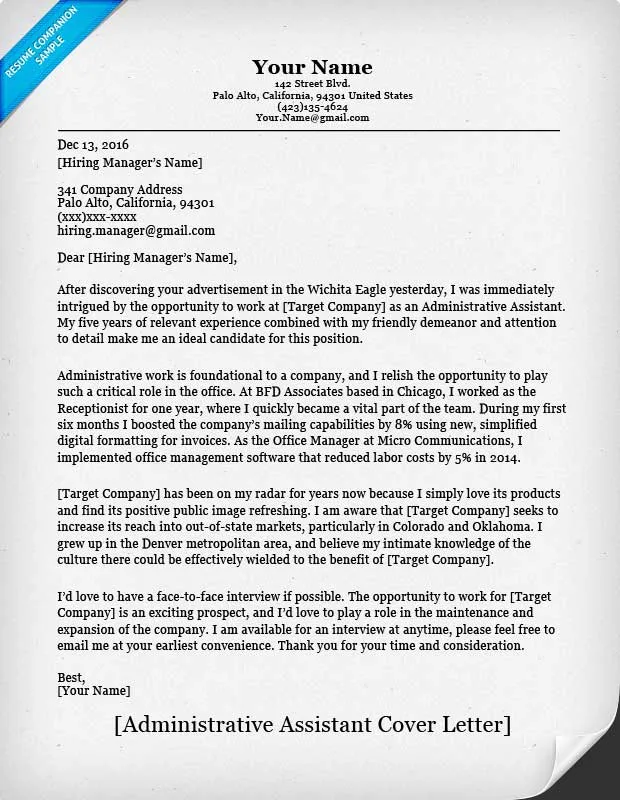
Crafting a Compelling Administrative Assistant Cover Letter
A well-crafted cover letter is your first opportunity to impress a potential employer and secure an interview. For administrative assistants, a cover letter is particularly vital because it showcases your organizational skills, communication abilities, and attention to detail. This guide will help you create a cover letter that highlights your strengths and aligns with the specific requirements of the role you are applying for, ensuring you make a lasting positive impression. A strong cover letter can significantly increase your chances of getting noticed and moving forward in the application process. By following these steps, you can create a cover letter that effectively communicates your value and helps you stand out from the competition.
Understanding the Purpose of an Administrative Assistant Cover Letter
The primary purpose of an administrative assistant cover letter is to introduce yourself, express your interest in the position, and demonstrate how your skills and experience align with the job requirements. Unlike a resume, which provides a factual overview of your qualifications, a cover letter allows you to connect with the hiring manager on a more personal level, showcasing your personality and enthusiasm. It’s your chance to explain why you are the ideal candidate and to highlight specific achievements that are most relevant to the role. The cover letter should not simply reiterate your resume; it should expand on key points and provide context, offering a narrative that supports your qualifications and strengthens your application.
Highlighting Your Skills and Experience

A successful administrative assistant cover letter effectively highlights your key skills and relevant experience. This involves carefully reviewing the job description and identifying the specific skills and qualifications that the employer is seeking. Use your cover letter to provide concrete examples of how you have successfully applied these skills in previous roles, quantifying your achievements whenever possible. This approach not only demonstrates your capabilities but also provides evidence of your ability to perform the duties required. By tailoring your cover letter to match the requirements of the specific job, you demonstrate your understanding of the role and your commitment to excellence.
Key Skills to Showcase
Administrative assistant roles demand a diverse set of skills. Some of the most important skills to highlight in your cover letter include excellent communication (both written and verbal), strong organizational abilities, proficiency in office software (such as Microsoft Office or Google Workspace), time management, attention to detail, and problem-solving capabilities. Furthermore, demonstrate your ability to handle multiple tasks simultaneously, manage calendars, and maintain confidentiality. Emphasize any specialized skills, like experience with specific software or industry-related knowledge. Showcasing these skills gives a potential employer confidence you’re a good fit for the role.
Relevant Experience to Include
When describing your experience, focus on achievements that demonstrate your abilities. For example, instead of simply stating that you managed calendars, describe how you improved scheduling efficiency or reduced scheduling conflicts. If you have experience with managing projects, mention the specific projects and the outcomes you achieved. Include any experience with customer service, data entry, or handling sensitive information. Quantify your accomplishments whenever possible by including metrics such as the number of tasks completed, the amount of time saved, or the level of accuracy achieved. This helps in demonstrating the real impact you had in previous roles.
Structuring Your Administrative Assistant Cover Letter

The structure of your cover letter is critical for conveying your message effectively. A well-organized letter ensures that your key qualifications are presented clearly and concisely. Following a standard format helps the hiring manager quickly grasp your suitability for the role. Using clear and easy-to-follow sections and paragraphs will make your cover letter more professional and easier to read. A well-structured cover letter reflects your organizational skills and attention to detail, which are highly valued traits in an administrative assistant.
The Header and Contact Information
Start your cover letter with a professional header that includes your name, address, phone number, and email address. If you are applying for a specific position, include the date and the name and address of the hiring manager or the company. Ensure that your contact information is accurate and up-to-date, as this is how the employer will reach you. A clean, well-formatted header demonstrates professionalism and attention to detail from the outset. This sets the tone for the rest of your letter and is a very important detail.
The Opening Paragraph
The opening paragraph is your first opportunity to grab the reader’s attention. Start by clearly stating the position you are applying for and how you learned about the opportunity. Express your enthusiasm for the role and the company. Briefly mention one or two key skills or experiences that make you a strong candidate. Tailor your opening to the specific job and company. Avoid generic phrases; instead, show your genuine interest and what value you can add to the company. This will make the reader want to continue reading your letter.
Body Paragraphs to Demonstrate Value

The body paragraphs are where you demonstrate your value. Use these paragraphs to elaborate on your skills, experience, and accomplishments. Provide specific examples that highlight your ability to perform the job’s requirements. Support your claims with quantifiable results whenever possible. For instance, you might describe how you improved office efficiency, managed projects, or handled sensitive information. Make sure each paragraph focuses on a specific point and directly relates to the job description. Each example should support your qualifications for the role and persuade the hiring manager to consider you.
Closing with Confidence and a Call to Action
In your closing paragraph, reiterate your interest in the position and express your enthusiasm for the opportunity. Thank the hiring manager for their time and consideration. Include a call to action, such as requesting an interview or stating your availability for a follow-up call. This is very important, and this indicates your initiative and eagerness to move forward in the hiring process. Your closing paragraph should leave a positive impression and motivate the hiring manager to take the next step.
Tailoring Your Cover Letter for Administrative Assistant Roles
Customization is crucial for an effective cover letter. Generic cover letters that are sent to multiple companies rarely make a good impression. Take the time to tailor each cover letter to the specific job and company. This personalization demonstrates your interest and ability to meet the specific needs of the role. Researching the company and customizing the content will help you stand out from the other candidates.
Researching the Company and the Role

Before you start writing, research the company and the specific role. Visit the company’s website to understand their mission, values, and culture. Review the job description carefully, paying attention to the required skills, experience, and responsibilities. Identify the keywords and phrases used in the job description, and incorporate them into your cover letter where appropriate. This will not only show that you have taken the time to understand the role but also help the hiring manager see how your qualifications align with their needs. Showing this effort will make the hiring manager take notice.
Customizing Content for Each Application
Once you have researched the company and the role, customize your cover letter to match. Highlight the skills and experiences that are most relevant to the specific job requirements. Use examples that demonstrate your ability to perform the duties described in the job description. Tailor your language to reflect the company’s culture and values. This will show that you understand the role and that you have the skills and experience required to be successful in that position. A personalized cover letter will make you stand out and dramatically increase your chances of getting an interview.
Showcasing Relevant Accomplishments
Focus on accomplishments rather than simply listing your job duties. Provide concrete examples of how you have excelled in previous roles. Quantify your achievements whenever possible. For instance, if you improved office efficiency, state by how much you reduced errors, or the amount of time saved. Highlighting achievements and successes demonstrates your value. By showcasing relevant accomplishments, you make your cover letter more compelling and show the hiring manager your ability to make a difference in the role.
Common Mistakes to Avoid in Your Cover Letter

Avoiding common mistakes will help you create a polished and professional cover letter. Errors can undermine your credibility and reduce your chances of getting an interview. By being aware of these pitfalls, you can ensure that your cover letter presents you in the best possible light. Always proofread your letter carefully and seek feedback from others to make sure it is free of errors and presents your best self.
Grammar and Spelling Errors
Grammar and spelling errors are a significant red flag for any potential employer. Such errors show a lack of attention to detail and can damage your credibility. Always proofread your cover letter carefully before submitting it. Use spell-check and grammar-check tools, but don’t rely on them entirely; manually proofread your document for accuracy. Ask someone else to review your cover letter to catch any errors you might have missed. A clean and well-written cover letter demonstrates your professionalism and attention to detail.
Generic or Vague Language
Avoid generic or vague language that could apply to any job applicant. Instead, be specific about your skills, experience, and accomplishments. Use action verbs to describe your responsibilities and achievements. Provide concrete examples that demonstrate your capabilities and your value to the company. Generic language will not make you stand out from the competition; therefore, focus on providing relevant details that are specific to the job and the company.
Ignoring the Job Description

Failing to address the specific requirements of the job description is a critical mistake. The job description provides key details about the skills, experience, and qualifications the employer is seeking. Read the job description carefully and tailor your cover letter to highlight how you meet those requirements. Include keywords from the job description and provide examples that demonstrate your ability to perform the required duties. This shows the hiring manager that you have taken the time to understand the role and that you are a strong candidate.
Formatting and Design Considerations
The formatting and design of your cover letter play an essential role in its readability and professionalism. A well-designed cover letter is easy to read and visually appealing. Poor formatting can distract from your message. Following these guidelines will help you present your skills and experience in the best way possible.
Choosing a Professional Font and Layout
Choose a professional font such as Times New Roman, Arial, or Calibri. Use a font size between 10 and 12 points. Keep the layout clean and uncluttered. Use clear headings and bullet points to organize information. Use consistent formatting throughout the document. Ensure adequate spacing between paragraphs. The layout should be easy to read and visually appealing. A well-formatted cover letter demonstrates your attention to detail and professionalism.
Proofreading and Editing Your Cover Letter
Proofreading and editing your cover letter is one of the most important steps in the process. Carefully review your cover letter for any grammar, spelling, or punctuation errors. Ensure that your content is concise, clear, and easy to understand. Ask a friend or family member to review your cover letter for feedback. Make sure your tone is appropriate and that your letter aligns with the job and company. A well-proofread cover letter ensures that your message is conveyed clearly and that you present yourself as a professional candidate.
Finalizing and Submitting Your Cover Letter
Before submitting your cover letter, review it one last time to ensure accuracy and professionalism. Make sure that all the information is correct, and that you have addressed all the requirements of the job description. When submitting your cover letter, follow the instructions provided by the employer. Save your cover letter in a professional file format, such as PDF. Make sure to check the company’s requirements. With a professional and well-crafted cover letter, you will have a much better chance of standing out from the crowd.