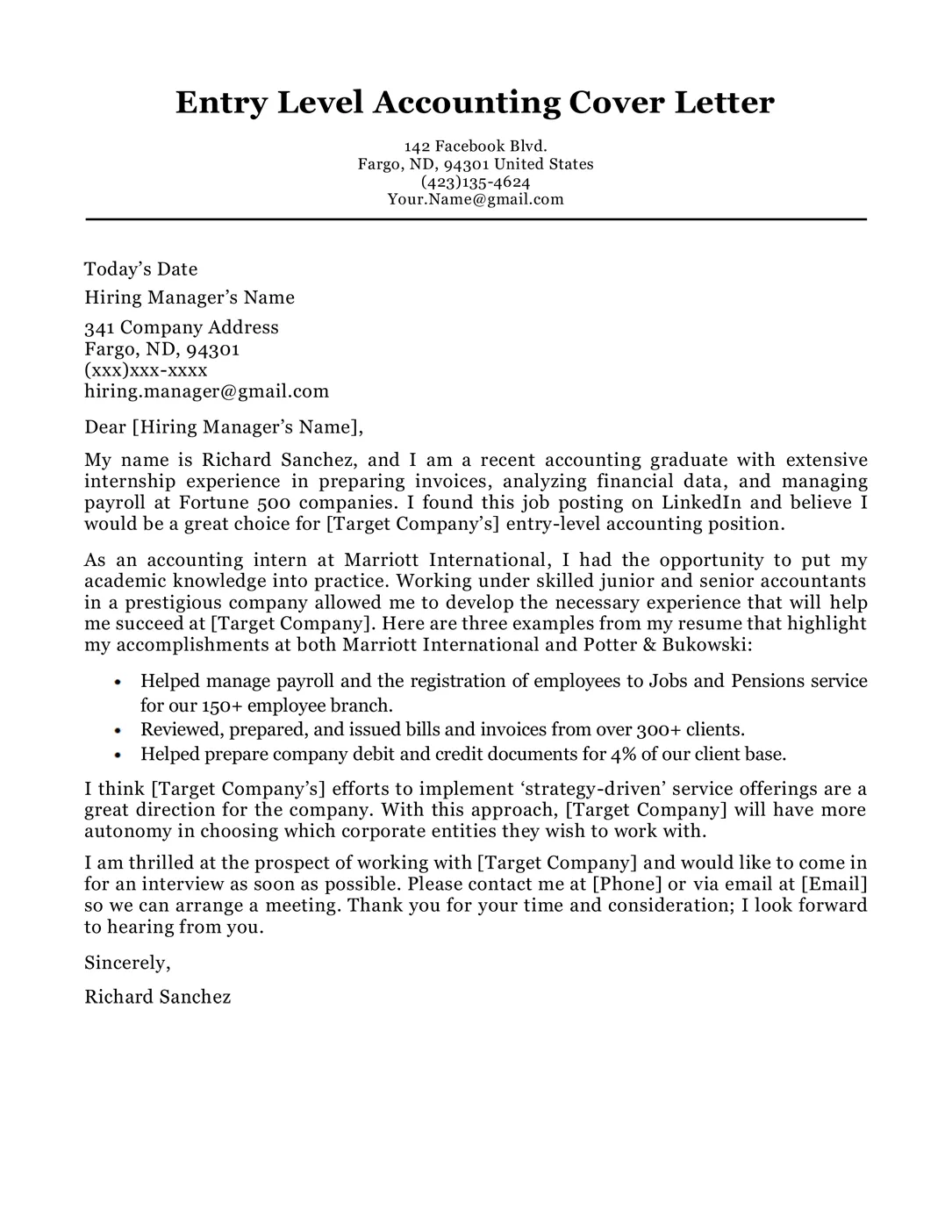
What is an Accounting Internship Cover Letter
An accounting internship cover letter is a formal document that accompanies your resume when applying for an accounting internship position. It serves as your introduction to the hiring manager and provides you with the opportunity to showcase your qualifications, skills, and enthusiasm for the role. Unlike a resume, which provides a factual overview of your experience, a cover letter allows you to express your personality, explain why you’re a good fit for the specific company, and highlight aspects of your background that align with the internship requirements. Think of it as your personal sales pitch, designed to persuade the reader to invite you for an interview. This document is your first impression and can significantly impact your chances of securing the internship.
Why Is a Cover Letter Important for an Accounting Internship
In the competitive field of accounting, a cover letter offers a crucial advantage. It provides the context for your resume, allowing you to demonstrate how your skills and experiences directly relate to the internship’s requirements. Furthermore, it allows you to explain any gaps in your resume or unusual career choices. A well-written cover letter shows that you have taken the time to research the company and understand the role, signaling genuine interest. It gives you a platform to demonstrate your communication skills, attention to detail, and professionalism—essential qualities in accounting. In essence, it’s your chance to stand out from the crowd of other applicants and make a compelling case for why you deserve the opportunity. It is a tool to go beyond a list of qualifications and give a sense of who you are and what you could contribute to the company.
Key Components of an Accounting Internship Cover Letter

A strong accounting internship cover letter comprises several key elements, each playing a vital role in conveying your message effectively. These components work together to create a persuasive and memorable introduction. Proper formatting, clear organization, and professional language are key to presenting yourself as a serious candidate. A well-structured cover letter shows that you understand professional communication norms and are capable of composing a concise, engaging document. Ensure the letter flows logically, from your introduction to your conclusion, and that each section builds upon the previous one. This structure guides the reader and keeps them engaged, which is crucial for making a positive impression and moving forward in the application process.
Header and Contact Information
Start with a header that includes your name, address, phone number, and email address. Ensure this information is accurate and easily accessible. This section is important because it helps the recipient immediately identify you and know how to contact you. The header should be clean and professional. Avoid using nicknames in your name, and use a professional-sounding email address. Double-check the accuracy of your contact information to prevent any missed opportunities. It establishes your identity and provides the hiring manager with the necessary details to reach out for the interview. This is the foundation for your application, so make sure it is correct and clear.
Recipient Information
Ideally, address your cover letter to a specific person, such as the hiring manager or the internship coordinator. Research the company to find out the correct name and title. If you can’t find a specific name, use a professional greeting like ‘Dear Hiring Manager.’ Addressing the letter to a specific person shows that you have done your research and are genuinely interested in the position. Finding the right contact person demonstrates initiative. If you are unable to find a specific name, the more general approach of ‘Dear Hiring Manager’ is acceptable, but aim to personalize the greeting if possible. Proper research can set your letter apart.
Salutation

Use a formal salutation, such as ‘Dear Mr./Ms./Mx. [Last Name],’ or ‘Dear Hiring Manager,’ if you don’t have a specific name. Avoid informal greetings like ‘Hello’ or ‘Hi.’ The salutation sets the tone for the entire letter and should be professional and respectful. Always make sure you spell the name correctly. A professional salutation shows that you respect the recipient and understand the conventions of business communication. It is the first interaction in your letter, so it must convey respect and professionalism.
Body Paragraphs
The body of your cover letter is where you demonstrate your qualifications and enthusiasm. Break it down into well-structured paragraphs that highlight your skills and explain your interest in the position. Each paragraph should have a clear focus and support your overall message. Use concise language, avoiding jargon. The body of your letter is the main part and should focus on explaining why you would be a good fit for the company. Proper formatting enhances readability and ensures that your key messages are easily understood. Well-organized paragraphs are key to a compelling argument for your candidacy.
First Paragraph Introduce Yourself and State Your Purpose
Start by introducing yourself and clearly stating the position you are applying for. Mention where you found the job posting (e.g., company website, job board). Briefly state why you are interested in the internship and what you hope to gain from it. This paragraph should grab the reader’s attention and make them want to read on. It establishes the purpose of your letter and sets the tone for the rest of the document. Keep it concise and focused to make an immediate impact on the reader. The first paragraph is essential for making a positive initial impression and securing their interest.
Second Paragraph Highlight Your Skills and Experience

Focus on the skills and experiences that make you a strong candidate. Mention any relevant coursework, projects, or previous work experience. Quantify your achievements whenever possible. For example, instead of saying ‘Managed accounts,’ say ‘Managed accounts for 20 clients, ensuring timely payments and resolving discrepancies.’ Use specific examples to demonstrate how your skills align with the internship requirements. Tailor this section to the specific job description, highlighting the skills that the employer is looking for. When writing the second paragraph, concentrate on demonstrating your specific abilities and accomplishments.
Third Paragraph Show Your Enthusiasm and Company Research
Show your genuine interest in the company and the specific internship. Mention something specific that attracted you to the company, such as its values, culture, or recent projects. Explain how the internship aligns with your career goals. This demonstrates that you have researched the company and are genuinely interested in working there. It shows that you see yourself as a fit within the company culture. Personalizing this paragraph shows you’re not just sending out a generic application; you’re expressing genuine interest in this specific role and organization. By demonstrating your enthusiasm, you differentiate yourself from other applicants.
Closing and Call to Action
End your cover letter with a professional closing and a call to action. Thank the hiring manager for their time and consideration. Clearly state that you are available for an interview and provide your contact information again. Express enthusiasm about the opportunity and reiterate your interest in the position. A strong closing paragraph reinforces your interest and makes it easy for the hiring manager to take the next step. End with a call to action that encourages the hiring manager to contact you. Use a professional closing, like ‘Sincerely’ or ‘Best regards,’ before your typed name.
Proofreading and Formatting Tips

Proofreading and formatting are essential for making a professional impression. Carefully proofread your cover letter for any grammatical errors, spelling mistakes, and typos. Use a spell checker, but also read the letter aloud to catch any errors. Pay attention to the formatting of your cover letter. Use a standard font, such as Times New Roman or Arial, and keep the font size between 10 and 12 points. Use single-spacing within paragraphs and double-spacing between paragraphs. Ensure the letter is well-structured with clear paragraphs and proper spacing. A polished cover letter indicates that you pay attention to detail and are serious about the opportunity. A well-formatted and error-free letter reflects your professionalism.
Common Mistakes to Avoid
Several common mistakes can damage your chances of getting an interview. Avoid generic cover letters that are not tailored to the specific position or company. Do not simply repeat your resume; use the cover letter to expand on your experiences and highlight your skills. Refrain from using slang, informal language, or overly casual tones. Be positive and enthusiastic, but avoid being overly familiar. Ensure that your cover letter aligns with the tone and style of the company. Make sure the letter is well-structured and easy to read. Also, ensure there are no grammatical errors or typos. By avoiding common mistakes, you can increase your chances of a successful application.
Examples of Strong Action Verbs
Using strong action verbs can make your cover letter more engaging and impactful. Instead of using passive language, use action verbs to describe your accomplishments and skills. Some examples include: ‘Managed,’ ‘Analyzed,’ ‘Prepared,’ ‘Implemented,’ ‘Developed,’ ‘Organized,’ ‘Resolved,’ ‘Streamlined,’ ‘Collaborated,’ and ‘Led.’ These verbs make your statements more dynamic and showcase your proactive approach. Incorporating strong action verbs makes your accomplishments come alive. For instance, replace ‘Responsible for’ with ‘Managed’ to sound more confident and impactful. Using these verbs will enhance the quality and strength of your cover letter.